How Breath Shapes Alignment More Than We Realise
Decoding Posture – Post 5
When we think about posture, most people jump straight to the spine, shoulders, or pelvis. But one of the most powerful — and most overlooked — influencers of alignment is the ribcage. How we breathe, how we feel, and how we move all leave their imprint here.
The ribcage is not just a protective shell. It is a dynamic, responsive structure that reflects the state of the nervous system, the diaphragm, and the core. When the ribcage becomes stiff, flared, collapsed, or rotated, the entire posture adapts around it.
Understanding the ribcage is one of the most transformative skills a movement professional can develop.
Breath as a Postural Behaviour
Breathing is not just a physiological process — it is a behaviour. And like all behaviours, it adapts to stress, emotion, habit, and environment.
Common patterns include:
Shallow breathing
Often lifts the ribcage upward, creating a sense of “high chest” posture. This can lead to:
- Neck tension
- Overuse of accessory breathing muscles (primary breathing muscles are the diaphragm and intercostals)
- Reduced diaphragm movement
- Increased lumbar extension if the chest does lift.
Bracing breath
Common when clients are told to “engage the core.” This can stiffen the torso, reducing rib mobility, and limits natural spinal motion.
Emotional breath
Stress, anxiety, or overwhelm often narrow the ribs and restrict lateral expansion. This can create a collapsed or rounded posture.
Breath is a direct window into the nervous system — and the ribcage tells the story.
How Ribcage Position Influences Posture
The ribcage sits at the centre of the body’s alignment system. If it shifts, everything else shifts to compensate.
Rib flare
When the lower ribs lift and angle forward, we often see:
- excessive lumbar lordosis
- tight hip flexors
- overactive back extensors
- difficulty accessing deep core support
Collapsed ribcage
When the ribs drop and narrow, we often see:
- thoracic kyphosis
- rounded shoulders
- forward head posture
- reduced lung expansion
- limited rotation
Rotated ribcage
One side expands more than the other, often linked to:
- scoliosis tendencies
- dominant-side breathing
- asymmetrical sports or habits
- compensatory spinal rotation
These are not diagnoses — they are patterns that help us understand client posture, muscle imbalances and how someone moves.
Excessive Kyphosis & Rounded Shoulders: How They Affect Breathing
Excessive thoracic kyphosis and rounded shoulders are among the most common postural patterns seen in modern life.
What happens in the body?
- The thoracic spine becomes stiff and less able to extend
- The ribcage narrows and collapses forward
- The diaphragm loses space to descend
- The upper back muscles weaken
- The chest and anterior shoulder tissues tighten
How this affects breathing
- Reduced rib expansion
- Reliance on neck and upper chest muscles
- Shallow, rapid breathing
- Difficulty accessing lateral and posterior rib movement
- Increased sympathetic (fight-or-flight) tone
Even though the thoracic spine is long and designed for mobility, this posture often makes it one of the stiffest regions of the body.
Breath, Core Activation & Pressure Regulation
The diaphragm, pelvic floor, deep abdominals, and ribcage work as a pressure system. When the ribcage is stiff or misaligned, this system cannot function optimally.
A well‑functioning breath–core system allows:
- natural core activation without bracing
- better spinal support
- improved pelvic alignment
- smoother movement
- reduced back tension
A poorly functioning system leads to:
- gripping
- over-bracing
- shallow breathing
- increased spinal load
- reduced mobility
Breath is not separate from posture — it is posture.
Pilates & Yoga Exercises to Improve Ribcage Mobility and Breath
Here are some effective, accessible movements you can include in your teaching:
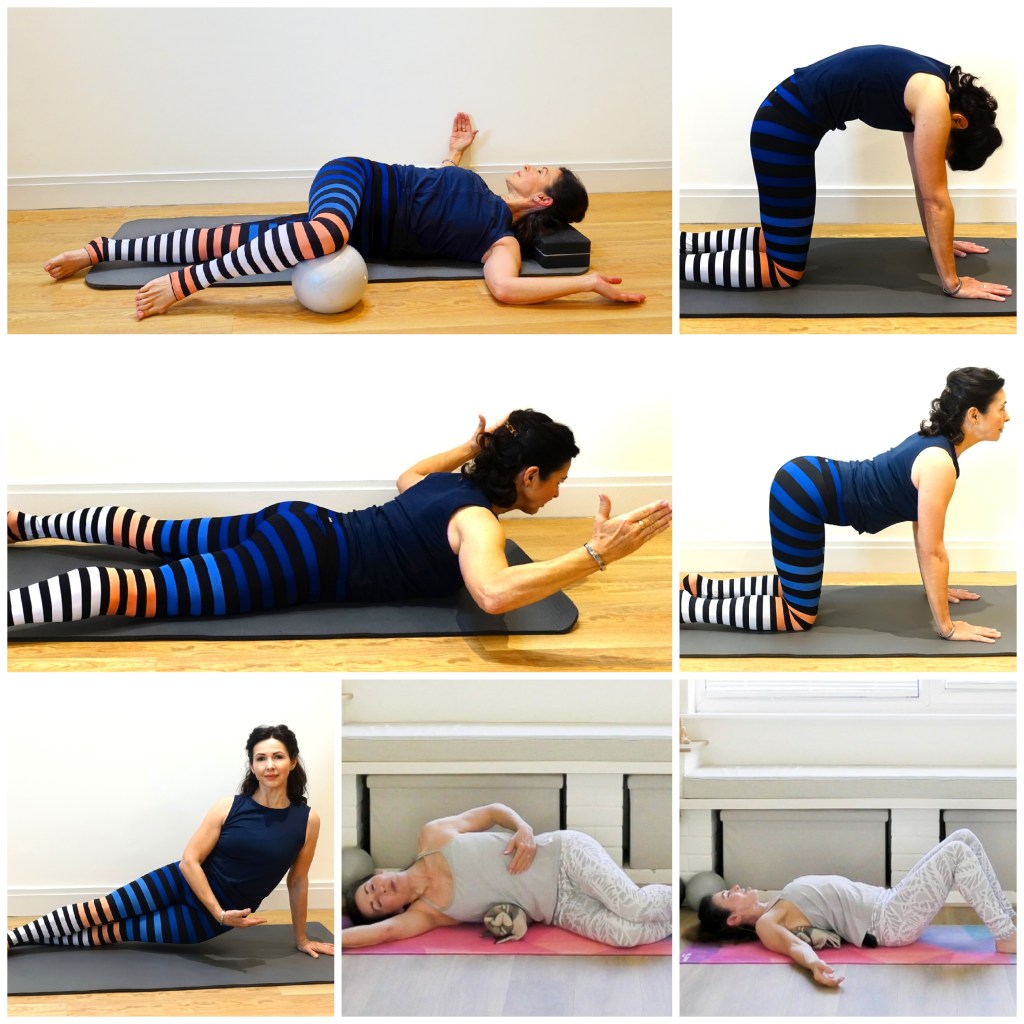
1. Cat–Cow with Breath Focus
- Inhale: expand ribs and lift sternum as you extend the spine
- Exhale: soften ribs and round gently
- Improves mobility of the spine and ribcage, rib–spine coordination.
2. Side Lying Spine Twist
- Encourages thoracic rotation and therefore, mobility
- Opens the chests and front of shoulders
- Reduces upper/mid‑back stiffness
3. Spine Extension
- Strength work for the mid back
- With arms in a U shape and attention to positioning, this version offers great benefits to upper body posture.
4. Lateral Flexion
- Opens up the side ribs, so be aware of the possible difference each side
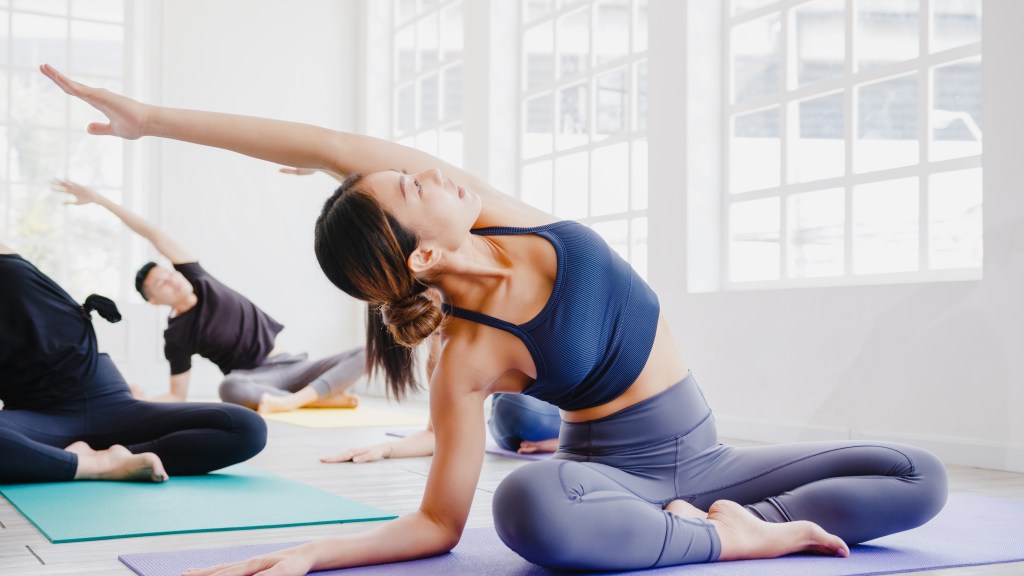
- Lots of variations, from the more accessible in the main image, or the Pilates Side Bend. When able, the full version offers a full range of motion, making it very effective. The added benefit of strength work
5. Rib/Thoracic Spine Breath work
- Placing a rolled towel under the ribs on one side of the body allows you to focus entirely on those side ribs.
- Placing the roll in the mid back area (adjust as necessary) and laying supine over it opens the chest, front ribs and shoulders
- You can rest in Savasana or Childs Pose (the latter has the added benefit of the focus moving to the back ribs.
- Counteracts kyphosis and rounded shoulders
These exercises help restore mobility, balance, and breath–core synergy.
A Simple Breath Awareness Exercise
Place your hands on your lower ribs. Inhale softly and fully into the sides, allowing the torso to move as it wants to. Exhale without collapsing. Notice how the spine responds. There should be a natural extension/gentle flexion of the spine on the inhalation/exhalation. As you improve your thoracic and ribcage mobility, you will begin to notice the natural rhythm. You will also become far more aware of the natural relaxation/contraction of the core muscles.
If you want to learn how to interpret ribcage patterns, breathing behaviours, thoracic compensations and other postural topics, my Postural Assessment & Correction Course includes assessment tools and workshops that help you understand what the posture is really telling you.
 BODY SOUL WELL