Tag: core

  • Understanding Snapping Hip Syndrome: Why Alignment, Core Stability & Smart Range Matter

    Snapping Hip Syndrome (SHS) is one of those curious movement phenomena that clients often describe as “a click,” “a pop,” or “a flick” at the front, side, or back of the hip. Sometimes it’s painless; sometimes it’s sharp and uncomfortable. For Pilates teachers and movement practitioners, understanding the underlying causes is essential—not only for supporting clients safely, but also for refining our own movement practice.

    In this post, we’ll explore the key contributors to SHS—muscle and tendon tightness, anatomical variations, overuse and fatigue, and intra‑articular causes—and why maintaining neutral alignment, activating the core, and reducing range of motion can make such a profound difference.

    What Is Snapping Hip Syndrome?

    Snapping Hip Syndrome occurs when a structure around the hip—usually a tendon—moves over a bony prominence, creating an audible or palpable “snap.” It can happen:

    • Externally (most common): the IT band or gluteus maximus tendon flicks over the greater trochanter.
    • Internally: the iliopsoas tendon snaps over the femoral head or iliopectineal eminence.
    • Intra‑articularly: the “snap” originates from within the joint, often due to a labral tear or loose body.

    For Pilates teachers, the snapping often appears during leg circles, hip flexion work, side‑lying series, or any movement that challenges hip stability.

    1. Muscle & Tendon Tightness: When Tension Creates Noise

    Tightness in the hip flexors, TFL/IT band, or deep rotators can increase friction around the hip. When a tendon is already taut, it’s more likely to “flick” over bone during movement.

    Common contributors include:

    • Prolonged sitting (shortened hip flexors)
    • Over‑reliance on gripping strategies
    • Weak glutes leading to compensatory TFL dominance
    • Limited thoracic mobility affecting pelvic mechanics

    Pilates takeaway: Lengthening strategies alone aren’t enough. We need to pair mobility with stability—especially around the pelvis and deep core—to reduce the tension‑plus‑instability combination that often triggers snapping.

    Anatomical Variations: When Structure Shapes Function

    Some people are simply more predisposed to SHS due to their natural anatomy. Variations in:

    • Femoral neck angle
    • Acetabular depth
    • Trochanteric width
    • Tendon pathing

    …can all influence whether a tendon is more likely to catch.

    This is why two clients can perform the same movement with identical technique, yet only one experiences snapping.

    Pilates takeaway: Alignment needs to supports our body and movement. Our job is to help clients find their most functional position, not force them into shapes that don’t suit their structure.

    3. Overuse & Fatigue: When the System Can’t Support the Load

    Repetitive hip flexion (running, cycling, dance, high‑volume Pilates) can fatigue stabilising muscles. When the deep stabilisers switch off, the larger global muscles take over—and they’re not designed for fine control.

    This leads to:

    • Loss of pelvic stability
    • Increased tendon friction
    • Reduced neuromuscular control
    • Compensatory gripping patterns

    Pilates takeaway: Less is often more. Reducing range, slowing tempo, and reinforcing core‑to‑limb sequencing helps restore control and reduce snapping.

    4. Intra‑Articular Causes: When the Issue Is Inside the Joint

    Although less common, snapping can originate from within the hip joint itself. Causes may include:

    • Labral tears
    • Cartilage irregularities
    • Loose bodies

    These often present with deeper pain, catching, or giving way.

    Pilates takeaway: If snapping is painful, unpredictable, or accompanied by joint instability, refer to a medical professional or appropriate therapist. Pilates can support, but it shouldn’t replace medical assessment.

    Why Neutral Alignment Matters

    Neutral pelvis and spine create the most efficient environment for the hip to move without unnecessary friction. When the pelvis tips forward or backward, the path of the tendons changes—and snapping becomes more likely.

    Neutral alignment helps:

    • Balance the hip flexors and extensors
    • Reduce anterior hip compression
    • Improve load transfer through the pelvis
    • Support optimal tendon tracking

    Core Activation: The Stability That Protects the Hip

    When the deep core (TA, pelvic floor, multifidus, diaphragm) is active, the pelvis becomes a stable base for the femur to move from. Without this stability, the hip flexors often overwork to create control, increasing the likelihood of snapping.

    Core activation helps:

    • Reduce excessive hip flexor recruitment
    • Improve femoral glide
    • Support smoother tendon movement
    • Enhance proprioception and control

    Think of it as giving the hip a “quiet environment” to move in.

    Reducing Range of Motion: A Smart, Not Weak, Strategy

    Many clients push into end‑range hip movements long before they have the stability to support them. This is where snapping often appears.

    By reducing range, we allow:

    • Better control
    • More accurate muscle recruitment
    • Less tendon displacement
    • Improved movement quality

    Small, precise ranges build the neuromuscular foundation that eventually allows for larger, smoother, pain‑free movement.

    Practical Teaching Tips for Pilates Teachers

    Here are simple cues and strategies you can use immediately:

    ✔️ 1. Start with alignment

    “Find your neutral—front and back of the pelvis equally weighted.”

    ✔️ 2. Layer in core activation

    “Imagine zipping up from the pelvic floor to the ribs.”

    ✔️ 3. Reduce range

    “Work in the range where the movement feels smooth and quiet.”

    ✔️ 4. Add a Prop

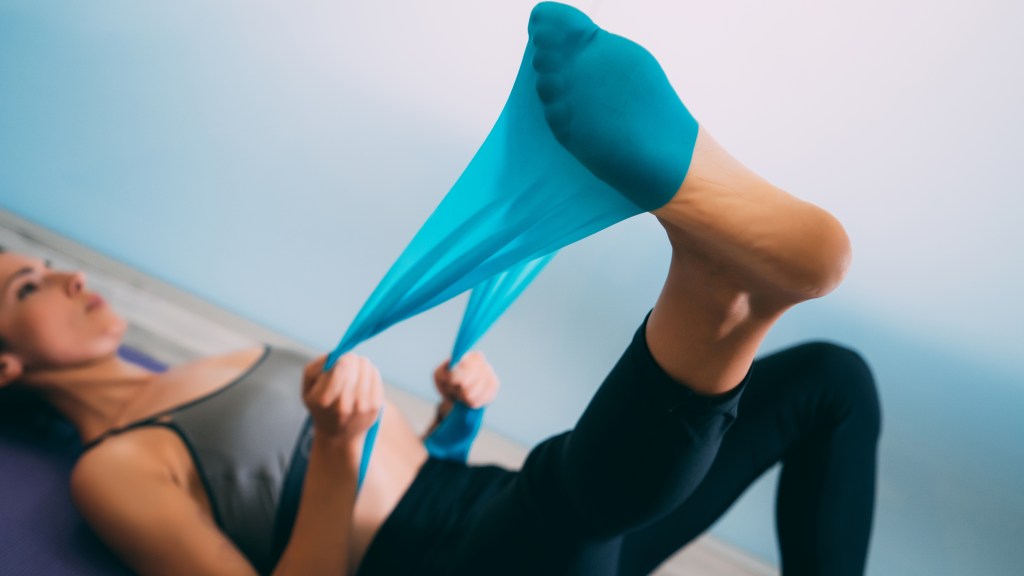
    A resistance band will support the weight of the leg to help the core.

    ✔️ 5. Slow the tempo, let it flow

    “Let the hip glide, not snap.”

    ✔️ 6. Strengthen the glutes

    Especially glute med and deep rotators.

    ✔️ 7. Balance mobility with stability

    Lengthen what’s tight, strengthen what’s underworking.

    Final Thoughts

    Snapping Hip Syndrome is rarely something to fear—but it is something to understand. With thoughtful cueing, intelligent range management, and a focus on neutral alignment and core stability, we can help clients move with more ease, less noise, and far greater confidence.

  • Core Engagement and Stability in Pilates: Building a Strong Foundation

    Why Core Engagement Matters in Pilates

    Part 4  of the Pilates Essentials Series

    The core is the powerhouse of Pilates. In Pilates, core engagement isn’t just about having toned abs — it’s about creating stability, improving posture, and enabling efficient movement. When your core is active, every exercise becomes safer and more effective.

    “A strong centre supports everything else.”

    Benefits of a Strong Core

    • Improved Posture: A stable core supports spinal alignment and reduces strain on joints.
    • Enhanced Balance: Core strength helps maintain equilibrium during dynamic movements.
    • Injury Prevention: Proper engagement protects the lower back and hips.
    • Functional Strength: A strong core translates to better performance in everyday activities.

    Understanding the Core in Pilates

    When we talk about the “core” in Pilates, we mean more than just the rectus abdominis (the six-pack muscles). The Pilates core includes:

    • Transversus Abdominis (TA): The deepest abdominal layer, acting like a corset.
    • Multifidus: Small stabilising muscles along the spine.
    • Pelvic Floor: Supports the organs and works with the TA for stability.
    • Diaphragm: Integral for breath and core activation.
    • Obliques: Assist with rotation and lateral flexion.

    This interconnected system creates a strong, supportive centre for movement.

    How to Cue Core Engagement Effectively

    Teaching core activation is an art. Here are practical cues to help clients find and maintain engagement:

    1. Start with Breath

    Breathwork is the gateway to core activation. Use lateral breathing:

    • Inhale: Expand the ribcage sideways and into the back.
    • Exhale: Draw the navel gently towards the spine, activating the TA without gripping.

    Cue: “Imagine tightening a corset as you exhale.”

    2. Visualisation Techniques

    • “Think of zipping up a pair of jeans.”
    • “Draw your hip bones together without moving them.”

    3. Avoid Common Mistakes

    • Over-bracing: A common mistake is gripping too hard, creating tension.
    • Holding Breath: Keep breathing while engaging.
    • Pelvic Tilt Overload: Engagement should be subtle, not forced.

    Exercises to Build Core Stability

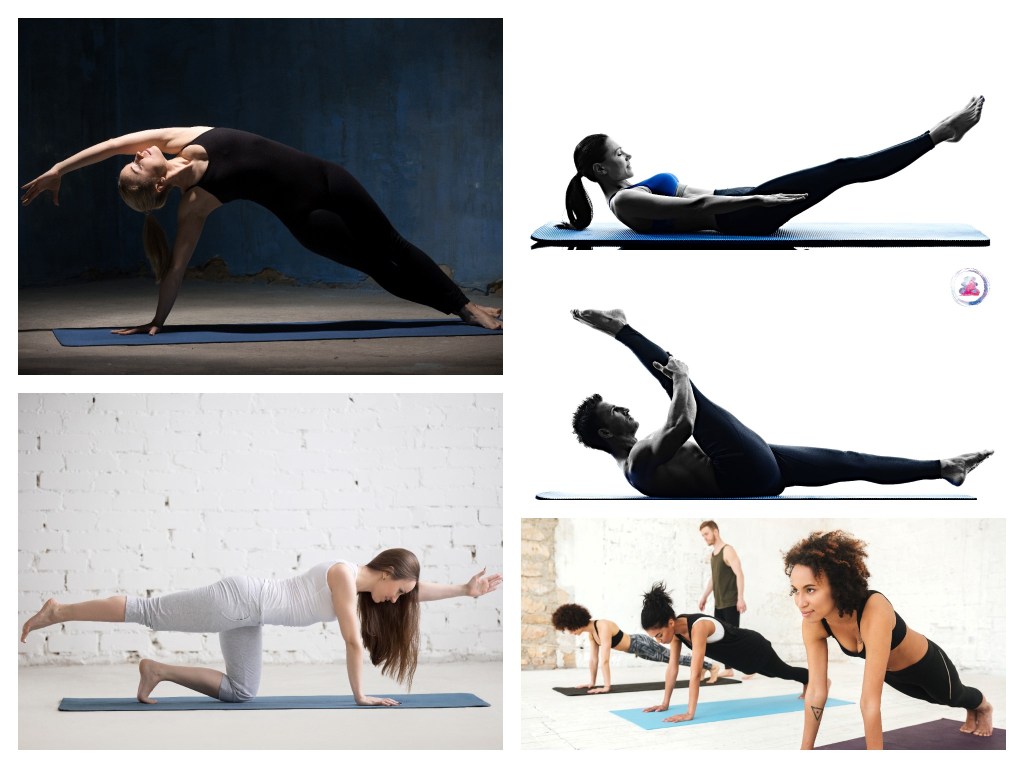
    Here are five Pilates staples for core strength and stability:

    1. The Hundred

    • Purpose: Warm-up and activate deep core muscles.
    • Key Cue: Maintain neutral spine while pumping arms.
    • Modification: Bend knees if needed.

    2. Single Leg Stretch

    • Purpose: Strengthens TA and obliques.
    • Key Cue: Keep pelvis stable as legs move.

    3. Plank/Leg Pull Down (modified)

    • Purpose: Full-body integration with core focus.
    • Key Cue: Avoid sagging hips; draw navel to spine.

    4. Bird Dog

    • Purpose: Stability during limb movement whilst working multifidus.
    • Key Cue: Keep ribs connected and spine neutral.

    5. Side Plank

    • Purpose: Targets obliques and lateral stability.
    • Key Cue: Lift from the core, lift out out the shoulder.

    Take the Time to Connect

    Whether you are teaching or practising Pilates, take the time to

    • Prepare the nervous system: breathe deeply, release tension from body & mind.
    • Find neutral position: the core muscles fire up most effectively in ideal alignment.
    • Feel the natural core activation with the exhale: this makes it easier to hold voluntarily as the mind has connected with the sensation.
    • Lateral/thoracic breathing: hold the contraction and feel the breath move into the ribcage, wide rather than deep.
    • Neuromuscular activation: warm up the core muscles and allow them to prepare for the work to come.

    Integrating Core Engagement into Every Pilates Session

    Core activation isn’t a standalone concept — it should underpin every exercise. Encourage clients (or yourself!) to:

    • Check-in before movement: Activate TA and pelvic floor. Breathe
    • Maintain engagement during transitions: Stability matters between exercises and before you start each exercise.
    • Release when appropriate: Avoid constant gripping; teach dynamic control. Consider at least a minute at the end of class in Savasana.

    Want to deepen your understanding of Pilates fundamentals? Stay tuned for Part 5: Alignment and Posture: Key Principles for Safe and Effective Movement next week!

    Pilates Teacher Training

  • The Importance of a Warm-Up in Pilates

    Yes, even in Pilates classes

    Discover why warming up before Pilates is essential for injury prevention, better performance, and a mindful practice.

    Why Warming Up Is Non-Negotiable

    As a Pilates educator, I’m often surprised at the lack of an appropriate warm-up in assessments and classes. On my Pilates Teacher Training Course, I emphasise warm-ups with examples, and every class I teach begins with one. Yet many students report attending sessions where teachers skip this vital step.

    A warm-up is not optional. It’s a fundamental element of all fitness classes, regardless of level or intensity. Beyond injury prevention, it prepares the body and mind for effective movement, enhances performance, and supports long-term wellbeing.

    The Science Behind Warming Up

    Blood Flow and Muscle Elasticity

    Warm muscles are more pliable and elastic. A cold start increases the risk of strain, particularly in the lower back and hamstrings, which are vulnerable areas for many clients.

    Joint Lubrication

    Warm-ups stimulate synovial fluid production, lubricating the joints and allowing smoother, safer movement. This is especially important in Pilates, where joint mobility underpins every exercise.

    Nervous System Activation

    Gentle preparatory movements awaken the nervous system, improving coordination, balance, and mind-body connection. This primes students for the precision and control that Pilates demands.

    Breath and Core Engagement

    Pilates is unique in its emphasis on breath and core activation. A warm-up ensures the deep stabilising muscles are switched on, supporting the spine and protecting against injury.

    The Safest Approach to a Pilates Warm-Up

    A Pilates warm-up should generally include:

    • Breathing exercises to activate the core and establish rhythm.
    • Shoulder mobility to release neck tension and prepare for arm work.
    • Gentle pelvic tilts to articulate the lumbar spine, engage abdominals, and find neutral alignment.
    • Spinal movements in all directions — flexion, extension, rotation, and lateral flexion — to mobilise safely.

    Think of the warm-up as a miniature version of the class: simplified movements, limited range of motion, and positions that avoid stress on the spine.

    Practical Warm-Up Exercises for Pilates

    • Arm sweeps with breath: Inhale as arms lift overhead (standing or supine), exhale as they lower.
    • Cat/Cow variations: Mobilise the spine in box, supine, or standing with support.
    • Windshield Wipers: Gentle spinal rotation and hip mobility.
    • Side bends: Standing with hand support on hip or thigh.
    • Coordination drills: Soldier or Windmill arms; add knee lifts for balance and control.

    These simple movements build awareness, circulation, and mobility before progressing into more demanding exercises.

    The Complete Mat Sequence and Warm-Up Integration

    Even when teaching the original Pilates sequence, I often add brief warm-up exercises depending on class experience. Advanced groups may move straight into the Hundred, but it must always be performed at a level that allows freedom of breath.

    When taught together with the other four classical warm-up exercises, you cover virtually every movement pattern needed for the rest of the class. This ensures students are prepared both physically and mentally.

    The Roll Down: A Word of Caution

    The Roll Down often appears at the start of warm-ups without preparation, which I strongly advise against. At minimum:

    • Take deep breaths.
    • Activate the core to support spinal flexion.
    • Offer bent knees and hand support.
    • Be mindful of back issues and tight hamstrings.

    While the Roll Down can help lengthen hamstrings, an over-zealous approach risks undue stress on the spine. Always prioritise safety and mindful progression.

    Common Mistakes in Pilates Warm-Ups

    • Skipping breathwork: Breath is central to Pilates; neglecting it undermines the practice.
    • Rushing through mobility: Warm-ups should be slow and controlled, not hurried.
    • Ignoring individual needs: Students with back issues, tight hamstrings, or limited mobility require tailored modifications.
    • Treating warm-up as optional: It’s not a “nice-to-have” — it’s essential.

    FAQs: Pilates Warm-Ups

    Do I need to warm up for a short Pilates session?
    Yes. Even a 20-minute class benefits from a few minutes of breathwork and mobility.

    What’s the difference between a Pilates warm-up and a gym warm-up?
    Gym warm-ups often focus on cardiovascular activity. Pilates warm-ups emphasise breath, spinal mobility, and core activation. But the main point here is that the warmup prepares the class for what’s to come, so warmups will always be different depending on the genre and content.

    Can advanced students skip the warm-up?
    No. Advanced students may move more quickly into classical exercises, but preparation is still essential.

    How long should a Pilates warm-up last?
    Typically 5–10 minutes, depending on class length and intensity.

    Key Takeaway

    A Pilates warm-up is not just preparation — it’s the foundation of safe, effective practice. By mobilising joints, activating muscles, and connecting breath with movement, you set the tone for a mindful, injury-free class.

    Think of warming up as an investment: it enhances performance, prevents injury, and deepens the Pilates experience.

    #pilates #warmup #injuryprevention #classpreparation #mindbody

  • The Mental Health Benefits of Somatic Movement: Reclaiming Calm Through Pilates and Somatic Movement

    In today’s fast-paced, hyper-connected world, mental health challenges are more prevalent than ever. Anxiety, stress, burnout and emotional fatigue have become common experiences for people across all walks of life. While traditional therapies and medications play a vital role, many are turning to holistic, movement-based practices to support their emotional well-being. One such powerful approach is somatic movement, especially when integrated with Pilates principles.

    Somatic movement is more than just exercise—it’s a way of reconnecting with your body, calming your nervous system and cultivating emotional resilience. In this blog post, we’ll explore the science and soul behind somatic movement, its mental health benefits, and how Pilates and somatic practices can help you feel more grounded, present and empowered.

    What Is Somatic Movement?

    The term somatic comes from the Greek word soma, meaning “the living body in its wholeness.” Somatic movement refers to any physical activity that emphasises internal awareness—how your body feels, moves and responds—rather than external performance or aesthetics.

    Unlike conventional workouts that focus on reps, sets or calorie burn, somatic movement invites you to slow down, tune in and move with intention. It’s about sensing, not striving. This approach is deeply therapeutic, especially for those recovering from trauma, chronic stress or disconnection from their bodies.

    Key characteristics of somatic movement include:

    • Mindful attention to breath, sensation and alignment
    • Slow, deliberate motion to release tension
    • Emphasis on internal experience over external form
    • Integration of nervous system regulation and emotional awareness

    Why Somatic Movement Supports Mental Health

    Somatic movement works on multiple levels—neurological, emotional and psychological. Here’s how it supports mental health:

    1. Regulates the Nervous System

    Chronic stress activates the sympathetic nervous system (fight-or-flight), leading to anxiety, insomnia and emotional dysregulation. Somatic movement stimulates the parasympathetic nervous system (rest-and-digest), helping the body return to a state of calm.

    Somatic-based Pilates practices, with their focus on breath, spinal alignment and core control, are especially effective at downregulating stress responses.

    2. Releases Stored Tension and Trauma

    Trauma isn’t just psychological—it’s physiological. It lives in the body as muscle tightness, restricted breath and movement avoidance. Somatic movement helps release these patterns gently, without re-triggering emotional overwhelm.

    Practices like self-myofascial release, guided meditation, and gentle Pilates flows allow the body to unwind and let go.

    3. Improves Emotional Awareness

    Somatic movement fosters interoception—the ability to sense internal bodily states. This enhances emotional literacy, helping individuals recognise and respond to feelings like sadness, anger, or joy with greater clarity.

    4. Builds Resilience and Self-Efficacy

    By reconnecting with your body and learning to move with ease, you build trust in yourself. This sense of agency is crucial for mental health, especially for those recovering from depression or anxiety.

    Pilates as a Somatic Practice

    While Pilates is often thought of as a fitness workout, associated with core strength and flexibility, its roots are deeply somatic. Joseph Pilates emphasised breath, control, concentration and flow—all key elements of mindful movement.

    Somatic-style Pilates blends classical Pilates exercises with somatic principles, creating a therapeutic experience that supports both physical and emotional healing.

    Benefits of Somatic Pilates for Mental Health:

    • Mind-body integration: Enhances awareness and presence
    • Gentle strength building: Supports posture and confidence
    • Breathwork: Calms the mind and improves focus
    • Flow and rhythm: Encourages emotional regulation
    • Creative sequencing: Keeps movement engaging and joyful

    Who Can Benefit from Somatic Movement?

    Somatic movement is accessible to everyone, regardless of age, fitness level or background. It’s especially beneficial for:

    • Individuals with chronic stress or anxiety
    • Those recovering from trauma or PTSD
    • People with depression or emotional numbness
    • Clients with chronic pain or movement restrictions
    • Anyone seeking gentle, mindful exercise

    Somatic Movement in Practice: What It Looks Like

    A typical somatic movement session might include:

    • Centering breathwork to settle the nervous system
    • Slow spinal articulation to release tension
    • Pelvic tilts and hip mobility for grounding
    • Gentle core activation to build stability
    • Self-myofascial release using props like balls or foam rollers
    • Guided meditation or body scan to integrate the experience

    In a Pilates-based somatic class, these elements are woven into short, accessible sequences that prioritise feeling over form.

    The Science Behind Somatic Movement and Mental Health

    Recent studies support the efficacy of somatic movement for emotional well-being:

    • Interoceptive awareness has been linked to improved emotional regulation and reduced anxiety.
    • Mindful movement practices, including Pilates and yoga, have shown positive effects on depression, PTSD and chronic pain.
    • Somatic therapies are increasingly used in trauma recovery, helping individuals reconnect with their bodies and process emotions safely.

    Integrating Somatic Movement Into Your Life

    You don’t need a full hour or fancy equipment to benefit from somatic movement. Even 10–20 minute sessions, like those in my Express Pilates course or an exercise or two from my Somatic Movement course, can create meaningful shifts in mood and energy.

    Tips for Getting Started:

    • Start small: Choose one or two movements and focus on sensation.
    • Use breath as your anchor: Inhale to expand, exhale to release.
    • Stay curious: Notice how your body responds without judgment.
    • Create a calming space: Dim lights, soft music and a mat are enough.
    • Practice regularly: Consistency builds resilience and awareness.

    Final Thoughts: Movement as Medicine

    Somatic movement reminds us that healing doesn’t always come from doing more—it often comes from doing less, with more intention. In a world that values hustle and performance, Pilates-based somatic practices offer a sanctuary of slowness, presence and self-compassion.

    Whether you’re a wellness professional, a busy parent or someone navigating emotional challenges, somatic movement can help you reconnect with your body, regulate your emotions, and reclaim your calm.

    “Change happens through movement and movement heals.” Joseph Pilates

    If you want to try these amazing movement therapies for yourself, checkout Services or Sale

  • Diaphragmatic Breathing: the Cornerstone of Every Pilates Class

    Nothing else will make sense unless you start here

    One of the assignments for the assessed Certification is to teach the Fundamentals, the foundations of Pilates: neutral position, core activation and thoracic breathing.  So many students start with thoracic breathing, but clients will struggle to understand this if they aren’t breathing deeply (or normally?) first.  They will struggle to understand what the core muscles are and where they are.  They will struggle to engage them effectively.

    I say “normally” because this is the way we should all be breathing as we go about our daily business, so let’s start with a definition and method:

    What is Diaphragmatic Breathing?

    Diaphragmatic breathing, also known as abdominal or deep breathing, is a technique that involves the diaphragm pressing down onto the abdominal organs as it flattens out when it contracts.  It is the primary muscle responsible for the mechanics of breathing, located at the base of the lungs which divides the chest cavity from the abdominal cavity.  Diaphragmatic breathing encourages fuller oxygen exchange by expanding the thoracic cavity on inhalation, creating a vacuum that pulls air into the lungs.  As the diaphragm relaxes and returns to its dome shape, aided by the natural  contraction of the core muscles, air is pushed from the lungs.  

    Immediately, you can see how the core muscles respond naturally when we breathe efficiently, without us having to think about making it happen.  We are left in no doubt where they are or how to activate them on the exhalation.  It’s a small step to holding the core engagement whilst inhaling as well as exhaling and clients will observe that now, rather than the abdomen expanding to make space for the diaphragm, the ribs expand: thoracic breathing!

    How to Practise Diaphragmatic Breathing

    1. Find a comfortable position, either sitting or lying down.
    2. Place one hand on your chest and the other on your abdomen.
    3. Breathe in slowly through your nose, allowing your abdomen to rise as the diaphragm contracts and draws air into your lungs. Your chest should remain relatively still.
    4. Exhale slowly through your mouth, feeling your abdomen fall as you expel the air.
    5. Repeat this process for several breaths, focusing on the movement of your abdomen and contraction of the core on the exhale.
    6. Notice also the natural movement of the spine – albeit subtle – from extension as you inhale to flexion as you exhale, essential for efficient breathing.

    Benefits of Diaphragmatic Breathing

    • Reduces stress and anxiety: Deep, focused breathing activates the body’s relaxation response, lowering stress hormones and promoting a sense of calm.  The first principle of Pilates is “Relaxation”.
    • Improves oxygen exchange: By fully engaging the diaphragm, more oxygen reaches the bloodstream, which enhances overall health and energy levels.
    • Lowers heart rate and blood pressure: Regular diaphragmatic breathing can help reduce heart rate and blood pressure, supporting cardiovascular health.
    • Enhances concentration and focus: The mindful aspect of the technique can improve mental clarity and alertness.
    • Supports respiratory function: It can increase lung efficiency and is often used in pulmonary rehabilitation and by those with breathing difficulties.
    • Relieves muscle tension: Engaging the diaphragm and promoting relaxation can help ease muscle tightness, especially in the shoulders and neck.
    • Improves posture: Practising diaphragmatic breathing encourages better posture by activating core muscles and reducing reliance on chest and shoulder muscles for breathing.

    Starting each class with diaphragmatic breathing will lead to a better understanding of Pilates Fundamentals and a greater ease and efficiency of use.  It can help focus the mind at the beginning of every class and lead to significant improvements in both physical and mental well-being.   A great way to finish a class, too.

  • Teaching Tips:

    How you and your Client can get the Most out of every class

    For the first 15 years of my career in the fitness industry, I taught high energy, highly choreographed classes to music – aerobics and Step mainly.  I did it all – every step, hop and jump – all 25 classes some weeks!  I was fit and loved every minute of it.  If I stopped, they stopped, so we did it all together.

    The first thing I noticed on day one of my first Pilates teacher training course back in 2000 was that the teacher didn’t do any of the exercises!  Each training day began with a Pilates class and she didn’t do one exercise.  Yet she managed to get us all safely through a number of very enjoyable sessions. 

    The most common scenario, however, in many leisure centres and clubs is the teacher lying down at the front of the class, doing the exercises with the clients who are constantly stopping, lifting their heads or even sitting up to see what’s going on.  Not ideal in a mind/body somatic type class that is essentially about posture, concentration, co-ordination, flow, precision, etc.

    It’s a subject that comes up often and something I see all the time in my student assessments for Certification.  It’s something I used to do myself which left me with a deep sense of loss of control and frustration.  I’ve been lucky enough to work with some incredible instructors from around the world in some exclusive studios with discerning clients and I’ve learned a lot.  I wanted to share a few insights that have helped me through my many years of teaching and kept me here for 40 years.

    1. What is your role as a teacher?  To help your clients learn, understand and practice Pilates safely and effectively.  We were always told: “If you want a workout, go to a class.”  Through a combination of demonstration (keep it brief – just one thing to get them started), verbal/physical cues and adjustments, together with relevant information whilst observing the class, you will spend most of your time on your feet (except for beginner classes).
    2. Understand what you are teaching: there is a massive difference between fitness classes that are heavily choreographed, high energy with loud music.  The cues are less on technique and more on direction.  You need to be doing otherwise it soon deteriorates into total chaos!  But they can see you all the time unlike in a Pilates class. 
    3. Pilates is a mind/body form of exercise: you want them feeling it and “going inside” rather than trying to rely on seeing what you are doing.  They can’t see you easily anyway for most of the exercises as they are supine or prone.  You can’t see them if you’re lying down.  If you need to demonstrate something new, try to plan it to follow a seated or side-lying exercise and put yourself in front of them.  Or demo at some point during the warmup when they are busy doing something simple.  Keep it brief.
    4. Separate the beginners from the rest:  sometimes easier said than done if you are working for a leisure centre of similar, but the classes will be more satisfactory for all concerned.
    5. Arrive early:  if you have no control over who comes to which class, you can at least avoid surprises!  Briefly welcome the regulars and position the beginners for easy access.  Maybe at least give them a quick tour of neutral and thoracic breathing before class.  Always teach these fundamentals in every class.
    6. Kiss:  Keep It Super Simple – in mixed classes, start with a modification that everyone is likely to understand and move the more advanced on once everyone is moving.  Don’t try to cram too much into the class either – technique over reps and content.
    7. Sharpen up your verbal cues, vocabulary and use visuals:  they are more likely to do the exercise correctly if the language is clear and descriptive.
    8. Try not to count all the way through:  maybe just “last 2” or similar so that they can gauge whether to rest or see it through.  There are so many interesting things to say – muscles, benefits, principles, technique, etc.  Once you start to really see what’s in front of you, you will know when they’ve done enough!
    9. Avoid over-correcting:  It can be demoralising for “the one” who seems to always struggle with the same thing.  When you do correct, do it in a positive way.  Say what they are doing well and use positive reinforcement.  It’s very motivating to be told that you’re doing a great job.  Also, in larger groups, priortise safety, correcting those who are in danger of hurting themselves.  Obviously in a large group you won’t get to everyone but if you don’t get to someone, try to do so the following session.  Stay on at the end and help “the one” understand the exercise – we all learn in different ways and sometimes, we just don’t hear or feel it for a while.
    10. Plan: there’s nothing like being prepared.

    Conclusion

    Unless you are teaching Pilates as a side hustle, you need to teach a lot of classes a week to make a living.  It just wouldn’t be sustainable (or healthy) to do the whole class (or even half of it) every time.  Standing in front of a group of people can be daunting, especially in the early days of teaching; both you and your clients may feel self-conscious at first – you, because of all eyes on you and eye contact; they, due to the personal attention they are getting – but you will all get used to it and come to enjoy it.  They will learn to really value and appreciate your attention to detail and to them and you will find that engaging fully with your clients makes the whole experience so much more rewarding.  The more you practice, the more familiar it will become, and your confidence will grow, as will your reputation as an expert instructor.

    #pilates #pilatesteacher #pilatesteachertraining

  • Teaching Pilates – Effective Cues

    teacher explaining people fitness exercises to balance the body

    I had a great question from one of my students recently (thank you if you are reading this), wanting to know what the most useful cues are when teaching Pilates.  Constantly reminding clients to breathe – preferably using the thoracic breathing technique – and engage the core are useful, but any cue that helps a client perform the exercise well and safely is essential.  This will vary from exercise to exercise, client to client, so there isn’t really a list of the top ten.  Yes, of course: there will be some cues that we reel off ad nauseum that aren’t really aimed at anyone in particular in the class.  They are just general reminders in case our clients’ minds have wandered to a parallel universe.

    So what makes a cue useful?  At the most fundamental level, a cue offers basic instructions: name of the exercise, body position, initial movement, direction of traffic.  For example, for the Roll Up, it could sound something like this:

    “Roll Up, seated facing me knees bent, as you exhale engage the core and tilt the pelvis.”

    In 5 seconds, they have a good idea of where this is heading.  From there, the execution cues will continue to progress the exercise, modify or help the client perform the exercise with good technique to enable them to perform safely and effectively. 

    And you can’t do that unless you can see your clients.  Back in my Jane Fonda inspired halcyon days as an aerobics instructor, if I stopped, the whole class stopped.  But we were on our feet, I was visible the whole time.  That is not the case in a Pilates class.  With the exception of those very few exercises where the clients are seated or side-facing, they can’t see you at all.  They rely on the cues you give them.  But you cannot give effective cues if you can’t see them and you can’t see them when you are lying down, doing the exercises with them.  And anyway, they can’t see you without losing alignment. 

    So if you aren’t already on your feet, observing, correcting and adjusting, the time has come.  You will never be short of an effective cue again.