Pilates Essentials Series — Part 7
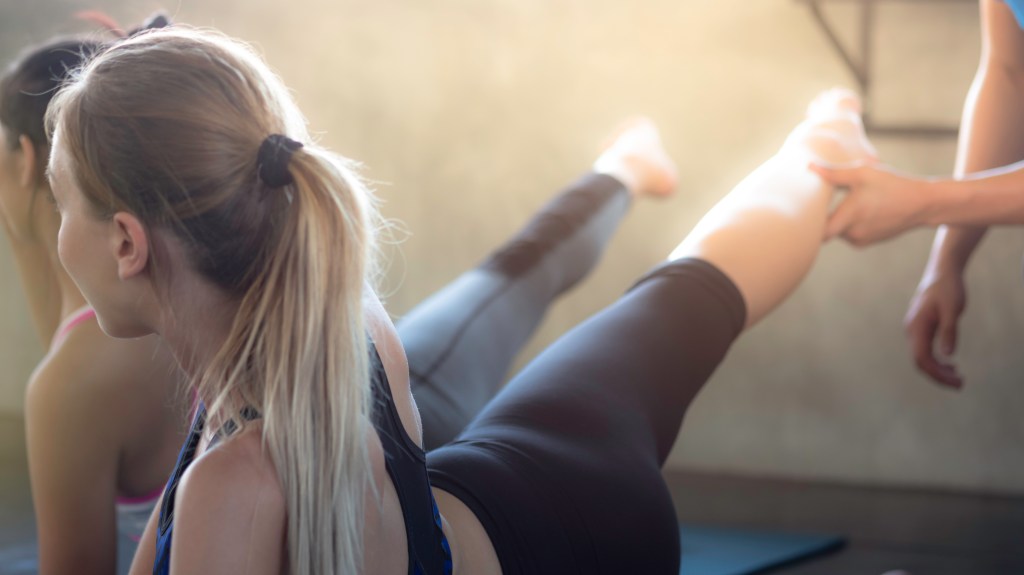
Introduction: Why Hip Mobility Is the Missing Link in Most Pilates Practices
If there is one area of the body that consistently shows up with tightness, weakness, compensation, or confusion in Pilates clients, it’s the hips. The hip joint is incredibly powerful and incredibly complex — and when it’s not moving well, the entire body feels the consequences.
For Pilates teachers, understanding hip mobility and lower‑body alignment is essential for helping clients move with ease, reduce pain, and build functional strength. The hips influence gait, posture, balance, core activation, and even breath. When the hips are stiff or misaligned, clients compensate with their lower back, knees, or feet without realising it.
In this instalment of the Pilates Essentials Series, we explore how to teach hip mobility and lower‑body alignment in a way that empowers your clients to move freely, safely, and efficiently.
1. Why Hip Mobility Matters in Pilates
The hip joint is a ball‑and‑socket joint designed for a wide range of motion. But modern life — sitting, driving, screens, stress — limits that movement dramatically.
Common hip issues you’ll see in clients:
- Tight hip flexors
- Weak glutes
- Limited hip extension
- Poor external rotation
- Overactive TFL and quads
- Knee valgus or varus
- Lower‑back compensation
Why this matters in Pilates
Hip mobility affects:
- Pelvic alignment
- Core activation
- Spinal mobility
- Balance and gait
- Lower‑body strength
- Load distribution
When the hips move well, the entire body moves better.
2. Understanding Lower‑Body Alignment: A Teacher’s Perspective
Lower‑body alignment is not just about the hips — it’s about the entire kinetic chain.
Key alignment checkpoints:
- Feet: tripod grounding, arches active
- Knees: tracking over the second toe
- Hips: level, stable, mobile
- Pelvis: neutral, not tipping, tilting or rotating
- Spine: supported by the core
The hips as the centre of lower‑body organisation
The hips influence:
- Knee tracking
- Foot mechanics
- Pelvic stability
- Glute activation
- Balance and proprioception
When the hips are aligned, the rest of the lower body follows.
3. The Three Pillars of Hip Mobility
1. Flexibility
Clients need adequate length in:
- Hip flexors
- Hamstrings
- Adductors
- External rotators
2. Strength
Mobility without strength leads to instability. Key muscles include:
- Glute max
- Glute med/min
- Deep hip rotators
- Hamstrings
- Iliopsoas
3. Control
True mobility is the ability to move through range with control. Pilates excels here.
4. How Hip Mobility Influences the Entire Body
a. The pelvis
Tight hip flexors pull the pelvis into anterior tilt. Weak glutes reduce pelvic stability. Both affect spinal alignment.
b. The spine
When the hips don’t move, the lower back compensates. This is a major cause of:
- Lower‑back pain
- Poor core activation
- Limited spinal mobility
c. The knees
Hip weakness often shows up as:
- Knee valgus (knees collapsing inward)
- Knee varus (knees bowing outward)
d. The feet
Hip rotation influences foot pronation and supination.
5. Teaching Hip Mobility: A Step‑by‑Step Method for Instructors
Step 1: Build awareness
Clients must understand how their hips move.
Use explorations such as:
- Hip circles
- Leg slides
- Standing weight shifts
- External/internal rotation
Step 2: Introduce alignment
Cue:
- “Keep your pelvis steady as your leg moves.”
- “Imagine your thigh bone rotating inside your hip socket.”
- “Let the movement come from the hip, not the back.”
Step 3: Layer in breath
Breath helps release tension and support stability.
Cue:
- “Inhale to create space; exhale to stabilise.”
Step 4: Add load gradually
Once alignment is established, challenge it with:
- Leg lifts
- Bridging variations
- Side‑lying work
- Standing balance
6. Common Hip Mobility Issues & How to Correct Them
1. Tight hip flexors
Often caused by:
- Sitting
- Stress
- Weak glutes
Corrections:
- Stretch hip flexors
- Strengthen glutes
- Cue neutral pelvis
2. Weak glutes
Often caused by:
- Sedentary lifestyle
- Overactive hip flexors
- Poor movement patterns
Corrections:
- Bridge variations
- Side‑lying leg work
- Standing hip abduction
3. Limited external rotation
Often caused by:
- Tight deep rotators
- Weak glutes
- Poor hip mechanics
Corrections:
- Clams
- Figure‑four stretch
- Hip rotation drills
4. Knee valgus
Often caused by:
- Weak glute med
- Poor foot mechanics
- Hip instability
Corrections:
- Cue knee tracking
- Strengthen lateral hips
- Improve foot grounding
7. Cueing Strategies That Create Real Change
Use imagery
- “Imagine your thigh bone spiralling in the socket.”
- “Think of your hips as headlights — keep them shining forward.”
Use tactile cues
With consent:
- Hands on the pelvis
- Guiding hip rotation
Use functional cues
- “Can you move your leg without your pelvis shifting?”
- “Can you keep your knee tracking over your toes?”
Use layered cueing
Start broad → refine → integrate.
8. Exercises That Teach Hip Mobility Naturally
1. Supine leg circles
Teach hip dissociation.
2. Bridge variations
Strengthen glutes and improve hip extension.
3. Side‑lying leg series
Build lateral hip strength.
4. Clams and hip rotation drills
Improve external rotation.
5. Standing balance work
Integrate hip stability into functional movement.
9. Progressions for Safe, Effective Lower‑Body Training
Start with awareness
Clients must feel the hip joint move.
Add stability
Introduce neutral pelvis and knee tracking.
Add load
Leg lifts, bridging, standing work.
Add complexity
Rotation, balance, transitions.
Add functional integration
Gait patterns, footwork, lunges.
10. Why Hip Mobility Elevates Your Teaching
When you teach hip mobility well, your clients:
- Reduce lower‑back pain
- Improve posture
- Strengthen their glutes
- Move with more confidence
- Build long‑term resilience
And your teaching becomes:
- More precise
- More effective
- More transformative
Conclusion: Building Balanced, Functional Movement Patterns
Hip mobility and lower‑body alignment are essential for safe, efficient, and powerful movement. When clients learn to move their hips with awareness and control, they unlock better posture, stronger glutes, and a more integrated Pilates practice.
As teachers, our role is to guide them toward this freedom with clarity, patience, and thoughtful cueing.
 BODY SOUL WELL