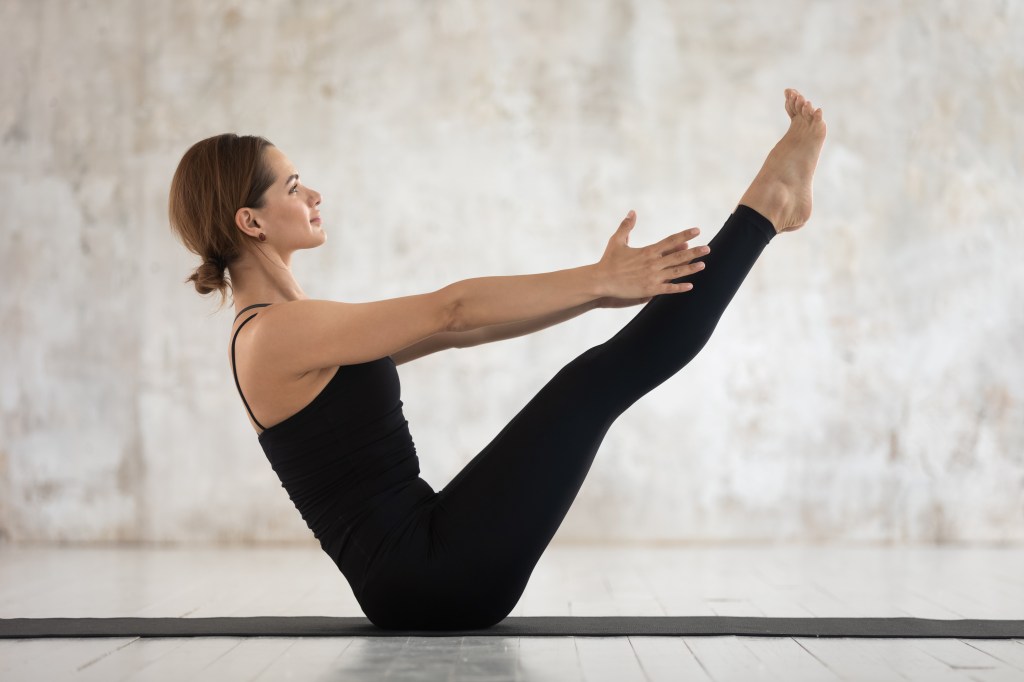
Tag: corestability

  • Pelvic Alignment & Neutral Spine: Teaching the Cornerstone of Safe Movement

    Part 5 of the Pilates Essentials Series

    Introduction: Why Pelvic Alignment Is the Quiet Powerhouse of Pilates

    If there is one concept that quietly determines the success, safety, and effectiveness of nearly every Pilates exercise, it’s pelvic alignment. For teachers, understanding how to assess, cue, and correct pelvic positioning is essential — not only for technique, but for helping clients build long‑term functional strength, good posture and body awareness.

    Pelvic alignment is the foundation of spinal organisation, core activation, hip mobility, and load distribution. When the pelvis is out of alignment, everything above and below it compensates. When it’s in neutral, the body moves with efficiency, stability and ease.

    In this instalment of the Pilates Essentials Series, we explore how to teach pelvic alignment and neutral spine with clarity, confidence and precision — so your clients can move better, feel stronger and stay injury‑free.

    1. Understanding Pelvic Alignment: The Teacher’s Perspective

    Before we can teach pelvic alignment effectively, we need to understand what we’re looking for.

    The pelvis has three primary positions:

    • Anterior tilt — ASIS forward/down, lumbar spine increases in extension
    • Posterior tilt — ASIS back/up, lumbar spine flattens
    • Neutral pelvis — ASIS and pubic bone aligned

    Why neutral matters

    Neutral pelvis:

    • Supports optimal spinal curves
    • Allows the deep core to activate reflexively
    • Reduces compensatory tension in the hips and lower back
    • Improves load transfer through the kinetic chain
    • Enhances balance and proprioception

    For teachers, neutral pelvis is a functional starting point. It’s the place where the body is most organised and ready for movement.

    2. How Pelvic Alignment Influences the Entire Body

    a. The spine

    The pelvis is the base of the spine. If the base shifts, the spine must adapt.

    • Anterior tilt → increased lumbar lordosis
    • Posterior tilt → flattened lumbar curve
    • Neutral → natural shock absorption and segmental mobility

    b. The core

    Neutral pelvis allows the transversus abdominis, pelvic floor and multifidus to work together. If the pelvis is tilted, one or more of these systems becomes inhibited.

    c. The hips

    Hip flexors, extensors, abductors and rotators all attach to the pelvis. Pelvic misalignment often shows up as:

    • Tight hip flexors
    • Weak glutes
    • Limited hip extension
    • Overactive hamstrings

    d. Movement quality

    Clients with poor pelvic alignment often:

    • Grip with their lower back
    • Overuse superficial abdominals
    • Struggle with balance
    • Lose control during transitions

    Teaching neutral pelvis early creates a foundation for everything that follows.

    3. Teaching Neutral Spine: A Step‑by‑Step Approach for Instructors

    Step 1: Establish body awareness

    Clients need to feel the pelvis move before they can control it.

    Use simple explorations:

    • Pelvic tilts (anterior/posterior)
    • Rocking side to side
    • Circling the pelvis

    These movements help clients understand the range available to them.

    Step 2: Define neutral clearly

    Use tactile, visual and verbal cues:

    • “Imagine your pelvis is a bowl of water — in neutral, the water stays level.”
    • “Your hip bones and pubic bone form a triangle — keep it flat like a tabletop.”
    • “Feel equal weight on both sit bones.”

    Step 3: Layer in breath

    Breath helps release unnecessary tension and supports deep core activation.

    Cue:

    • Inhale to expand the ribs laterally
    • Exhale to gently engage the deep abdominals without forcing a tilt

    Step 4: Add load gradually

    Once neutral is established, challenge it with:

    • Arm movements
    • Leg lifts
    • Bridging variations
    • Quadruped work

    The goal is maintaining alignment under increasing demand.

    4. Common Pelvic Alignment Issues & How to Correct Them

    1. Over‑tucking (posterior tilt dominance)

    Often seen in clients who:

    • Have tight hamstrings
    • Overuse superficial abdominals
    • Fear lumbar extension

    Corrections:

    • Encourage length through the spine
    • Cue the sit bones to widen
    • Reduce abdominal bracing
    • Strengthen hip flexors and spinal extensors gently

    2. Over‑arching (anterior tilt dominance)

    Common in:

    • Can be seen in hypermobile clients
    • Those with tight hip flexors
    • People who stand with “gymnastic/dancer’s posture”

    Corrections:

    • Cue drawing back the ribs
    • Encourage engagement of lower abdominals
    • Stretch hip flexors
    • Strengthen glutes and hamstrings

    3. Lateral pelvic shift or hike

    Often caused by:

    • Glute med weakness on one side
    • Scoliosis
    • Habitual standing patterns

    Corrections:

    • Cue equal weight on both sit bones
    • Strengthen lateral hip stabilisers
    • Use mirrors or tactile feedback

    5. Cueing Strategies That Actually Work

    Use imagery

    Pilates thrives on imagery because it bypasses overthinking.

    • “Imagine your pelvis is a compass — keep north and south aligned.”
    • “Think of your pelvis as a bowl of fruit — don’t spill it.”

    Use tactile cues

    Either client of you with consent:

    • Hands on ASIS
    • Hands on the sacrum
    • Guiding the pelvis through tilt and neutral

    Use functional cues

    • “Can you breathe without your pelvis shifting?”
    • “Can you lift your leg without your back joining in?”

    Use layered cueing

    Start simple → add detail → refine precision.

    6. Exercises That Teach Pelvic Alignment Naturally

    1. Supine pelvic tilts

    Build awareness and control.

    2. Bridge extended leg variation

    Teach hip extension without lumbar compensation.

    3. Dead bug / toe taps

    Challenge neutral under load.

    4. Quadruped arm/leg reach (Box Swim/Superman)

    Integrates core, pelvis and shoulder stability.

    5. Standing weight shifts

    Bring pelvic alignment into functional movement.

    7. How to Progress Clients Safely

    Start with awareness

    Clients must feel the pelvis move.

    Add stability

    Introduce neutral and hold it with breath.

    Add load

    Leg lifts, arm reaches, bridging.

    Add complexity

    Rotation, balance, transitions.

    Add functional integration

    Standing work, balance, gait patterns.

    8. Why Pelvic Alignment Is a Game‑Changer for Teachers

    When you teach pelvic alignment well, you help clients:

    • Reduce back pain
    • Improve posture
    • Strengthen their core
    • Move with confidence
    • Understand their bodies
    • Build long‑term resilience

    It also elevates your teaching:

    • Your cueing becomes clearer
    • Your programming becomes more intentional
    • Your clients progress faster
    • Your sessions become safer and more effective

    Pelvic alignment is not just a concept — it’s a teaching superpower.

    Conclusion: Neutral Pelvis as the Foundation for Everything That Comes Next

    Pelvic alignment and neutral spine are the cornerstones of safe, effective Pilates practice. When clients understand how to organise their pelvis, they unlock better movement patterns, deeper core activation and a more connected mind‑body experience.

    As teachers, our role is to guide them toward awareness, control and confidence — one cue, one breath and one movement at a time.
  • Pilates One Leg Circle: Unlocking Hip Health and Mobility

    Introduction: Why Hip Health Matters

    The hips are the body’s powerhouse. They connect the upper and lower body, stabilise the pelvis, and support nearly every movement we make — from walking and running to sitting and standing. Yet, modern lifestyles often leave hips tight, weak, or imbalanced. Hours of sitting, repetitive movement patterns, and lack of mobility training can contribute to stiffness, discomfort, and even chronic pain, often leading to hip replacements which run into millions worldwide each year.

    Pilates offers a solution. Among its repertoire of mat exercises, the One Leg Circle stands out as a deceptively simple yet profoundly effective movement for hip health. Often misunderstood and under-rated, this classic exercise not only strengthens and mobilizes the hip joint but also integrates core stability, balance, and neuromuscular control.

    In this blog post, we’ll explore:

    • The importance of hip mobility and stability
    • How the One Leg Circle supports hip health
    • Step‑by‑step guidance on performing the exercise
    • The deeper somatic and neuroplastic benefits
    • Practical tips for integrating it into your routine

    The Role of Hip Mobility in Whole‑Body Wellness

    Healthy hips are both mobile and stable. Mobility allows the joint to move freely through its range of motion, while stability ensures control and protection. When either is compromised, compensations occur elsewhere in the body — often in the lower back, knees, or even shoulders.

    Key Benefits of Hip Mobility:

    • Improved posture: Free hips reduce strain on the spine.
    • Enhanced athletic performance: Mobility supports efficient running, dancing, and sports.
    • Reduced injury risk: Balanced hips prevent overuse injuries in surrounding joints.
    • Better circulation and energy flow: Movement through the pelvis supports lymphatic and nervous system health.

    Pilates emphasises this balance, teaching practitioners to move with awareness and precision. The One Leg Circle embodies these principles perfectly.

    The Pilates One Leg Circle: Purpose and Principles

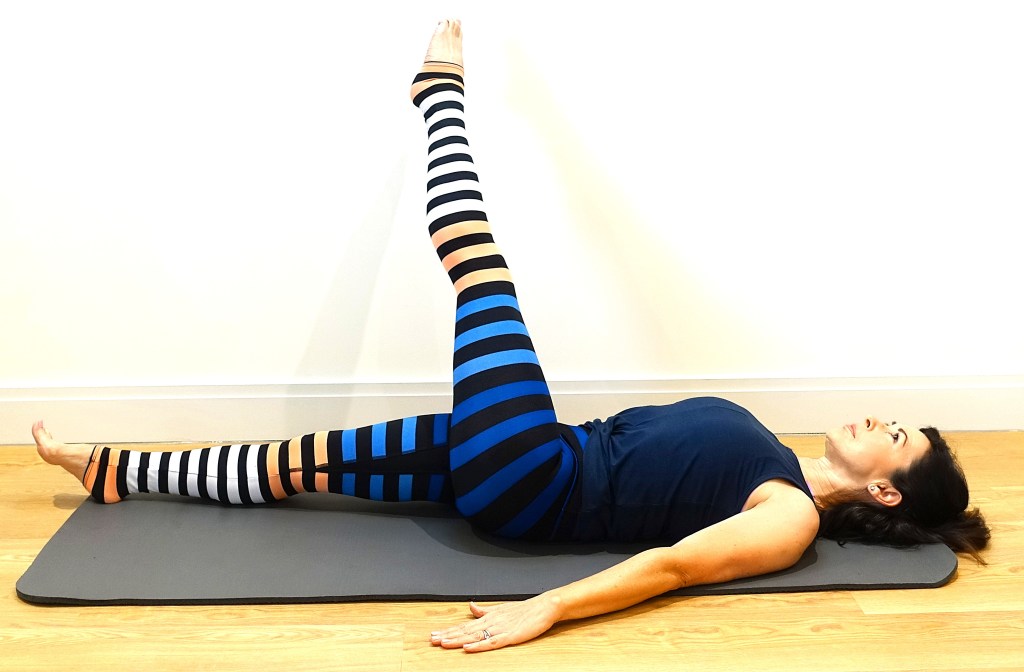
    The One Leg Circle is a foundational mat exercise (part of the classical warm up) performed lying supine, with one leg extended on the mat and the other lifted toward the ceiling. The lifted leg traces a controlled circular path, challenging the hips, abdominals, and stabilisers.

    Purpose of the Exercise:

    • Hip joint mobilisation: Encourages smooth movement in multiple planes.
    • Pelvic stability: Trains the core to anchor the pelvis while the leg moves.
    • Neuromuscular coordination: Integrates breath, awareness, and precise control.
    • Symmetry and balance: Highlights imbalances between left and right sides.
    • Thoracic Spine Mobility: the advanced version adds a spine twist

    Why It’s Effective:

    The One Leg Circle isolates hip movement while demanding stability from the rest of the body. This dual challenge — mobility plus stability — makes it a cornerstone for both rehabilitation and performance training.

    Step‑by‑Step Guide to the One Leg Circle

    1. Starting Position:
      • Lie on your back with arms by your sides.
      • Extend one leg along the mat, toes pointing forward.
      • Lift the opposite leg toward the ceiling, keeping it straight if hamstrings allow.
    2. Engage the Core:
      • Draw the abdominals back, engaging the core muscles to stabilise the pelvis.
    3. Circle the Leg:
      • Inhale to prepare.
      • Exhale as the lifted leg crosses the midline, sweeps down; as it circles back to the starting position, inhale in preparation.
      • Keep the movement smooth and controlled, tracing a small to medium circle, increasing range as stability is mastered.
    4. Repeat:
    • Perform 3 to 5 circles in each direction.
    • Switch legs and repeat.

    Technique Tips:

    • Keep the pelvis stable — avoid rocking side to side. Use your arms if necessary when you’re learning.
    • Start with smaller circles, gradually increasing range as control improves.
    • Focus on breath: inhale to prepare, exhale through the circle.
    • Imagine drawing the circle from the hip joint, not the foot.

    Benefits of the One Leg Circle for Hip Health

    1. Mobility and Range of Motion

    The circular pathway moves the hip through flexion, extension, abduction, and adduction. This multidirectional movement nourishes the joint, lubricates connective tissue, and maintains functional range.

    2. Strength and Stability

    While the moving leg mobilises, the supporting leg and core stabilise. This dual action strengthens deep stabilizers, including the transverse abdominis and pelvic floor, creating resilience against injury.

    3. Balance and Symmetry

    By isolating each leg, the exercise reveals asymmetries. Practitioners often notice one hip feels freer or stronger. Addressing these differences builds balanced strength and mobility.

    4. Neuromuscular Re‑education

    The One Leg Circle requires mindful control. This conscious movement enhances neuromuscular pathways, supporting neuroplasticity — the brain’s ability to adapt and rewire. Over time, this improves coordination and movement efficiency.

    5. Somatic Awareness

    Pilates emphasises internal awareness. As you circle the leg, you notice subtle shifts in the pelvis, breath, and tension. This somatic focus helps release unnecessary holding patterns, fostering relaxation and ease.

    Hip Health Beyond the Mat

    The benefits of the One Leg Circle extend into daily life:

    • Walking and running: Freer hips improve stride length and efficiency.
    • Sitting and standing: Strong stabilisers reduce lower back strain.
    • Sports and dance: Enhanced mobility supports dynamic movement.
    • Aging gracefully: Maintaining hip mobility reduces fall risk and supports independence.

    For postpartum recovery, back care, or athletic conditioning, this exercise adapts beautifully. It can be modified with bent knees, smaller circles, or props like a resistance band. It can also be progressed by adding the spine twist.

    Common Mistakes and How to Avoid Them

    • Pelvis rocking: Anchor the core to prevent compensations.
    • Overly large circles: Start small – bigger isn’t better if control is lost.
    • Locked knee: Keep the leg straight if hamstrings allow but not rigid.
    • Holding breath: Use breath to guide rhythm and release tension.

    Correcting these mistakes ensures the exercise delivers maximum benefit without strain.

    Integrating the One Leg Circle into Your Practice

    • Warm‑up: Use it early in a session to mobilize hips – it’s number 4 in the classical sequence.
    • Rehabilitation: Ideal for gentle re‑education after injury.
    • Progression: Pair with exercises like the Shoulder Bridge or Side Kick for comprehensive hip training.
    • Mindfulness: Treat it as a meditation in motion, focusing on sensation and control.

    Conclusion: Circling Towards Health

    The Pilates One Leg Circle is more than a leg or core exercise — it’s a gateway to hip health, mobility, and whole‑body integration. By combining mobility with stability, awareness with control, it embodies the essence of Pilates: mindful movement that transforms both body and mind.

    Whether you’re a beginner seeking freedom from stiffness, an athlete aiming for performance, or a wellness enthusiast exploring somatic practices, this exercise offers profound benefits. Add it to your routine, and let your hips move with strength, grace, and ease.

    #Pilates #hipmobility #corestability #corestrength #painrelief #hiphealth #somatichealing