Part 3 of the Pilates Essentials Series
Learn why spinal mobility is essential in Pilates. Discover safe techniques, teaching tips, and warm-up exercises to improve movement quality and reduce back pain.
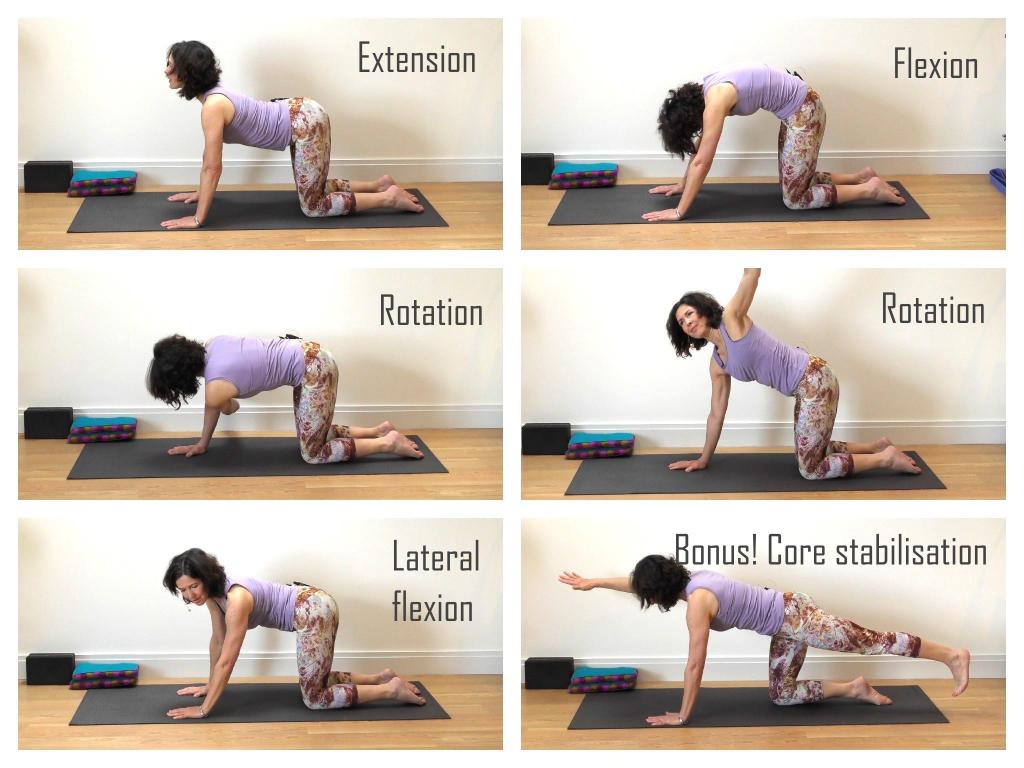
Spinal mobility is one of the most important — and most misunderstood — components of Pilates. Whether you’re teaching beginners, seniors, or advanced movers, the spine is the central axis of every exercise. When it moves well, the whole body moves well. When it doesn’t, everything else compensates.
In my assessments for my teacher training courses, I often see two extremes:
- Teachers who avoid spinal movement altogether out of fear of “doing it wrong or causing injury”, favouring instead core strength and stability. Pilates is about so much more than just the core.
- Teachers who dive straight into deep flexion or extension without preparing the body – rolling down from standing at the very beginning of class, for example.
Both approaches miss the essence of Pilates: mindful, progressive, functional movement that supports the spine rather than stresses it.
This post will help you understand spinal mobility more deeply and teach it with clarity, confidence, and safety.
Why Spinal Mobility Matters
1. A Mobile Spine Is a Healthy Spine
The spine is designed to move in multiple directions — flexion, extension, rotation, and lateral flexion. When we stop moving it, stiffness sets in, posture declines, and compensations appear in the hips, shoulders, and neck.
Pilates restores natural movement patterns, helping clients feel lighter, freer, and more aligned.
2. Spinal Mobility Reduces Back Pain
Many people experience back pain not because their spine moves too much, but because it doesn’t move enough. Gentle, controlled mobility work:
- Hydrates the discs
- Improves circulation
- Releases muscular tension
- Encourages balanced movement – and we are made to move
For seniors, this is especially important as mobility naturally declines with age.
3. Mobility Improves Core Activation
A spine that moves well allows the deep core muscles to activate more effectively. When the spine is rigid, clients often grip, brace, or overuse superficial muscles.
Mobility creates space for the core to do its job.
4. Mobility Enhances Movement Quality
Pilates is built on flow, articulation, and control. Spinal mobility improves:
- Coordination
- Balance
- Breath integration
- Movement efficiency
It’s the difference between “doing exercises” and moving with intelligence.
Understanding the Four Directions of Spinal Movement
1. Flexion
Forward bending of the spine.
Used in: Roll Up, Roll Over, Spine Stretch
Benefits: Lengthens the back body, articulates the spine, strengthens abdominals
Caution: Avoid deep flexion for clients with disc issues or osteoporosis. Always take a medical history.
2. Extension
Backward bending of the spine.
Used in: Swan, Single Leg Kicks, Swimming.
Benefits: Strengthens the posterior chain, improves posture and quality of breathing
Caution: Avoid forcing extension; focus on length, not compression.
3. Rotation
Twisting through the spine.
Used in: Spine Twist, Saw, Criss-Cross.
Benefits: Improves oblique strength, rib mobility, efficient breathing and gait mechanics.
Caution: Keep rotation gentle for clients with spinal stenosis, osteoporosis or arthritis.
4. Lateral Flexion
Side bending of the spine.
Used in: Mermaid, Side Bend.
Benefits: Improves rib and spine mobility, hip function, and balance.
Caution: Avoid collapsing into the waist; think of lengthening up and over.
How to Teach Spinal Mobility Safely
1. Start With Breath
Breath prepares the spine for movement.
- Inhale to lengthen or extend
- Exhale to mobilise or flex
This creates space and support.
2. Use Progressive Layers
Start small, then build:
- Pelvic tilts → Articulated bridge
- Seated rotation → Saw
- Cat/Cow → Swan prep
This approach is especially important for seniors or beginners.
3. Cue Length, Not Depth
Encourage clients to imagine:
- “Growing taller as you move”
- “Creating space between each vertebra”
- “Moving like a wave, not a hinge”
This reduces compression and encourages articulation.
4. Respect Individual Differences
Not all spines move the same way.
- Some clients are hypermobile
- Some are stiff
- Some have structural limitations
Your job is to guide, not force.
Warm-Up Exercises for Spinal Mobility
These are perfect at the start of class.
1. Cat/Cow (any position)
Mobilises the entire spine with breath.
Great for: all levels, seniors, back pain.
2. Pelvic Tilts
Gentle articulation of the lumbar spine.
Great for: core activation, finding neutral, preparing for larger ROM
3. Seated Spine Rotation
Encourages rib mobility and oblique activation.
Great for: beginners, seniors, desk workers.
4. Mermaid Stretch
Improves lateral flexion and rib expansion.
Great for: shoulder release, breathwork integration.
5. Standing Roll Downs (with preparation)
Only after breathwork, gentle spine mobility and core activation.
Great for: hamstring length, spinal articulation, core control.
Caution: avoid for clients with osteoporosis or disc issues.
Common Mistakes in Spinal Mobility Work
❌ Forcing range of motion
Fix: Focus on ease, not depth.
❌ Moving too quickly
Fix: Slow, controlled articulation.
❌ Over-cueing
Fix: Use simple, sensory cues.
❌ Ignoring breath
Fix: Pair every movement with inhale/exhale patterns.
❌ Not offering regressions
Fix: Provide options for every spine.
Case Study: The Power of Gentle Mobility
One of my senior clients arrived with chronic stiffness, back pain and fear of movement. We began with breath-led pelvic tilts, seated rotation, and supported lateral flexion. Within weeks, she reported:
- Less morning stiffness
- Better balance
- More confidence in daily movement
- Reduced pain
Her words: “I feel like my spine has woken up again.”
This is the magic of mindful mobility.
Key Takeaway
Spinal mobility is not about bending further — it’s about moving better. When taught with breath, clarity, and respect for individual bodies, it transforms posture, reduces pain, and enhances every Pilates exercise that follows.
Teach it slowly. Teach it mindfully. And your clients will feel the difference in every part of their practice.
If you missed my post on the importance of a warmup, this is a good opportunity to read now.
Learning or Teaching Pilates is about so much more than movement instructions. I can help you get the most out of this amazing practice.
#Pilates #mobility #spinehealth #posture #movement
 BODY SOUL WELL