Tag: pilatesinstructor

  • Shoulder Girdle Stability & Upper Body Integration: Creating Strength Without Tension

    Pilates Essentials Series — Part 6

    Introduction: Why the Shoulder Girdle Is the Unsung Hero of Pilates Technique

    When we think of Pilates fundamentals, the core and pelvis often take centre stage — but the shoulder girdle is just as essential. For teachers, understanding how to cue and organise the shoulder complex is key to helping clients move with ease, reduce neck and upper‑back tension, and build true functional strength.

    The shoulder girdle is a dynamic, mobile structure designed for fluid movement. Yet many clients arrive with stiff necks, rounded shoulders, overactive upper traps, and underactive stabilisers. Without proper alignment and engagement, even simple Pilates exercises can create strain instead of strength.

    In this instalment of the Pilates Essentials Series, we explore how to teach shoulder girdle stability and upper‑body integration in a way that empowers your clients to move freely, breathe fully, and build balanced strength.

    1. Understanding the Shoulder Girdle: A Teacher’s Guide

    The shoulder girdle is not just the shoulder joint — it’s an entire system.

    Key components include:

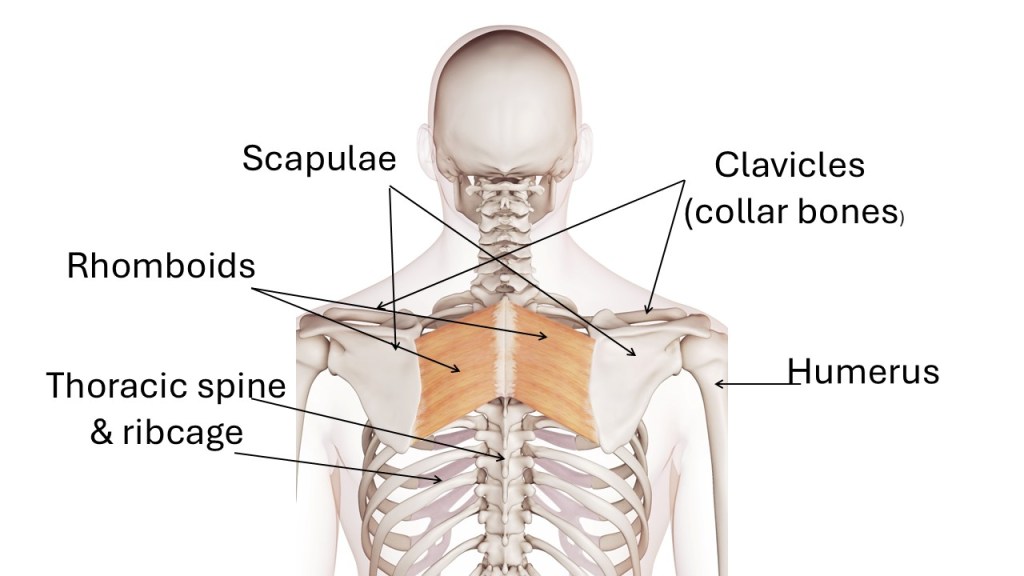
    • Scapulae (shoulder blades)
    • Clavicles (collarbones)
    • Humerus (upper arm bone)
    • Thoracic spine and ribcage
    • Muscles including:
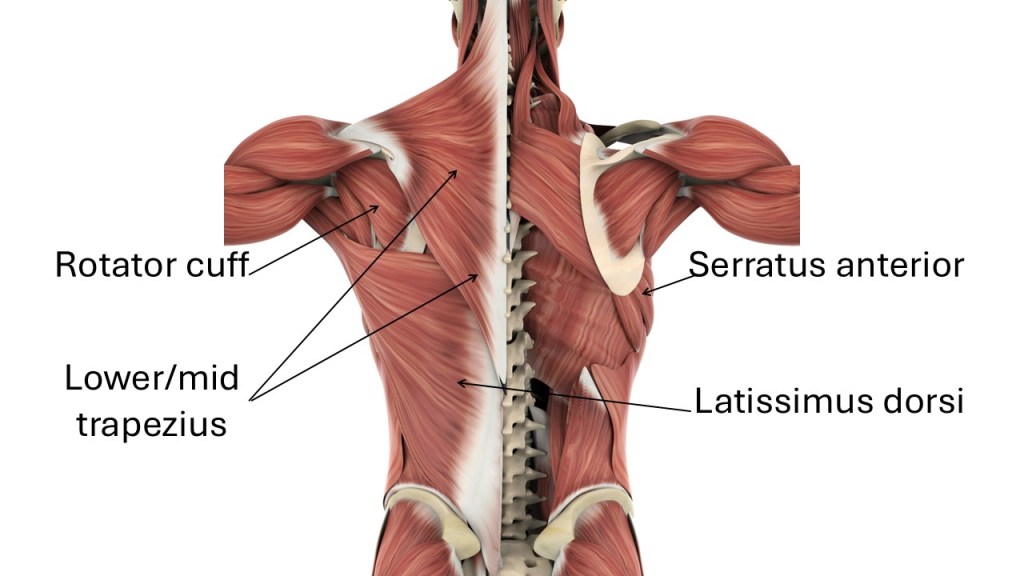
      • Serratus anterior
      • Lower and middle trapezius
      • Rhomboids (above)
      • Rotator cuff
      • Pectorals (chest)
      • Latissimus dorsi

    Why this matters in Pilates

    The shoulder girdle influences:

    • Neck tension
    • Ribcage mobility
    • Breath capacity
    • Core activation
    • Arm strength
    • Posture
    • Load transfer through the spine

    When the shoulder girdle is organised, the entire upper body becomes more efficient and responsive.

    2. The Three Pillars of Shoulder Girdle Stability

    1. Scapular placement

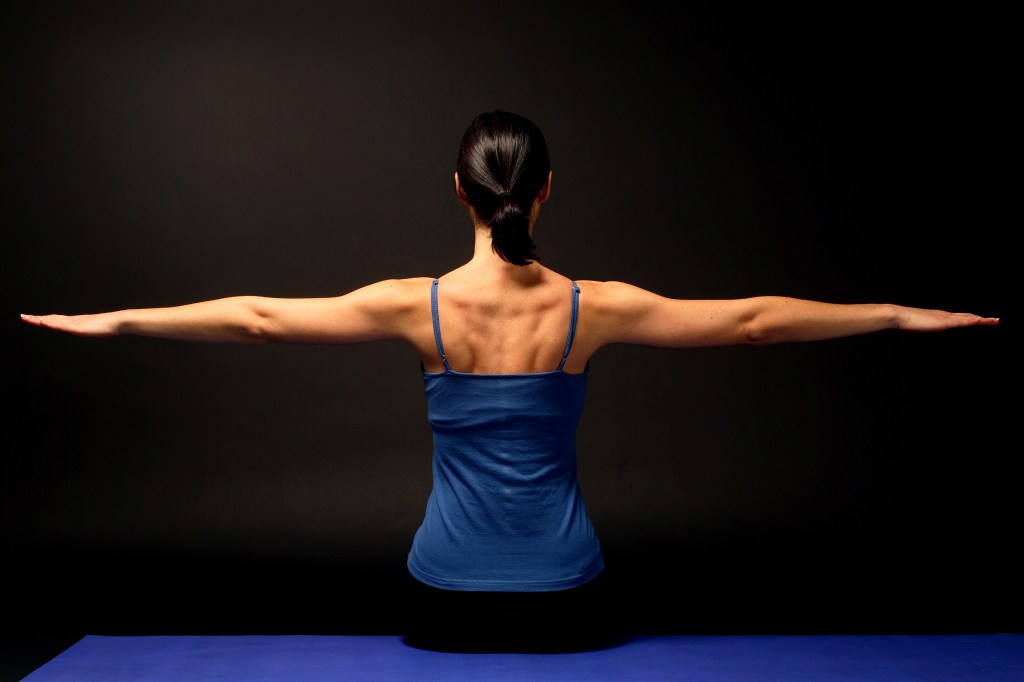
    The scapulae should rest on the ribcage like “wings,” not pinched together or shrugged upward.

    Neutral scapular placement means:

    • Wide across the collarbones
    • Shoulder blades gently anchored down the back
    • No gripping or forcing

    2. Serratus anterior activation

    This muscle is the secret weapon of shoulder stability.

    It helps:

    • Keep the scapulae flush to the ribcage
    • Prevent winging
    • Support overhead movements
    • Reduce upper‑trap dominance

    3. Balanced mobility

    Stability does not mean rigidity. The shoulder girdle must glide, rotate, and slide to support natural movement.

    3. How Shoulder Girdle Alignment Affects the Whole Body

    a. The neck

    Poor scapular control often leads to:

    • Neck tension
    • Forward-head posture
    • Overuse of upper trapezius

    b. The ribcage

    The shoulder girdle sits on the ribcage — if the ribs are stiff or flared, the shoulders cannot organise well.

    c. The core

    Upper‑body alignment influences:

    • Deep core activation
    • Breath mechanics and efficiency
    • Thoracic mobility

    d. The arms

    Without stable scapulae, arm movements become inefficient and strain the rotator cuff.

    4. Teaching Shoulder Girdle Stability: A Step‑by‑Step Method for Instructors

    Step 1: Build awareness

    Clients must first feel their shoulder blades.

    Use explorations such as:

    • Scapular elevation/depression
    • Protraction/retraction
    • Upward/downward rotation

    Encourage slow, mindful movement.

    Step 2: Introduce neutral scapular placement

    Cue:

    • “Widen your collarbones.”
    • “Let your shoulder blades melt down your back.”
    • “Imagine your shoulder blades sliding into your back pockets.”

    Avoid cues like “pull your shoulders down” — they often create tension.

    Step 3: Layer in breath

    Breath expands the ribcage, which supports scapular placement.

    Cue:

    • “Inhale to widen the ribs; exhale to soften the shoulders.”

    Step 4: Add load gradually

    Once alignment is established, challenge it with:

    • Arm arcs
    • The Hundred arm pumps
    • Plank variations

    The goal is maintaining organisation under increasing demand.

    5. Common Shoulder Girdle Issues & How to Correct Them

    1. Over‑shrugging

    Often caused by:

    • Upper‑trap dominance
    • Weak serratus anterior
    • Stress and habitual tension

    Corrections:

    • Cue softening of the shoulders
    • Strengthen serratus anterior
    • Encourage ribcage expansion

    2. Scapular winging

    Often caused by:

    • Weak serratus anterior
    • Poor ribcage mobility
    • Overuse of pecs

    Corrections:

    • Teach protraction with control
    • Strengthen serratus (e.g., wall slides, quadruped work)
    • Improve thoracic mobility

    3. Over‑retraction (“military posture”)

    Often caused by:

    • Over‑cueing “shoulders back”
    • Tight rhomboids
    • Weak lower traps

    Corrections:

    • Cue width across the collarbones
    • Encourage natural scapular glide
    • Strengthen lower traps

    6. Cueing Strategies That Create Real Change

    Use imagery

    • “Imagine your shoulder blades floating on warm water.”
    • “Think of your collarbones as wings spreading wide.”

    Use tactile cues

    With consent:

    • Hands on the scapulae
    • Guiding the shoulder blades into neutral

    Use functional cues

    • “Can you move your arm without your shoulder hiking?”
    • “Can you breathe without your shoulders lifting?”

    Use layered cueing

    Start broad → refine → integrate.

    7. Exercises That Teach Shoulder Girdle Stability Naturally

    1. Scapular isolations

    Build awareness and control.

    2. Angel Arms/Wall slides

    Strengthen serratus anterior and improve upward rotation.

    3. Quadruped arm reach

    Integrates core, shoulder, and ribcage stability.

    4. Plank variations

    Teach load‑bearing with proper alignment.

    5. Arm work

    Challenges stability through resistance (bands or weights).

    8. Progressions for Safe, Effective Upper‑Body Training

    Start with awareness

    Clients must understand scapular movement.

    Add stability

    Introduce neutral placement and breath.

    Add load

    Use arm arcs, resistance, and planks.

    Add complexity

    Rotation, balance, and dynamic transitions.

    Add functional integration

    Standing work, overhead movements, and full‑body sequences.

    9. Why Shoulder Girdle Stability Elevates Your Teaching

    When you teach shoulder girdle organisation well, your clients:

    • Reduce neck and shoulder tension
    • Improve posture
    • Strengthen their upper body safely
    • Move with more confidence
    • Breathe more fully
    • Build long‑term resilience

    And your teaching becomes:

    • More precise
    • More effective
    • More transformative

    Conclusion: Creating Strength Without Tension

    The shoulder girdle is a dynamic, powerful system that supports every upper‑body movement in Pilates. When clients learn to organise their shoulders with ease and awareness, they unlock a new level of strength — one that is grounded, balanced, and free from tension.

    As teachers, our role is to guide them toward this integration with clarity, patience, and thoughtful cueing.

  • The Benefits of Self-Myofascial Release

    Unlock Mobility, Ease Pain & Tension, Boost Performance

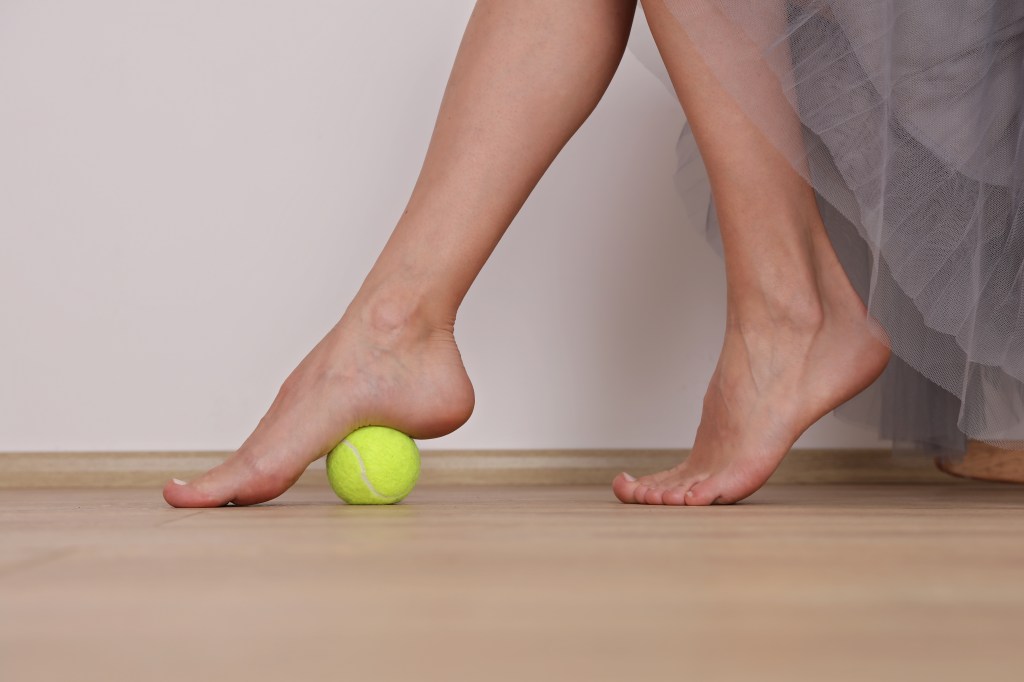
    Self-myofascial release of plantar fascia

    I created my new course: Freedom of Motion: Fascia & Self-Myofascial Essentials following great success in dealing with my own chronic injuries.  It really has been a revelation.  In today’s fast-paced world, many of us experience muscle tightness, aches, injuries, chronic pain and a limited range of motion, whether we’re athletes, office workers  or simply juggling the demands of daily life.  Self-myofascial release (SMR) is becoming an increasingly popular technique for managing these issues and when woven into a class that also included restorative breathing techniques, we can restore mental and emotional wellbeing too. 

    But what exactly is SMR and why are so many people singing its praises?  In this post, we’ll explore the key benefits of self-myofascial release and why it might be worth incorporating into your wellbeing routine or if you’re a movement professional, integrating it into sessions.

    What is Self-Myofascial Release?

    Self-myofascial release is a form of self-massage that involves applying gentle, sustained pressure to the connective tissue that surrounds and permeates your muscles — known as fascia.  Typically, people use foam rollers or massage balls to target areas of tightness or discomfort.  The goal is to release tension, improve tissue quality and promote better movement.

    The Top Benefits of Self-Myofascial Release

    1. Reduces Muscle Soreness and Tension

    One of the most immediate benefits of SMR is relief from sore, tight muscles.  By rolling out knots and trigger points, you can alleviate discomfort following exercise or long periods of inactivity.  This can help you recover faster from workouts or simply feel more at ease throughout the day.

    2. Improves Flexibility and Range of Motion

    Regularly practising self-myofascial release can help lengthen muscles and fascia, enabling you to move more freely.  Whether you’re aiming to touch your toes or simply reach for something on a high shelf, improved mobility makes daily activities and movement easier and safer.

    3. Enhances Athletic Performance

    For athletes and fitness enthusiasts, SMR can be a game-changer.  By releasing tightness and improving tissue quality, you can move more efficiently and with better alignment.  This not only helps prevent injury but can also boost overall performance, whether you’re running, lifting or playing sport.

    4. Aids in Injury Prevention

    Tight or restricted fascia can contribute to muscle imbalances and poor movement patterns and increase the risk of strains or sprains.  By keeping the connective tissue supple, self-myofascial release helps maintain proper biomechanics, reducing the likelihood of injury during physical activity.

    5. Supports Relaxation and Stress Relief

    Beyond the physical benefits, SMR can be a deeply relaxing practice.  The slow, mindful pressure encourages your body to activate its parasympathetic nervous system — the “rest and digest” mode — helping to reduce stress levels and promote a sense of calm.

    Self-myofascial release is a simple, accessible technique that offers a wealth of benefits, from easing muscle soreness to improving flexibility and supporting overall wellbeing.  Whether you’re a movement professional looking for effective tools to help your clients or just want to feel more comfortable in your own body, SMR is a valuable addition to anyone’s self-care routine.

  • Diaphragmatic Breathing: the Cornerstone of Every Pilates Class

    Nothing else will make sense unless you start here

    One of the assignments for the assessed Certification is to teach the Fundamentals, the foundations of Pilates: neutral position, core activation and thoracic breathing.  So many students start with thoracic breathing, but clients will struggle to understand this if they aren’t breathing deeply (or normally?) first.  They will struggle to understand what the core muscles are and where they are.  They will struggle to engage them effectively.

    I say “normally” because this is the way we should all be breathing as we go about our daily business, so let’s start with a definition and method:

    What is Diaphragmatic Breathing?

    Diaphragmatic breathing, also known as abdominal or deep breathing, is a technique that involves the diaphragm pressing down onto the abdominal organs as it flattens out when it contracts.  It is the primary muscle responsible for the mechanics of breathing, located at the base of the lungs which divides the chest cavity from the abdominal cavity.  Diaphragmatic breathing encourages fuller oxygen exchange by expanding the thoracic cavity on inhalation, creating a vacuum that pulls air into the lungs.  As the diaphragm relaxes and returns to its dome shape, aided by the natural  contraction of the core muscles, air is pushed from the lungs.  

    Immediately, you can see how the core muscles respond naturally when we breathe efficiently, without us having to think about making it happen.  We are left in no doubt where they are or how to activate them on the exhalation.  It’s a small step to holding the core engagement whilst inhaling as well as exhaling and clients will observe that now, rather than the abdomen expanding to make space for the diaphragm, the ribs expand: thoracic breathing!

    How to Practise Diaphragmatic Breathing

    1. Find a comfortable position, either sitting or lying down.
    2. Place one hand on your chest and the other on your abdomen.
    3. Breathe in slowly through your nose, allowing your abdomen to rise as the diaphragm contracts and draws air into your lungs. Your chest should remain relatively still.
    4. Exhale slowly through your mouth, feeling your abdomen fall as you expel the air.
    5. Repeat this process for several breaths, focusing on the movement of your abdomen and contraction of the core on the exhale.
    6. Notice also the natural movement of the spine – albeit subtle – from extension as you inhale to flexion as you exhale, essential for efficient breathing.

    Benefits of Diaphragmatic Breathing

    • Reduces stress and anxiety: Deep, focused breathing activates the body’s relaxation response, lowering stress hormones and promoting a sense of calm.  The first principle of Pilates is “Relaxation”.
    • Improves oxygen exchange: By fully engaging the diaphragm, more oxygen reaches the bloodstream, which enhances overall health and energy levels.
    • Lowers heart rate and blood pressure: Regular diaphragmatic breathing can help reduce heart rate and blood pressure, supporting cardiovascular health.
    • Enhances concentration and focus: The mindful aspect of the technique can improve mental clarity and alertness.
    • Supports respiratory function: It can increase lung efficiency and is often used in pulmonary rehabilitation and by those with breathing difficulties.
    • Relieves muscle tension: Engaging the diaphragm and promoting relaxation can help ease muscle tightness, especially in the shoulders and neck.
    • Improves posture: Practising diaphragmatic breathing encourages better posture by activating core muscles and reducing reliance on chest and shoulder muscles for breathing.

    Starting each class with diaphragmatic breathing will lead to a better understanding of Pilates Fundamentals and a greater ease and efficiency of use.  It can help focus the mind at the beginning of every class and lead to significant improvements in both physical and mental well-being.   A great way to finish a class, too.

  • Teaching Tips:

    How you and your Client can get the Most out of every class

    For the first 15 years of my career in the fitness industry, I taught high energy, highly choreographed classes to music – aerobics and Step mainly.  I did it all – every step, hop and jump – all 25 classes some weeks!  I was fit and loved every minute of it.  If I stopped, they stopped, so we did it all together.

    The first thing I noticed on day one of my first Pilates teacher training course back in 2000 was that the teacher didn’t do any of the exercises!  Each training day began with a Pilates class and she didn’t do one exercise.  Yet she managed to get us all safely through a number of very enjoyable sessions. 

    The most common scenario, however, in many leisure centres and clubs is the teacher lying down at the front of the class, doing the exercises with the clients who are constantly stopping, lifting their heads or even sitting up to see what’s going on.  Not ideal in a mind/body somatic type class that is essentially about posture, concentration, co-ordination, flow, precision, etc.

    It’s a subject that comes up often and something I see all the time in my student assessments for Certification.  It’s something I used to do myself which left me with a deep sense of loss of control and frustration.  I’ve been lucky enough to work with some incredible instructors from around the world in some exclusive studios with discerning clients and I’ve learned a lot.  I wanted to share a few insights that have helped me through my many years of teaching and kept me here for 40 years.

    1. What is your role as a teacher?  To help your clients learn, understand and practice Pilates safely and effectively.  We were always told: “If you want a workout, go to a class.”  Through a combination of demonstration (keep it brief – just one thing to get them started), verbal/physical cues and adjustments, together with relevant information whilst observing the class, you will spend most of your time on your feet (except for beginner classes).
    2. Understand what you are teaching: there is a massive difference between fitness classes that are heavily choreographed, high energy with loud music.  The cues are less on technique and more on direction.  You need to be doing otherwise it soon deteriorates into total chaos!  But they can see you all the time unlike in a Pilates class. 
    3. Pilates is a mind/body form of exercise: you want them feeling it and “going inside” rather than trying to rely on seeing what you are doing.  They can’t see you easily anyway for most of the exercises as they are supine or prone.  You can’t see them if you’re lying down.  If you need to demonstrate something new, try to plan it to follow a seated or side-lying exercise and put yourself in front of them.  Or demo at some point during the warmup when they are busy doing something simple.  Keep it brief.
    4. Separate the beginners from the rest:  sometimes easier said than done if you are working for a leisure centre of similar, but the classes will be more satisfactory for all concerned.
    5. Arrive early:  if you have no control over who comes to which class, you can at least avoid surprises!  Briefly welcome the regulars and position the beginners for easy access.  Maybe at least give them a quick tour of neutral and thoracic breathing before class.  Always teach these fundamentals in every class.
    6. Kiss:  Keep It Super Simple – in mixed classes, start with a modification that everyone is likely to understand and move the more advanced on once everyone is moving.  Don’t try to cram too much into the class either – technique over reps and content.
    7. Sharpen up your verbal cues, vocabulary and use visuals:  they are more likely to do the exercise correctly if the language is clear and descriptive.
    8. Try not to count all the way through:  maybe just “last 2” or similar so that they can gauge whether to rest or see it through.  There are so many interesting things to say – muscles, benefits, principles, technique, etc.  Once you start to really see what’s in front of you, you will know when they’ve done enough!
    9. Avoid over-correcting:  It can be demoralising for “the one” who seems to always struggle with the same thing.  When you do correct, do it in a positive way.  Say what they are doing well and use positive reinforcement.  It’s very motivating to be told that you’re doing a great job.  Also, in larger groups, priortise safety, correcting those who are in danger of hurting themselves.  Obviously in a large group you won’t get to everyone but if you don’t get to someone, try to do so the following session.  Stay on at the end and help “the one” understand the exercise – we all learn in different ways and sometimes, we just don’t hear or feel it for a while.
    10. Plan: there’s nothing like being prepared.

    Conclusion

    Unless you are teaching Pilates as a side hustle, you need to teach a lot of classes a week to make a living.  It just wouldn’t be sustainable (or healthy) to do the whole class (or even half of it) every time.  Standing in front of a group of people can be daunting, especially in the early days of teaching; both you and your clients may feel self-conscious at first – you, because of all eyes on you and eye contact; they, due to the personal attention they are getting – but you will all get used to it and come to enjoy it.  They will learn to really value and appreciate your attention to detail and to them and you will find that engaging fully with your clients makes the whole experience so much more rewarding.  The more you practice, the more familiar it will become, and your confidence will grow, as will your reputation as an expert instructor.

    #pilates #pilatesteacher #pilatesteachertraining

  • Teaching Pilates – Effective Cues

    teacher explaining people fitness exercises to balance the body

    I had a great question from one of my students recently (thank you if you are reading this), wanting to know what the most useful cues are when teaching Pilates.  Constantly reminding clients to breathe – preferably using the thoracic breathing technique – and engage the core are useful, but any cue that helps a client perform the exercise well and safely is essential.  This will vary from exercise to exercise, client to client, so there isn’t really a list of the top ten.  Yes, of course: there will be some cues that we reel off ad nauseum that aren’t really aimed at anyone in particular in the class.  They are just general reminders in case our clients’ minds have wandered to a parallel universe.

    So what makes a cue useful?  At the most fundamental level, a cue offers basic instructions: name of the exercise, body position, initial movement, direction of traffic.  For example, for the Roll Up, it could sound something like this:

    “Roll Up, seated facing me knees bent, as you exhale engage the core and tilt the pelvis.”

    In 5 seconds, they have a good idea of where this is heading.  From there, the execution cues will continue to progress the exercise, modify or help the client perform the exercise with good technique to enable them to perform safely and effectively. 

    And you can’t do that unless you can see your clients.  Back in my Jane Fonda inspired halcyon days as an aerobics instructor, if I stopped, the whole class stopped.  But we were on our feet, I was visible the whole time.  That is not the case in a Pilates class.  With the exception of those very few exercises where the clients are seated or side-facing, they can’t see you at all.  They rely on the cues you give them.  But you cannot give effective cues if you can’t see them and you can’t see them when you are lying down, doing the exercises with them.  And anyway, they can’t see you without losing alignment. 

    So if you aren’t already on your feet, observing, correcting and adjusting, the time has come.  You will never be short of an effective cue again.