Pilates Essentials Series — Part 8
Introduction: The Mind–Body Connection Is the Heart of Pilates
Pilates isn’t simply about strengthening muscles, the core or improving flexibility — it’s about cultivating awareness, presence, and intentional movement. For teachers, helping clients develop this connection is one of the most transformative aspects of the work.
Yet many clients arrive in the studio disconnected from their bodies. They’re stressed, distracted, rushing, or simply unaware of how they move. Teaching the mind–body connection is not about making Pilates “spiritual” — it’s about helping clients feel, sense, and understand their bodies so they can move with clarity and control.
In this instalment of the Pilates Essentials Series, we explore how to teach the mind–body connection in a practical, accessible, and empowering way — so your clients can experience Pilates not just as exercise, but as embodied practice.
1. What the Mind–Body Connection Really Means in Pilates
The mind–body connection is often misunderstood as something abstract or mystical. In Pilates, it’s incredibly practical.
It means:
- Being aware of how the body moves
- Noticing compensations and patterns
- Feeling the difference between effort and strain
- Using breath to support movement
- Staying mentally present
- Moving with intention rather than habit
Why it matters
Clients who develop mind–body awareness:
- Progress faster
- Move more efficiently
- Experience fewer injuries
- Build deeper core strength
- Feel more confident in their bodies
For teachers, it’s the difference between clients “doing exercises” and clients learning to move.
2. The Neuroscience of Awareness: Why Pilates Works
Pilates enhances proprioception — the body’s ability to sense its position in space. This is essential for balance, coordination, and movement efficiency.
Pilates improves:
- Interoception — sensing internal cues (breath, tension, effort)
- Proprioception — sensing external cues (alignment, position, movement)
- Neuromuscular coordination — the brain–muscle connection
When clients focus their attention, the brain literally rewires itself. This is why Pilates can feel so grounding, calming, and empowering.
3. Teaching Clients to “Feel” Instead of “Force”
Many clients approach movement with a “push harder” or “feel the burn” mentality. Pilates invites them to shift from force to awareness.
How to teach this shift
- Encourage curiosity rather than performance
- Use slow, controlled movement
- Offer moments of stillness
- Ask reflective questions
- Use breath to reduce tension
Teacher cue examples
- “Notice what you feel, without expectation.”
- “Let the movement be guided by awareness, not effort.”
This shift is often life‑changing for clients.
4. The Role of Breath in the Mind–Body Connection
Breath is the anchor of awareness. It regulates the nervous system, supports the core, and helps clients stay present.
Why breath matters
- Reduces stress
- Enhances focus
- Improves ribcage mobility
- Supports deep core activation
- Creates rhythm and flow
How to teach breath as awareness
- Begin sessions with simple breathing
- Use breath to guide transitions
- Encourage natural, unforced breath
- Connect breath to movement intention
Teacher cue examples
- “Let your breath bring you into your body.”
- “Inhale to create space; exhale to support.”
Breath is the simplest and most powerful tool for presence.
5. Cueing for Awareness: How to Help Clients Tune In
Cueing is one of the most effective ways to build the mind–body connection.
Use sensory cues
- “Feel your ribs expand into your hands.”
- “Notice the weight under your feet.”
Use directional cues
- “Let your spine lengthen upward.”
- “Allow your shoulder blades to glide.”
Use reflective cues
- “What changed when you softened your breath?”
- “Can you sense your pelvis staying steady?”
Use imagery
- “Imagine your spine floating.”
- “Think of your breath as a wave.”
Imagery bypasses overthinking and taps directly into sensation.
6. Creating a Mindful Teaching Environment
The environment you create as a teacher shapes your clients’ ability to connect.
Practical ways to support awareness
- Reduce unnecessary talking
- Allow pauses
- Use consistent cueing language
- Keep transitions smooth
- Offer grounding moments at the start and end of class
Encourage internal focus
Rather than clients looking for external validation, guide them inward.
Cue:
- “Notice what feels different today.”
- “Let your body guide the movement.”
A mindful environment helps clients feel safe, supported, and present.
7. Exercises That Naturally Build the Mind–Body Connection
1. Pelvic tilts
Teach awareness of the spine and pelvis.
2. Supine breathing with tactile feedback
Enhances ribcage awareness and core activation.
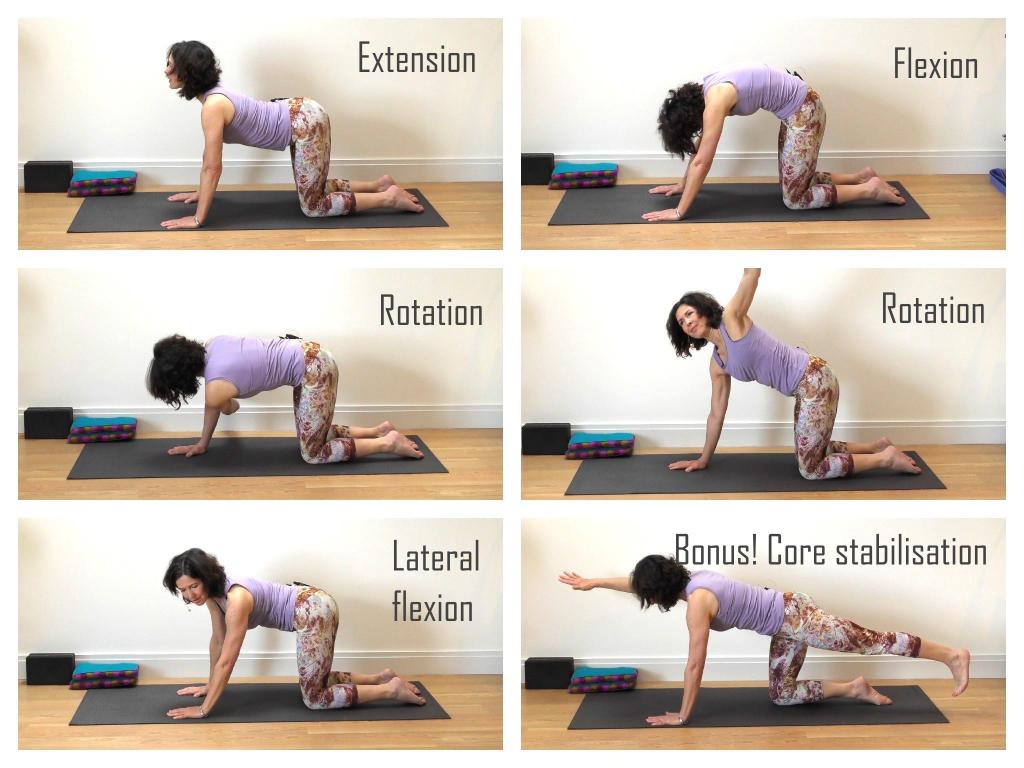
3. Cat–cow variations
Connect breath and spinal mobility.
4. Footwork
Teaches alignment, grounding, and control.
5. Side‑lying leg series
Builds awareness of hip stability and movement patterns.
6. Standing balance work
Enhances proprioception and whole‑body integration.
These exercises encourage clients to feel, sense, and adjust.
8. Helping Clients Break Habitual Patterns
Many clients move from habit rather than awareness. Pilates helps them break these patterns.
Common patterns include:
- Overusing the lower back
- Gripping the hip flexors
- Shrugging the shoulders
- Holding the breath
- Collapsing into the feet
How to help clients change patterns
- Slow the movement down
- Reduce load
- Use tactile feedback
- Offer clear, simple cues
- Celebrate small improvements
Awareness is the first step toward change.
9. The Mind–Body Connection as a Teaching Philosophy
Teaching the mind–body connection is not a technique — it’s a philosophy.
It means teaching clients to:
- Move with intention
- Listen to their bodies
- Respect their limits
- Explore their potential
- Stay present
- Build confidence
It means teaching from a place of:
- Curiosity
- Compassion
- Clarity
- Patience
- Precision
When you teach this way, your sessions become more than workouts — they become experiences.
10. Why the Mind–Body Connection Elevates Your Teaching
When clients develop awareness, everything improves:
- Technique
- Strength
- Mobility
- Balance
- Breath
- Confidence
And your teaching becomes:
- More intuitive
- More effective
- More impactful
Clients feel seen, supported, and empowered — and they keep coming back because they feel the difference.
Conclusion: Awareness Is the Foundation of Transformation
The mind–body connection is the heart of Pilates. It’s what turns movement into practice, effort into ease, and exercise into transformation. As teachers, our role is to guide clients toward awareness — one breath, one cue, and one moment at a time.
When clients learn to move with presence and intention, they don’t just change their bodies — they change their relationship with themselves.


 BODY SOUL WELL