Tag: pilatesteachertraining

  • Shoulder Girdle Stability & Upper Body Integration: Creating Strength Without Tension

    Pilates Essentials Series — Part 6

    Introduction: Why the Shoulder Girdle Is the Unsung Hero of Pilates Technique

    When we think of Pilates fundamentals, the core and pelvis often take centre stage — but the shoulder girdle is just as essential. For teachers, understanding how to cue and organise the shoulder complex is key to helping clients move with ease, reduce neck and upper‑back tension, and build true functional strength.

    The shoulder girdle is a dynamic, mobile structure designed for fluid movement. Yet many clients arrive with stiff necks, rounded shoulders, overactive upper traps, and underactive stabilisers. Without proper alignment and engagement, even simple Pilates exercises can create strain instead of strength.

    In this instalment of the Pilates Essentials Series, we explore how to teach shoulder girdle stability and upper‑body integration in a way that empowers your clients to move freely, breathe fully, and build balanced strength.

    1. Understanding the Shoulder Girdle: A Teacher’s Guide

    The shoulder girdle is not just the shoulder joint — it’s an entire system.

    Key components include:
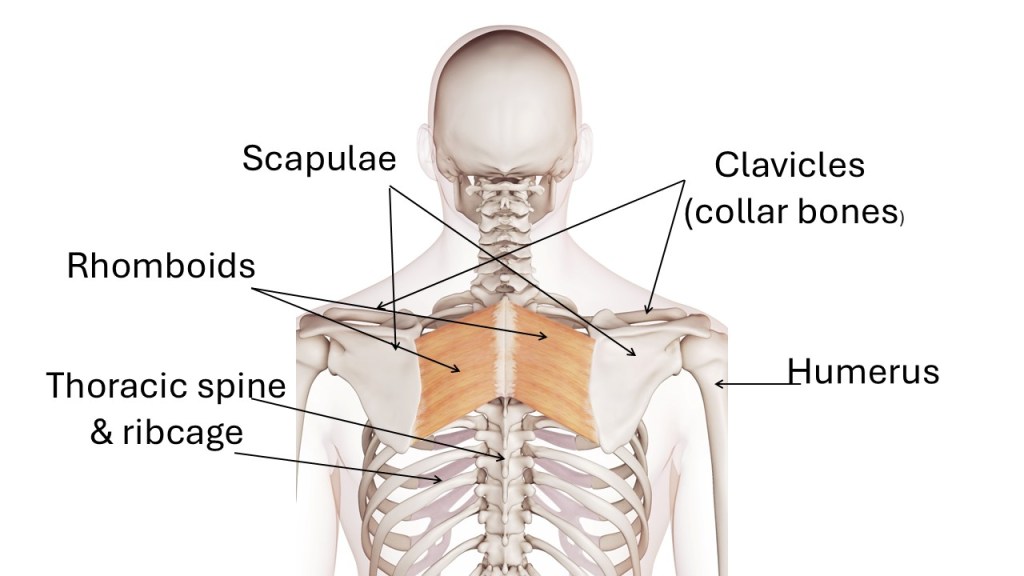
    • Scapulae (shoulder blades)
    • Clavicles (collarbones)
    • Humerus (upper arm bone)
    • Thoracic spine and ribcage
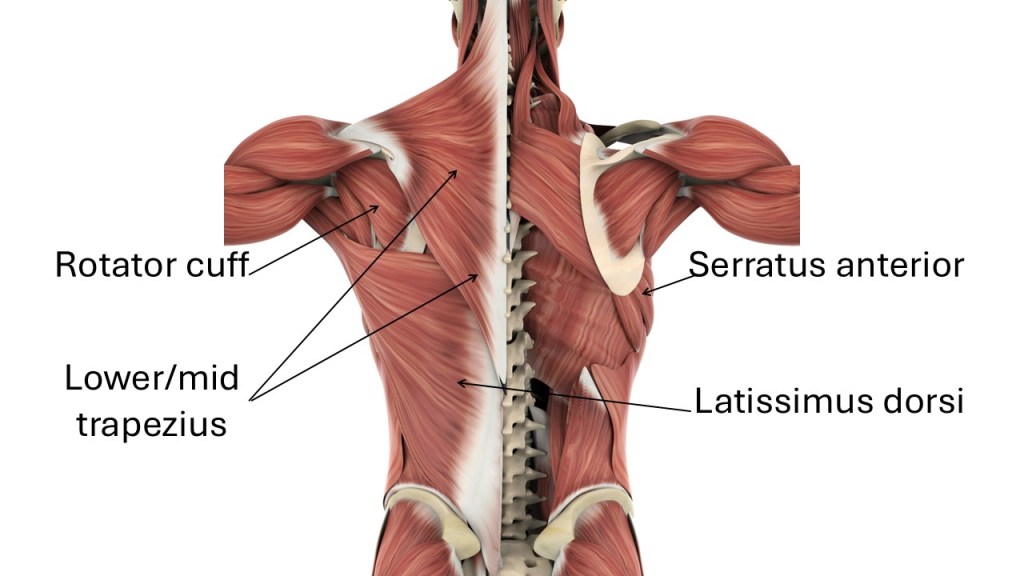
    • Muscles including:
      • Serratus anterior
      • Lower and middle trapezius
      • Rhomboids (above)
      • Rotator cuff
      • Pectorals (chest)
      • Latissimus dorsi

    Why this matters in Pilates

    The shoulder girdle influences:

    • Neck tension
    • Ribcage mobility
    • Breath capacity
    • Core activation
    • Arm strength
    • Posture
    • Load transfer through the spine

    When the shoulder girdle is organised, the entire upper body becomes more efficient and responsive.

    2. The Three Pillars of Shoulder Girdle Stability

    1. Scapular placement

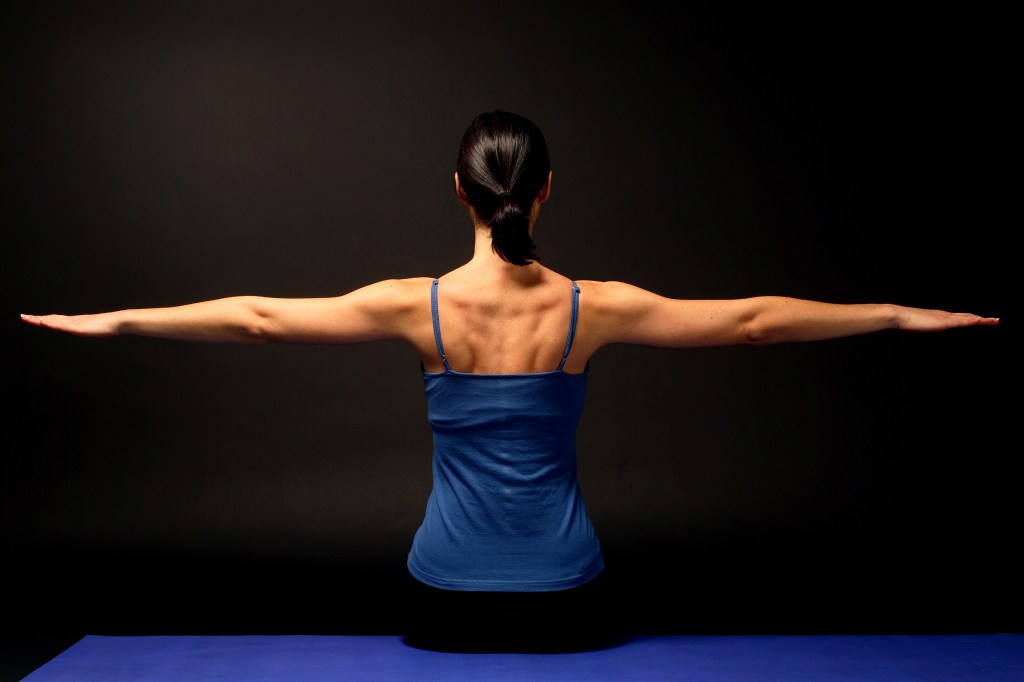
    The scapulae should rest on the ribcage like “wings,” not pinched together or shrugged upward.

    Neutral scapular placement means:

    • Wide across the collarbones
    • Shoulder blades gently anchored down the back
    • No gripping or forcing

    2. Serratus anterior activation

    This muscle is the secret weapon of shoulder stability.

    It helps:

    • Keep the scapulae flush to the ribcage
    • Prevent winging
    • Support overhead movements
    • Reduce upper‑trap dominance

    3. Balanced mobility

    Stability does not mean rigidity. The shoulder girdle must glide, rotate, and slide to support natural movement.

    3. How Shoulder Girdle Alignment Affects the Whole Body

    a. The neck

    Poor scapular control often leads to:

    • Neck tension
    • Forward-head posture
    • Overuse of upper trapezius

    b. The ribcage

    The shoulder girdle sits on the ribcage — if the ribs are stiff or flared, the shoulders cannot organise well.

    c. The core

    Upper‑body alignment influences:

    • Deep core activation
    • Breath mechanics and efficiency
    • Thoracic mobility

    d. The arms

    Without stable scapulae, arm movements become inefficient and strain the rotator cuff.

    4. Teaching Shoulder Girdle Stability: A Step‑by‑Step Method for Instructors

    Step 1: Build awareness

    Clients must first feel their shoulder blades.

    Use explorations such as:

    • Scapular elevation/depression
    • Protraction/retraction
    • Upward/downward rotation

    Encourage slow, mindful movement.

    Step 2: Introduce neutral scapular placement

    Cue:

    • “Widen your collarbones.”
    • “Let your shoulder blades melt down your back.”
    • “Imagine your shoulder blades sliding into your back pockets.”

    Avoid cues like “pull your shoulders down” — they often create tension.

    Step 3: Layer in breath

    Breath expands the ribcage, which supports scapular placement.

    Cue:

    • “Inhale to widen the ribs; exhale to soften the shoulders.”

    Step 4: Add load gradually

    Once alignment is established, challenge it with:

    • Arm arcs
    • The Hundred arm pumps
    • Plank variations

    The goal is maintaining organisation under increasing demand.

    5. Common Shoulder Girdle Issues & How to Correct Them

    1. Over‑shrugging

    Often caused by:

    • Upper‑trap dominance
    • Weak serratus anterior
    • Stress and habitual tension

    Corrections:

    • Cue softening of the shoulders
    • Strengthen serratus anterior
    • Encourage ribcage expansion

    2. Scapular winging

    Often caused by:

    • Weak serratus anterior
    • Poor ribcage mobility
    • Overuse of pecs

    Corrections:

    • Teach protraction with control
    • Strengthen serratus (e.g., wall slides, quadruped work)
    • Improve thoracic mobility

    3. Over‑retraction (“military posture”)

    Often caused by:

    • Over‑cueing “shoulders back”
    • Tight rhomboids
    • Weak lower traps

    Corrections:

    • Cue width across the collarbones
    • Encourage natural scapular glide
    • Strengthen lower traps

    6. Cueing Strategies That Create Real Change

    Use imagery

    • “Imagine your shoulder blades floating on warm water.”
    • “Think of your collarbones as wings spreading wide.”

    Use tactile cues

    With consent:

    • Hands on the scapulae
    • Guiding the shoulder blades into neutral

    Use functional cues

    • “Can you move your arm without your shoulder hiking?”
    • “Can you breathe without your shoulders lifting?”

    Use layered cueing

    Start broad → refine → integrate.

    7. Exercises That Teach Shoulder Girdle Stability Naturally

    1. Scapular isolations

    Build awareness and control.

    2. Angel Arms/Wall slides

    Strengthen serratus anterior and improve upward rotation.

    3. Quadruped arm reach

    Integrates core, shoulder, and ribcage stability.

    4. Plank variations

    Teach load‑bearing with proper alignment.

    5. Arm work

    Challenges stability through resistance (bands or weights).

    8. Progressions for Safe, Effective Upper‑Body Training

    Start with awareness

    Clients must understand scapular movement.

    Add stability

    Introduce neutral placement and breath.

    Add load

    Use arm arcs, resistance, and planks.

    Add complexity

    Rotation, balance, and dynamic transitions.

    Add functional integration

    Standing work, overhead movements, and full‑body sequences.

    9. Why Shoulder Girdle Stability Elevates Your Teaching

    When you teach shoulder girdle organisation well, your clients:

    • Reduce neck and shoulder tension
    • Improve posture
    • Strengthen their upper body safely
    • Move with more confidence
    • Breathe more fully
    • Build long‑term resilience

    And your teaching becomes:

    • More precise
    • More effective
    • More transformative

    Conclusion: Creating Strength Without Tension

    The shoulder girdle is a dynamic, powerful system that supports every upper‑body movement in Pilates. When clients learn to organise their shoulders with ease and awareness, they unlock a new level of strength — one that is grounded, balanced, and free from tension.

    As teachers, our role is to guide them toward this integration with clarity, patience, and thoughtful cueing.
  • Pelvic Alignment & Neutral Spine: Teaching the Cornerstone of Safe Movement

    Part 5 of the Pilates Essentials Series

    Introduction: Why Pelvic Alignment Is the Quiet Powerhouse of Pilates

    If there is one concept that quietly determines the success, safety, and effectiveness of nearly every Pilates exercise, it’s pelvic alignment. For teachers, understanding how to assess, cue, and correct pelvic positioning is essential — not only for technique, but for helping clients build long‑term functional strength, good posture and body awareness.

    Pelvic alignment is the foundation of spinal organisation, core activation, hip mobility, and load distribution. When the pelvis is out of alignment, everything above and below it compensates. When it’s in neutral, the body moves with efficiency, stability and ease.

    In this instalment of the Pilates Essentials Series, we explore how to teach pelvic alignment and neutral spine with clarity, confidence and precision — so your clients can move better, feel stronger and stay injury‑free.

    1. Understanding Pelvic Alignment: The Teacher’s Perspective

    Before we can teach pelvic alignment effectively, we need to understand what we’re looking for.

    The pelvis has three primary positions:

    • Anterior tilt — ASIS forward/down, lumbar spine increases in extension
    • Posterior tilt — ASIS back/up, lumbar spine flattens
    • Neutral pelvis — ASIS and pubic bone aligned

    Why neutral matters

    Neutral pelvis:

    • Supports optimal spinal curves
    • Allows the deep core to activate reflexively
    • Reduces compensatory tension in the hips and lower back
    • Improves load transfer through the kinetic chain
    • Enhances balance and proprioception

    For teachers, neutral pelvis is a functional starting point. It’s the place where the body is most organised and ready for movement.

    2. How Pelvic Alignment Influences the Entire Body

    a. The spine

    The pelvis is the base of the spine. If the base shifts, the spine must adapt.

    • Anterior tilt → increased lumbar lordosis
    • Posterior tilt → flattened lumbar curve
    • Neutral → natural shock absorption and segmental mobility

    b. The core

    Neutral pelvis allows the transversus abdominis, pelvic floor and multifidus to work together. If the pelvis is tilted, one or more of these systems becomes inhibited.

    c. The hips

    Hip flexors, extensors, abductors and rotators all attach to the pelvis. Pelvic misalignment often shows up as:

    • Tight hip flexors
    • Weak glutes
    • Limited hip extension
    • Overactive hamstrings

    d. Movement quality

    Clients with poor pelvic alignment often:

    • Grip with their lower back
    • Overuse superficial abdominals
    • Struggle with balance
    • Lose control during transitions

    Teaching neutral pelvis early creates a foundation for everything that follows.

    3. Teaching Neutral Spine: A Step‑by‑Step Approach for Instructors

    Step 1: Establish body awareness

    Clients need to feel the pelvis move before they can control it.

    Use simple explorations:

    • Pelvic tilts (anterior/posterior)
    • Rocking side to side
    • Circling the pelvis

    These movements help clients understand the range available to them.

    Step 2: Define neutral clearly

    Use tactile, visual and verbal cues:

    • “Imagine your pelvis is a bowl of water — in neutral, the water stays level.”
    • “Your hip bones and pubic bone form a triangle — keep it flat like a tabletop.”
    • “Feel equal weight on both sit bones.”

    Step 3: Layer in breath

    Breath helps release unnecessary tension and supports deep core activation.

    Cue:

    • Inhale to expand the ribs laterally
    • Exhale to gently engage the deep abdominals without forcing a tilt

    Step 4: Add load gradually

    Once neutral is established, challenge it with:

    • Arm movements
    • Leg lifts
    • Bridging variations
    • Quadruped work

    The goal is maintaining alignment under increasing demand.

    4. Common Pelvic Alignment Issues & How to Correct Them

    1. Over‑tucking (posterior tilt dominance)

    Often seen in clients who:

    • Have tight hamstrings
    • Overuse superficial abdominals
    • Fear lumbar extension

    Corrections:

    • Encourage length through the spine
    • Cue the sit bones to widen
    • Reduce abdominal bracing
    • Strengthen hip flexors and spinal extensors gently

    2. Over‑arching (anterior tilt dominance)

    Common in:

    • Can be seen in hypermobile clients
    • Those with tight hip flexors
    • People who stand with “gymnastic/dancer’s posture”

    Corrections:

    • Cue drawing back the ribs
    • Encourage engagement of lower abdominals
    • Stretch hip flexors
    • Strengthen glutes and hamstrings

    3. Lateral pelvic shift or hike

    Often caused by:

    • Glute med weakness on one side
    • Scoliosis
    • Habitual standing patterns

    Corrections:

    • Cue equal weight on both sit bones
    • Strengthen lateral hip stabilisers
    • Use mirrors or tactile feedback

    5. Cueing Strategies That Actually Work

    Use imagery

    Pilates thrives on imagery because it bypasses overthinking.

    • “Imagine your pelvis is a compass — keep north and south aligned.”
    • “Think of your pelvis as a bowl of fruit — don’t spill it.”

    Use tactile cues

    Either client of you with consent:

    • Hands on ASIS
    • Hands on the sacrum
    • Guiding the pelvis through tilt and neutral

    Use functional cues

    • “Can you breathe without your pelvis shifting?”
    • “Can you lift your leg without your back joining in?”

    Use layered cueing

    Start simple → add detail → refine precision.

    6. Exercises That Teach Pelvic Alignment Naturally

    1. Supine pelvic tilts

    Build awareness and control.

    2. Bridge extended leg variation

    Teach hip extension without lumbar compensation.

    3. Dead bug / toe taps

    Challenge neutral under load.

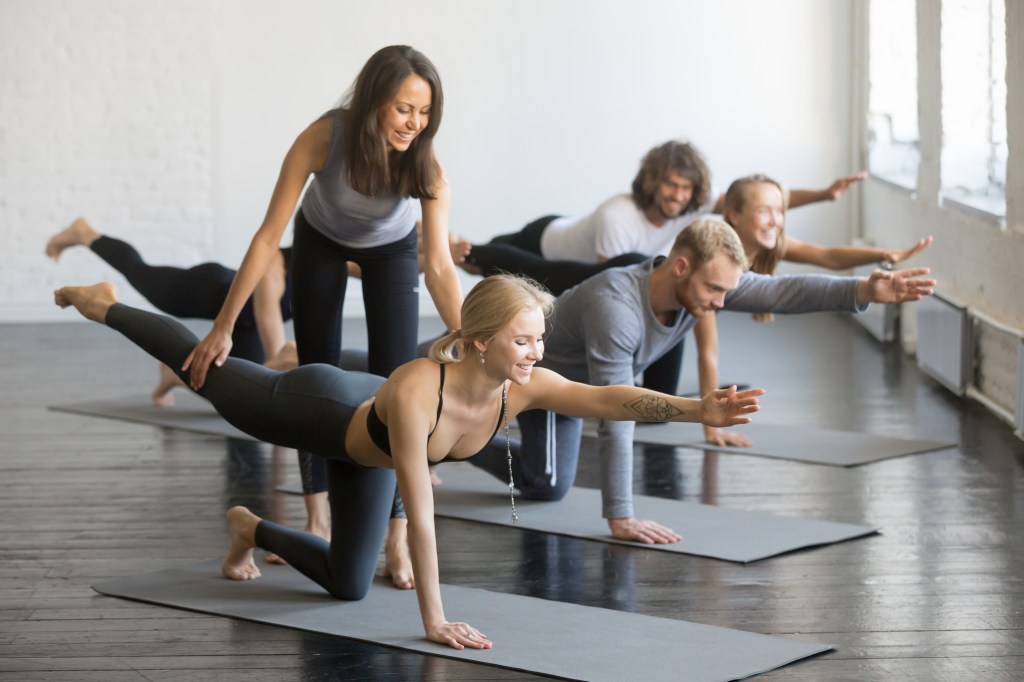
    4. Quadruped arm/leg reach (Box Swim/Superman)

    Integrates core, pelvis and shoulder stability.

    5. Standing weight shifts

    Bring pelvic alignment into functional movement.

    7. How to Progress Clients Safely

    Start with awareness

    Clients must feel the pelvis move.

    Add stability

    Introduce neutral and hold it with breath.

    Add load

    Leg lifts, arm reaches, bridging.

    Add complexity

    Rotation, balance, transitions.

    Add functional integration

    Standing work, balance, gait patterns.

    8. Why Pelvic Alignment Is a Game‑Changer for Teachers

    When you teach pelvic alignment well, you help clients:

    • Reduce back pain
    • Improve posture
    • Strengthen their core
    • Move with confidence
    • Understand their bodies
    • Build long‑term resilience

    It also elevates your teaching:

    • Your cueing becomes clearer
    • Your programming becomes more intentional
    • Your clients progress faster
    • Your sessions become safer and more effective

    Pelvic alignment is not just a concept — it’s a teaching superpower.

    Conclusion: Neutral Pelvis as the Foundation for Everything That Comes Next

    Pelvic alignment and neutral spine are the cornerstones of safe, effective Pilates practice. When clients understand how to organise their pelvis, they unlock better movement patterns, deeper core activation and a more connected mind‑body experience.

    As teachers, our role is to guide them toward awareness, control and confidence — one cue, one breath and one movement at a time.

  • Core Engagement and Stability in Pilates: Building a Strong Foundation

    Why Core Engagement Matters in Pilates

    Part 4  of the Pilates Essentials Series

    The core is the powerhouse of Pilates. In Pilates, core engagement isn’t just about having toned abs — it’s about creating stability, improving posture, and enabling efficient movement. When your core is active, every exercise becomes safer and more effective.

    “A strong centre supports everything else.”

    Benefits of a Strong Core

    • Improved Posture: A stable core supports spinal alignment and reduces strain on joints.
    • Enhanced Balance: Core strength helps maintain equilibrium during dynamic movements.
    • Injury Prevention: Proper engagement protects the lower back and hips.
    • Functional Strength: A strong core translates to better performance in everyday activities.

    Understanding the Core in Pilates

    When we talk about the “core” in Pilates, we mean more than just the rectus abdominis (the six-pack muscles). The Pilates core includes:

    • Transversus Abdominis (TA): The deepest abdominal layer, acting like a corset.
    • Multifidus: Small stabilising muscles along the spine.
    • Pelvic Floor: Supports the organs and works with the TA for stability.
    • Diaphragm: Integral for breath and core activation.
    • Obliques: Assist with rotation and lateral flexion.

    This interconnected system creates a strong, supportive centre for movement.

    How to Cue Core Engagement Effectively

    Teaching core activation is an art. Here are practical cues to help clients find and maintain engagement:

    1. Start with Breath

    Breathwork is the gateway to core activation. Use lateral breathing:

    • Inhale: Expand the ribcage sideways and into the back.
    • Exhale: Draw the navel gently towards the spine, activating the TA without gripping.

    Cue: “Imagine tightening a corset as you exhale.”

    2. Visualisation Techniques

    • “Think of zipping up a pair of jeans.”
    • “Draw your hip bones together without moving them.”

    3. Avoid Common Mistakes

    • Over-bracing: A common mistake is gripping too hard, creating tension.
    • Holding Breath: Keep breathing while engaging.
    • Pelvic Tilt Overload: Engagement should be subtle, not forced.

    Exercises to Build Core Stability

    Here are five Pilates staples for core strength and stability:

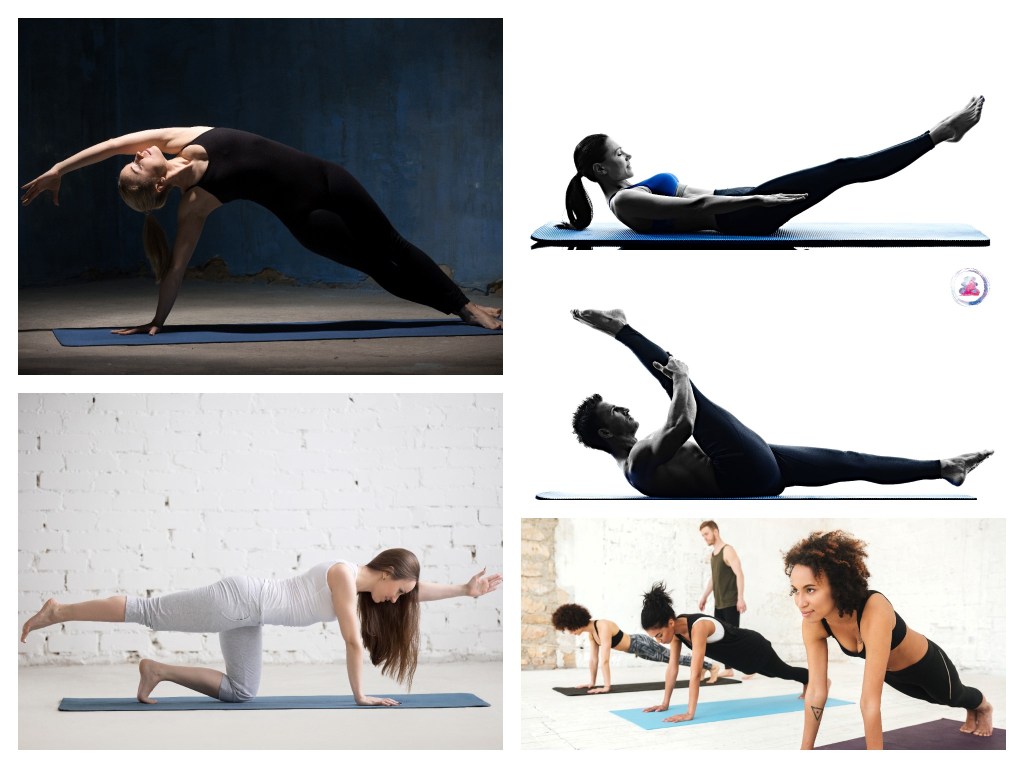
    1. The Hundred

    • Purpose: Warm-up and activate deep core muscles.
    • Key Cue: Maintain neutral spine while pumping arms.
    • Modification: Bend knees if needed.

    2. Single Leg Stretch

    • Purpose: Strengthens TA and obliques.
    • Key Cue: Keep pelvis stable as legs move.

    3. Plank/Leg Pull Down (modified)

    • Purpose: Full-body integration with core focus.
    • Key Cue: Avoid sagging hips; draw navel to spine.

    4. Bird Dog

    • Purpose: Stability during limb movement whilst working multifidus.
    • Key Cue: Keep ribs connected and spine neutral.

    5. Side Plank

    • Purpose: Targets obliques and lateral stability.
    • Key Cue: Lift from the core, lift out out the shoulder.

    Take the Time to Connect

    Whether you are teaching or practising Pilates, take the time to

    • Prepare the nervous system: breathe deeply, release tension from body & mind.
    • Find neutral position: the core muscles fire up most effectively in ideal alignment.
    • Feel the natural core activation with the exhale: this makes it easier to hold voluntarily as the mind has connected with the sensation.
    • Lateral/thoracic breathing: hold the contraction and feel the breath move into the ribcage, wide rather than deep.
    • Neuromuscular activation: warm up the core muscles and allow them to prepare for the work to come.

    Integrating Core Engagement into Every Pilates Session

    Core activation isn’t a standalone concept — it should underpin every exercise. Encourage clients (or yourself!) to:

    • Check-in before movement: Activate TA and pelvic floor. Breathe
    • Maintain engagement during transitions: Stability matters between exercises and before you start each exercise.
    • Release when appropriate: Avoid constant gripping; teach dynamic control. Consider at least a minute at the end of class in Savasana.

    Want to deepen your understanding of Pilates fundamentals? Stay tuned for Part 5: Alignment and Posture: Key Principles for Safe and Effective Movement next week!

    Pilates Teacher Training

  • The Importance of a Warm-Up in Pilates

    Yes, even in Pilates classes

    Discover why warming up before Pilates is essential for injury prevention, better performance, and a mindful practice.

    Why Warming Up Is Non-Negotiable

    As a Pilates educator, I’m often surprised at the lack of an appropriate warm-up in assessments and classes. On my Pilates Teacher Training Course, I emphasise warm-ups with examples, and every class I teach begins with one. Yet many students report attending sessions where teachers skip this vital step.

    A warm-up is not optional. It’s a fundamental element of all fitness classes, regardless of level or intensity. Beyond injury prevention, it prepares the body and mind for effective movement, enhances performance, and supports long-term wellbeing.

    The Science Behind Warming Up

    Blood Flow and Muscle Elasticity

    Warm muscles are more pliable and elastic. A cold start increases the risk of strain, particularly in the lower back and hamstrings, which are vulnerable areas for many clients.

    Joint Lubrication

    Warm-ups stimulate synovial fluid production, lubricating the joints and allowing smoother, safer movement. This is especially important in Pilates, where joint mobility underpins every exercise.

    Nervous System Activation

    Gentle preparatory movements awaken the nervous system, improving coordination, balance, and mind-body connection. This primes students for the precision and control that Pilates demands.

    Breath and Core Engagement

    Pilates is unique in its emphasis on breath and core activation. A warm-up ensures the deep stabilising muscles are switched on, supporting the spine and protecting against injury.

    The Safest Approach to a Pilates Warm-Up

    A Pilates warm-up should generally include:

    • Breathing exercises to activate the core and establish rhythm.
    • Shoulder mobility to release neck tension and prepare for arm work.
    • Gentle pelvic tilts to articulate the lumbar spine, engage abdominals, and find neutral alignment.
    • Spinal movements in all directions — flexion, extension, rotation, and lateral flexion — to mobilise safely.

    Think of the warm-up as a miniature version of the class: simplified movements, limited range of motion, and positions that avoid stress on the spine.

    Practical Warm-Up Exercises for Pilates

    • Arm sweeps with breath: Inhale as arms lift overhead (standing or supine), exhale as they lower.
    • Cat/Cow variations: Mobilise the spine in box, supine, or standing with support.
    • Windshield Wipers: Gentle spinal rotation and hip mobility.
    • Side bends: Standing with hand support on hip or thigh.
    • Coordination drills: Soldier or Windmill arms; add knee lifts for balance and control.

    These simple movements build awareness, circulation, and mobility before progressing into more demanding exercises.

    The Complete Mat Sequence and Warm-Up Integration

    Even when teaching the original Pilates sequence, I often add brief warm-up exercises depending on class experience. Advanced groups may move straight into the Hundred, but it must always be performed at a level that allows freedom of breath.

    When taught together with the other four classical warm-up exercises, you cover virtually every movement pattern needed for the rest of the class. This ensures students are prepared both physically and mentally.

    The Roll Down: A Word of Caution

    The Roll Down often appears at the start of warm-ups without preparation, which I strongly advise against. At minimum:

    • Take deep breaths.
    • Activate the core to support spinal flexion.
    • Offer bent knees and hand support.
    • Be mindful of back issues and tight hamstrings.

    While the Roll Down can help lengthen hamstrings, an over-zealous approach risks undue stress on the spine. Always prioritise safety and mindful progression.

    Common Mistakes in Pilates Warm-Ups

    • Skipping breathwork: Breath is central to Pilates; neglecting it undermines the practice.
    • Rushing through mobility: Warm-ups should be slow and controlled, not hurried.
    • Ignoring individual needs: Students with back issues, tight hamstrings, or limited mobility require tailored modifications.
    • Treating warm-up as optional: It’s not a “nice-to-have” — it’s essential.

    FAQs: Pilates Warm-Ups

    Do I need to warm up for a short Pilates session?
    Yes. Even a 20-minute class benefits from a few minutes of breathwork and mobility.

    What’s the difference between a Pilates warm-up and a gym warm-up?
    Gym warm-ups often focus on cardiovascular activity. Pilates warm-ups emphasise breath, spinal mobility, and core activation. But the main point here is that the warmup prepares the class for what’s to come, so warmups will always be different depending on the genre and content.

    Can advanced students skip the warm-up?
    No. Advanced students may move more quickly into classical exercises, but preparation is still essential.

    How long should a Pilates warm-up last?
    Typically 5–10 minutes, depending on class length and intensity.

    Key Takeaway

    A Pilates warm-up is not just preparation — it’s the foundation of safe, effective practice. By mobilising joints, activating muscles, and connecting breath with movement, you set the tone for a mindful, injury-free class.

    Think of warming up as an investment: it enhances performance, prevents injury, and deepens the Pilates experience.

    #pilates #warmup #injuryprevention #classpreparation #mindbody

  • Teaching Tips:

    How you and your Client can get the Most out of every class

    For the first 15 years of my career in the fitness industry, I taught high energy, highly choreographed classes to music – aerobics and Step mainly.  I did it all – every step, hop and jump – all 25 classes some weeks!  I was fit and loved every minute of it.  If I stopped, they stopped, so we did it all together.

    The first thing I noticed on day one of my first Pilates teacher training course back in 2000 was that the teacher didn’t do any of the exercises!  Each training day began with a Pilates class and she didn’t do one exercise.  Yet she managed to get us all safely through a number of very enjoyable sessions. 

    The most common scenario, however, in many leisure centres and clubs is the teacher lying down at the front of the class, doing the exercises with the clients who are constantly stopping, lifting their heads or even sitting up to see what’s going on.  Not ideal in a mind/body somatic type class that is essentially about posture, concentration, co-ordination, flow, precision, etc.

    It’s a subject that comes up often and something I see all the time in my student assessments for Certification.  It’s something I used to do myself which left me with a deep sense of loss of control and frustration.  I’ve been lucky enough to work with some incredible instructors from around the world in some exclusive studios with discerning clients and I’ve learned a lot.  I wanted to share a few insights that have helped me through my many years of teaching and kept me here for 40 years.

    1. What is your role as a teacher?  To help your clients learn, understand and practice Pilates safely and effectively.  We were always told: “If you want a workout, go to a class.”  Through a combination of demonstration (keep it brief – just one thing to get them started), verbal/physical cues and adjustments, together with relevant information whilst observing the class, you will spend most of your time on your feet (except for beginner classes).
    2. Understand what you are teaching: there is a massive difference between fitness classes that are heavily choreographed, high energy with loud music.  The cues are less on technique and more on direction.  You need to be doing otherwise it soon deteriorates into total chaos!  But they can see you all the time unlike in a Pilates class. 
    3. Pilates is a mind/body form of exercise: you want them feeling it and “going inside” rather than trying to rely on seeing what you are doing.  They can’t see you easily anyway for most of the exercises as they are supine or prone.  You can’t see them if you’re lying down.  If you need to demonstrate something new, try to plan it to follow a seated or side-lying exercise and put yourself in front of them.  Or demo at some point during the warmup when they are busy doing something simple.  Keep it brief.
    4. Separate the beginners from the rest:  sometimes easier said than done if you are working for a leisure centre of similar, but the classes will be more satisfactory for all concerned.
    5. Arrive early:  if you have no control over who comes to which class, you can at least avoid surprises!  Briefly welcome the regulars and position the beginners for easy access.  Maybe at least give them a quick tour of neutral and thoracic breathing before class.  Always teach these fundamentals in every class.
    6. Kiss:  Keep It Super Simple – in mixed classes, start with a modification that everyone is likely to understand and move the more advanced on once everyone is moving.  Don’t try to cram too much into the class either – technique over reps and content.
    7. Sharpen up your verbal cues, vocabulary and use visuals:  they are more likely to do the exercise correctly if the language is clear and descriptive.
    8. Try not to count all the way through:  maybe just “last 2” or similar so that they can gauge whether to rest or see it through.  There are so many interesting things to say – muscles, benefits, principles, technique, etc.  Once you start to really see what’s in front of you, you will know when they’ve done enough!
    9. Avoid over-correcting:  It can be demoralising for “the one” who seems to always struggle with the same thing.  When you do correct, do it in a positive way.  Say what they are doing well and use positive reinforcement.  It’s very motivating to be told that you’re doing a great job.  Also, in larger groups, priortise safety, correcting those who are in danger of hurting themselves.  Obviously in a large group you won’t get to everyone but if you don’t get to someone, try to do so the following session.  Stay on at the end and help “the one” understand the exercise – we all learn in different ways and sometimes, we just don’t hear or feel it for a while.
    10. Plan: there’s nothing like being prepared.

    Conclusion

    Unless you are teaching Pilates as a side hustle, you need to teach a lot of classes a week to make a living.  It just wouldn’t be sustainable (or healthy) to do the whole class (or even half of it) every time.  Standing in front of a group of people can be daunting, especially in the early days of teaching; both you and your clients may feel self-conscious at first – you, because of all eyes on you and eye contact; they, due to the personal attention they are getting – but you will all get used to it and come to enjoy it.  They will learn to really value and appreciate your attention to detail and to them and you will find that engaging fully with your clients makes the whole experience so much more rewarding.  The more you practice, the more familiar it will become, and your confidence will grow, as will your reputation as an expert instructor.

    #pilates #pilatesteacher #pilatesteachertraining