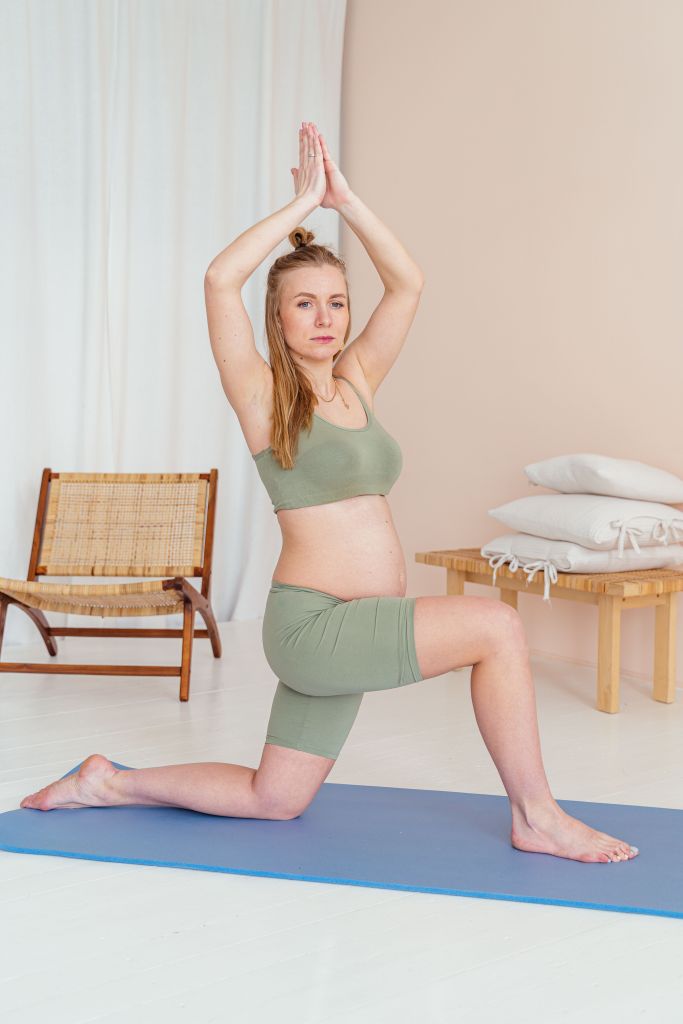
What the research actually says and how to modify safely.
Introduction
One of the most persistent prenatal exercise myths is that pregnant women should avoid twisting. You’ll hear it everywhere — from well‑meaning friends to fitness instructors who simply want to keep clients safe. But the truth is more nuanced.
Twisting isn’t inherently dangerous during pregnancy. What matters is how you twist, how much, and what stage of pregnancy you’re in.
Modern prenatal research, combined with our understanding of anatomy and biomechanics, shows that gentle rotational movement can be both safe and beneficial when performed mindfully.
Where the Myth Comes From
The “no twisting” rule originated from two concerns:
1. Pressure on the abdomen
Deep, forceful twists can compress the abdominal wall, which is already adapting to growing uterine pressure.
2. Overstretching the linea alba
In pregnancy, the connective tissue between the rectus abdominis (the linea alba) becomes more elastic. Aggressive twisting could theoretically increase strain.
These concerns are valid — but they apply to strong, end‑range, loaded twists, not gentle rotational movement.
What the Research Actually Says
Current guidelines from prenatal exercise organisations and physiotherapy bodies emphasise:
- Rotation is safe when performed with control
- Avoid deep, closed‑chain twists that compress the belly
- Prioritise open, spacious rotation
- Focus on thoracic mobility, not abdominal torque
- Modify based on comfort, trimester, and individual needs
Rotation is a natural part of gait, posture, and daily life. Removing it entirely can actually reduce mobility and contribute to back discomfort.
Why Gentle Twisting Is Beneficial
1. Thoracic Mobility
The upper spine often stiffens during pregnancy due to postural changes. Gentle rotation keeps the ribcage mobile and supports easier breathing.
2. Ribcage Expansion
As the uterus grows, space for the diaphragm reduces. Rotational mobility helps maintain ribcage flexibility for better breath mechanics.
3. Pelvic Comfort
Rotation can reduce compensatory lumbar tension and improve pelvic alignment.
4. Functional Movement
Pregnant women twist constantly in daily life — reaching, turning, getting out of bed. Practising it safely builds confidence.
How to Modify Twisting Safely
Here are the principles you can teach your clients:
1. Keep the belly spacious
Avoid compressing the abdomen with elbow-to-knee or closed twists.
2. Rotate from the ribcage, not the waist
Think “spiral the ribs” rather than “wring out the belly”.
3. Keep range small
Gentle, mid-range rotation is ideal.
4. Avoid twisting with loaded flexion
No deep twists combined with crunching or forward bending.
5. Prioritise breath
Inhale to create space, exhale to support the core.
Safe Prenatal Pilates Twists
1. Seated Open Twist
- Sit tall
- Place one hand behind you for support if required. Otherwise, arms wide
- Rotate gently from the ribs, keeping the hips and legs still
- Keep belly soft and spacious
2. Standing Thoracic Rotation
- Stand tall
- Rotate ribcage over pelvis
- Keep hips facing forward
3. Side-Lying Twist
- Lie on your side
- Circle top arm to open chest
- Allow gentle rib rotation, again with no movement below the waist
Movements to Avoid or Modify
- Deep closed twists (e.g., elbow to opposite knee)
- Twisting combined with strong abdominal compression
- Loaded twisting with weights
- Fast or jerky rotational movements
- Twists in supine, leading with legs and upper body fixed. Supine positions are not recommended as you move deeper into the second trimester anyway.
Conclusion
Pregnant women can twist — safely, gently, and with intention. The key is avoiding deep abdominal compression and focusing on thoracic mobility instead. Stop once you meet resistance.
When taught well, rotational movement supports comfort, breath, posture, and confidence throughout pregnancy.
 BODY SOUL WELL