Tag: Somaticmovement

  • Hip Mobility & Lower Body Alignment: Building Balanced, Functional Movement Patterns

    Pilates Essentials Series — Part 7

    Introduction: Why Hip Mobility Is the Missing Link in Most Pilates Practices

    If there is one area of the body that consistently shows up with tightness, weakness, compensation, or confusion in Pilates clients, it’s the hips. The hip joint is incredibly powerful and incredibly complex — and when it’s not moving well, the entire body feels the consequences.

    For Pilates teachers, understanding hip mobility and lower‑body alignment is essential for helping clients move with ease, reduce pain, and build functional strength. The hips influence gait, posture, balance, core activation, and even breath. When the hips are stiff or misaligned, clients compensate with their lower back, knees, or feet without realising it.

    In this instalment of the Pilates Essentials Series, we explore how to teach hip mobility and lower‑body alignment in a way that empowers your clients to move freely, safely, and efficiently.

    1. Why Hip Mobility Matters in Pilates

    The hip joint is a ball‑and‑socket joint designed for a wide range of motion. But modern life — sitting, driving, screens, stress — limits that movement dramatically.

    Common hip issues you’ll see in clients:

    • Tight hip flexors
    • Weak glutes
    • Limited hip extension
    • Poor external rotation
    • Overactive TFL and quads
    • Knee valgus or varus
    • Lower‑back compensation

    Why this matters in Pilates

    Hip mobility affects:

    • Pelvic alignment
    • Core activation
    • Spinal mobility
    • Balance and gait
    • Lower‑body strength
    • Load distribution

    When the hips move well, the entire body moves better.

    2. Understanding Lower‑Body Alignment: A Teacher’s Perspective

    Lower‑body alignment is not just about the hips — it’s about the entire kinetic chain.

    Key alignment checkpoints:

    • Feet: tripod grounding, arches active
    • Knees: tracking over the second toe
    • Hips: level, stable, mobile
    • Pelvis: neutral, not tipping, tilting or rotating
    • Spine: supported by the core

    The hips as the centre of lower‑body organisation

    The hips influence:

    • Knee tracking
    • Foot mechanics
    • Pelvic stability
    • Glute activation
    • Balance and proprioception

    When the hips are aligned, the rest of the lower body follows.

    3. The Three Pillars of Hip Mobility

    1. Flexibility

    Clients need adequate length in:

    • Hip flexors
    • Hamstrings
    • Adductors
    • External rotators

    2. Strength

    Mobility without strength leads to instability. Key muscles include:

    • Glute max
    • Glute med/min
    • Deep hip rotators
    • Hamstrings
    • Iliopsoas

    3. Control

    True mobility is the ability to move through range with control. Pilates excels here.

    4. How Hip Mobility Influences the Entire Body

    a. The pelvis

    Tight hip flexors pull the pelvis into anterior tilt. Weak glutes reduce pelvic stability. Both affect spinal alignment.

    b. The spine

    When the hips don’t move, the lower back compensates. This is a major cause of:

    • Lower‑back pain
    • Poor core activation
    • Limited spinal mobility

    c. The knees

    Hip weakness often shows up as:

    • Knee valgus (knees collapsing inward)
    • Knee varus (knees bowing outward)

    d. The feet

    Hip rotation influences foot pronation and supination.

    5. Teaching Hip Mobility: A Step‑by‑Step Method for Instructors

    Step 1: Build awareness

    Clients must understand how their hips move.

    Use explorations such as:

    • Leg and Hip circles
    • Leg slides
    • Standing weight shifts
    • External/internal rotation

    Step 2: Introduce alignment

    Cue:

    • “Keep your pelvis steady as your leg moves.”
    • “Imagine your thigh bone rotating inside your hip socket.”
    • “Let the movement come from the hip, not the back.”

    Step 3: Layer in breath

    Breath helps release tension and support stability.

    Cue:

    • “Inhale to create space; exhale to stabilise.”

    Step 4: Add load gradually

    Once alignment is established, challenge it with:

    • Supine core work
    • Bridging variations
    • Side‑lying work
    • Standing balance

    6. Common Hip Mobility Issues & How to Correct Them

    This is where a deep knowledge of Pilates exercises, their purpose and benefits and anatomy and physiology are essential.

    1. Tight hip flexors

    Often caused by:

    • Sitting
    • Stress
    • Weak glutes

    Corrections:

    • Stretch hip flexors
    • Strengthen glutes
    • Cue neutral pelvis

    Shoulder Bridge with the extended leg variation will address all these issues, but there are many other exercises to choose from.

    2. Weak glutes

    Often caused by:

    • Sedentary lifestyle
    • Overactive hip flexors
    • Poor movement patterns

    Corrections:

    • Bridge variations
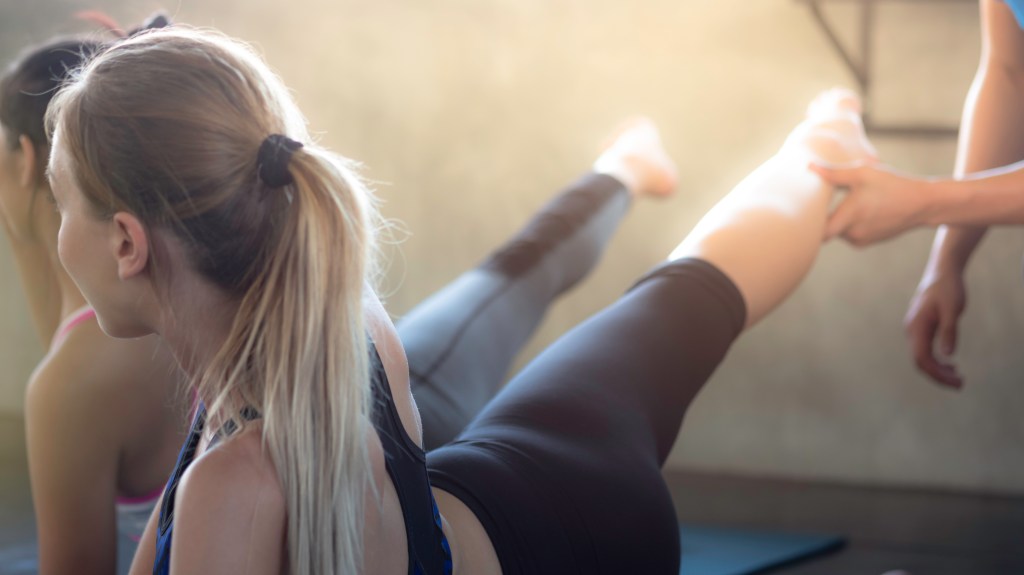
    • Side‑lying leg work
    • Standing hip abduction

    3. Limited external rotation

    Often caused by:

    • Tight deep rotators
    • Weak glutes
    • Poor hip mechanics

    Corrections:

    4. Knee valgus

    Often caused by:

    • Weak glute med
    • Poor foot mechanics
    • Hip instability

    Corrections:

    • Cue knee tracking
    • Strengthen lateral hips
    • Improve foot grounding

    7. Cueing Strategies That Create Real Change

    Use imagery

    • “Imagine your thigh bone spiralling in the socket” or “Stirring a cup of tea”
    • “Think of your hips as headlights — keep them shining forward.”
    • “Pelvis is a bowl of water – you don’t want to spill any.”

    Use tactile cues

    With consent:

    • Hands on the pelvis (yours or theirs)
    • Guiding hip rotation

    Use functional cues

    • “Can you move your leg without your pelvis shifting?”
    • “Can you keep your knee tracking over your toes?”

    Use layered cueing

    Start broad → refine → integrate.

    8. Exercises That Teach Hip Mobility Naturally

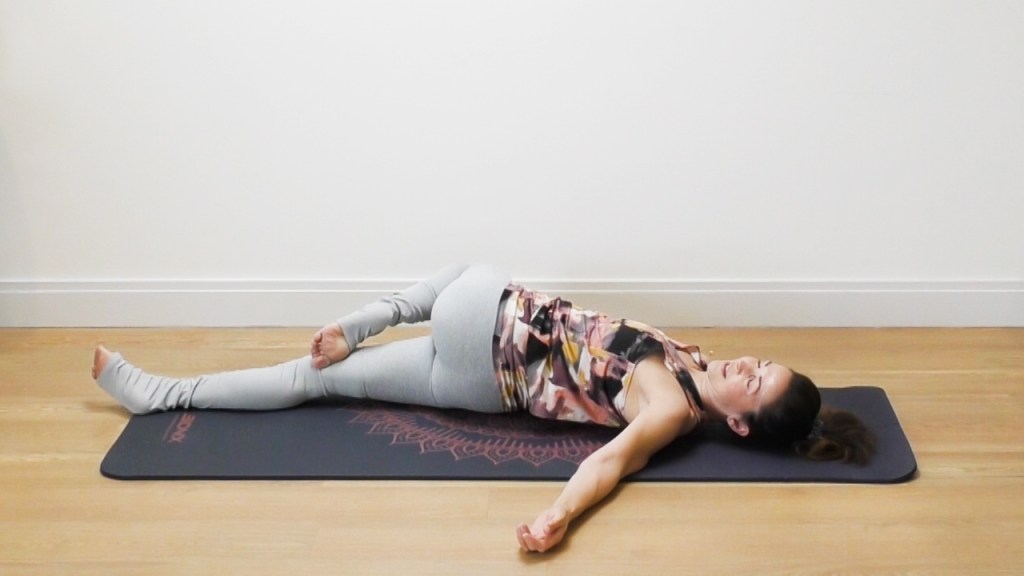
    1. Supine leg circles

    Teach hip dissociation.

    2. Bridge variations

    Strengthen glutes and improve hip extension.

    3. Side‑lying leg series

    Build lateral hip strength.

    4. Clams and hip rotation drills

    Improve external rotation.

    5. Standing balance work

    Integrate hip stability into functional movement.

    9. Progressions for Safe, Effective Lower‑Body Training

    Start with awareness

    Clients must feel the hip joint move.

    Add stability

    Introduce neutral pelvis, core activation and knee tracking.

    Add load

    Leg lifts, bridging, standing work.

    Add complexity

    Rotation, balance, transitions.

    Add functional integration

    Gait patterns, footwork.

    10. Why Hip Mobility Elevates Your Teaching

    When you teach hip mobility well, your clients:

    • Reduce lower‑back pain
    • Improve posture
    • Strengthen their glutes
    • Move with more confidence
    • Build long‑term resilience

    And your teaching becomes:

    • More precise
    • More effective
    • More transformative

    Conclusion: Building Balanced, Functional Movement Patterns

    Hip mobility and lower‑body alignment are essential for safe, efficient, and powerful movement. When clients learn to move their hips with awareness and control, they unlock better posture, stronger glutes, and a more integrated Pilates practice.

    As teachers, our role is to guide them toward this freedom with clarity, patience, and thoughtful cueing.

    It’s not enough to just know the Pilates exercises: we need to understand the purpose, benefits, muscles involved, fascia, the role of tension stored in body. A broad knowledge of all types of movement therapy is very useful. Take a look at my Services page, scroll through and click on the links for more information.

    #pilates #somaticmovement #hipmobility

  • The Science Behind Pilates: Why It Works Better Than Other Workouts

    Discover the science of Pilates—neuroplasticity, core strength, and joint health—why it outperforms traditional workouts for longevity and wellness.

    Introduction

    Pilates has often been described as mindful movement, but its benefits go far beyond flexibility and core strength. Backed by neuroscience, biomechanics, and somatic awareness, Pilates offers a unique blend of physical conditioning and nervous system regulation. In this post, we’ll explore why Pilates works better than other workouts, how it rewires the brain through neuroplasticity, and why it’s one of the most effective practices for longevity, injury prevention, and holistic health.

    1. Pilates and the Brain: Neuroplasticity in Action

    Unlike repetitive gym routines, Pilates emphasizes precision, control, and mindful awareness. This activates the brain’s neuroplasticity—the ability to form new neural connections.

    • Mind‑body connection: Each exercise requires conscious engagement of stabilizing muscles, improving motor control.
    • Cognitive health: Research shows mindful movement reduces stress, enhances memory, and supports emotional regulation.
    • Somatic awareness: By focusing on breath and alignment, Pilates helps retrain the nervous system to release tension and improve posture.

    2. Biomechanics: Why Pilates Protects Your Joints

    Traditional workouts often emphasise load and repetition, which can strain joints. Pilates, however, is designed around functional biomechanics.

    • Low‑impact conditioning: Movements strengthen without compressing joints.
    • Balanced muscle recruitment: Pilates avoids overtraining dominant muscles, reducing risk of injury.
    • Spinal health: Exercises like the One Leg Circle and Spine Stretch improve mobility while stabilising the pelvis and lumbar spine.

    3. Core Strength: More Than Just Abs

    Pilates is famous for building a strong core, but “core” in Pilates means the entire powerhouse—abdominals, pelvic floor, diaphragm, and deep spinal stabilisers.

    • Dynamic stability: A strong core supports every movement, from walking to lifting.
    • Pelvic floor health: Essential for postpartum recovery and senior fitness.
    • Breath integration: Pilates breathing techniques enhance oxygenation and core activation simultaneously.

    4. Somatic Movement: Healing Through Awareness

    Pilates overlaps with somatic practices, which emphasise internal perception over external performance.

    • Trauma‑informed approach: Gentle, mindful movement helps regulate the vagus nerve, reducing stress and anxiety.
    • Pain relief: Somatic awareness retrains the body to move without compensations, easing chronic pain.
    • Holistic back care: Pilates combined with somatic release techniques supports long‑term spinal health.

    5. Pilates vs Other Workouts: The Key Differences

    Why does Pilates often outperform other fitness methods?

    • Focus: Mind‑body connection, precision vs repetition, load, intensity
    • Impact: Low‑impact, joint‑friendly vs high‑impact, risk of strain
    • Core training: Deep stabilisers, breath vs superficial abs
    • Longevity: Sustainable across lifespan vs often unsustainable with age
    • Neuroplasticity: Actively rewires brain vs limited cognitive engagement

    6. Pilates for Seniors and Longevity

    Pilates is one of the few workouts that adapts seamlessly across age groups.

    • Senior fitness: Builds balance, coordination, and bone density.
    • Fall prevention: Strengthens stabilisers and improves proprioception.
    • Lifelong adaptability: Exercises can be modified for every stage of life.

    7. The Science of Breath and the Vagus Nerve

    Breathwork in Pilates isn’t just about oxygen—it’s about nervous system regulation.

    • Vagus nerve activation: Deep diaphragmatic breathing calms the nervous system.
    • Stress reduction: Pilates breathing lowers cortisol and promotes relaxation.
    • Performance enhancement: Efficient breathing improves endurance and focus.

    Conclusion: Why Pilates Works Better

    Pilates is more than exercise—it’s a scientifically grounded system that integrates biomechanics, neuroplasticity, and somatic awareness. Unlike traditional workouts, it builds strength while protecting joints, rewires the brain for better movement, and supports emotional resilience.

    For anyone seeking longevity, injury prevention, and holistic health, Pilates isn’t just another workout—it’s the smarter choice.

    #PilatesBenefits #SomaticMovement #PilatesSeniors #CoreStrength

  • The Mental Health Benefits of Somatic Movement: Reclaiming Calm Through Pilates and Somatic Movement

    In today’s fast-paced, hyper-connected world, mental health challenges are more prevalent than ever. Anxiety, stress, burnout and emotional fatigue have become common experiences for people across all walks of life. While traditional therapies and medications play a vital role, many are turning to holistic, movement-based practices to support their emotional well-being. One such powerful approach is somatic movement, especially when integrated with Pilates principles.

    Somatic movement is more than just exercise—it’s a way of reconnecting with your body, calming your nervous system and cultivating emotional resilience. In this blog post, we’ll explore the science and soul behind somatic movement, its mental health benefits, and how Pilates and somatic practices can help you feel more grounded, present and empowered.

    What Is Somatic Movement?

    The term somatic comes from the Greek word soma, meaning “the living body in its wholeness.” Somatic movement refers to any physical activity that emphasises internal awareness—how your body feels, moves and responds—rather than external performance or aesthetics.

    Unlike conventional workouts that focus on reps, sets or calorie burn, somatic movement invites you to slow down, tune in and move with intention. It’s about sensing, not striving. This approach is deeply therapeutic, especially for those recovering from trauma, chronic stress or disconnection from their bodies.

    Key characteristics of somatic movement include:

    • Mindful attention to breath, sensation and alignment
    • Slow, deliberate motion to release tension
    • Emphasis on internal experience over external form
    • Integration of nervous system regulation and emotional awareness

    Why Somatic Movement Supports Mental Health

    Somatic movement works on multiple levels—neurological, emotional and psychological. Here’s how it supports mental health:

    1. Regulates the Nervous System

    Chronic stress activates the sympathetic nervous system (fight-or-flight), leading to anxiety, insomnia and emotional dysregulation. Somatic movement stimulates the parasympathetic nervous system (rest-and-digest), helping the body return to a state of calm.

    Somatic-based Pilates practices, with their focus on breath, spinal alignment and core control, are especially effective at downregulating stress responses.

    2. Releases Stored Tension and Trauma

    Trauma isn’t just psychological—it’s physiological. It lives in the body as muscle tightness, restricted breath and movement avoidance. Somatic movement helps release these patterns gently, without re-triggering emotional overwhelm.

    Practices like self-myofascial release, guided meditation, and gentle Pilates flows allow the body to unwind and let go.

    3. Improves Emotional Awareness

    Somatic movement fosters interoception—the ability to sense internal bodily states. This enhances emotional literacy, helping individuals recognise and respond to feelings like sadness, anger, or joy with greater clarity.

    4. Builds Resilience and Self-Efficacy

    By reconnecting with your body and learning to move with ease, you build trust in yourself. This sense of agency is crucial for mental health, especially for those recovering from depression or anxiety.

    Pilates as a Somatic Practice

    While Pilates is often thought of as a fitness workout, associated with core strength and flexibility, its roots are deeply somatic. Joseph Pilates emphasised breath, control, concentration and flow—all key elements of mindful movement.

    Somatic-style Pilates blends classical Pilates exercises with somatic principles, creating a therapeutic experience that supports both physical and emotional healing.

    Benefits of Somatic Pilates for Mental Health:

    • Mind-body integration: Enhances awareness and presence
    • Gentle strength building: Supports posture and confidence
    • Breathwork: Calms the mind and improves focus
    • Flow and rhythm: Encourages emotional regulation
    • Creative sequencing: Keeps movement engaging and joyful

    Who Can Benefit from Somatic Movement?

    Somatic movement is accessible to everyone, regardless of age, fitness level or background. It’s especially beneficial for:

    • Individuals with chronic stress or anxiety
    • Those recovering from trauma or PTSD
    • People with depression or emotional numbness
    • Clients with chronic pain or movement restrictions
    • Anyone seeking gentle, mindful exercise

    Somatic Movement in Practice: What It Looks Like

    A typical somatic movement session might include:

    • Centering breathwork to settle the nervous system
    • Slow spinal articulation to release tension
    • Pelvic tilts and hip mobility for grounding
    • Gentle core activation to build stability
    • Self-myofascial release using props like balls or foam rollers
    • Guided meditation or body scan to integrate the experience

    In a Pilates-based somatic class, these elements are woven into short, accessible sequences that prioritise feeling over form.

    The Science Behind Somatic Movement and Mental Health

    Recent studies support the efficacy of somatic movement for emotional well-being:

    • Interoceptive awareness has been linked to improved emotional regulation and reduced anxiety.
    • Mindful movement practices, including Pilates and yoga, have shown positive effects on depression, PTSD and chronic pain.
    • Somatic therapies are increasingly used in trauma recovery, helping individuals reconnect with their bodies and process emotions safely.

    Integrating Somatic Movement Into Your Life

    You don’t need a full hour or fancy equipment to benefit from somatic movement. Even 10–20 minute sessions, like those in my Express Pilates course or an exercise or two from my Somatic Movement course, can create meaningful shifts in mood and energy.

    Tips for Getting Started:

    • Start small: Choose one or two movements and focus on sensation.
    • Use breath as your anchor: Inhale to expand, exhale to release.
    • Stay curious: Notice how your body responds without judgment.
    • Create a calming space: Dim lights, soft music and a mat are enough.
    • Practice regularly: Consistency builds resilience and awareness.

    Final Thoughts: Movement as Medicine

    Somatic movement reminds us that healing doesn’t always come from doing more—it often comes from doing less, with more intention. In a world that values hustle and performance, Pilates-based somatic practices offer a sanctuary of slowness, presence and self-compassion.

    Whether you’re a wellness professional, a busy parent or someone navigating emotional challenges, somatic movement can help you reconnect with your body, regulate your emotions, and reclaim your calm.

    “Change happens through movement and movement heals.” Joseph Pilates

    If you want to try these amazing movement therapies for yourself, checkout Services or Sale