Discover how a somatic approach to Pilates stimulates the vagus nerve to reduce stress, improve digestion, and build resilience through mindful movement and somatic awareness.
Introduction: Why the Vagus Nerve Matters
The vagus nerve is the body’s longest cranial nerve, running from the brainstem through the heart, lungs, diaphragm, and digestive system. It is the primary communicator of the parasympathetic nervous system — the “rest and digest” branch that calms stress and restores balance.
Pilates, with its emphasis on breath, alignment and mindful movement, is uniquely positioned to stimulate the vagus nerve. This connection transforms Pilates from just a physical workout into a practice of nervous system regulation, emotional resilience and holistic healing.
The Vagus Nerve and Polyvagal Theory
Psychologist Stephen Porges’ Polyvagal Theory explains how the vagus nerve influences our responses to safety, stress and connection.
- Dorsal Vagal (Immobilisation): Freeze or shutdown response.
- Sympathetic (Mobilisation): Fight‑or‑flight activation.
- Ventral Vagal (Social Engagement): Calm, connected state of regulation.
Pilates helps us move from stress or shutdown into ventral vagal activation, fostering safety, connection and resilience.
How Pilates Stimulates the Vagus Nerve
- Breathwork: Deep diaphragmatic breathing in Pilates activates vagal tone, lowering heart rate and calming stress. It’s the perfect way to start a class, connect body and mind and restore a sense of peace and tranquillity.
- Somatic Awareness: Mindful focus on sensation enhances vagal feedback, improving emotional regulation.
- Gentle Movement: Controlled spinal articulation and fascial release stimulate vagus nerve pathways.
- Safety and Connection: Pilates can create environments that support ventral vagal activation.
Benefits of Pilates for Vagus Nerve Activation
🔹 Emotional Regulation
- Reduces anxiety and stress
- Builds resilience to daily challenges
- Enhances emotional intelligence
🔹 Physical Health
- Improves digestion and gut health
- Reduces inflammation
- Supports cardiovascular regulation
🔹 Cognitive Health
- Enhances focus and memory
- Improves adaptability and neuroplasticity
- Reduces cognitive fatigue
🔹 Trauma Recovery
- Creates safety through gentle movement
- Restores nervous system balance
- Builds trust in body and mind
Practical Pilates Strategies for Vagus Nerve Stimulation
1. Breath‑Led Pelvic Tilt
- Focus: Diaphragm, pelvic floor, vagus nerve activation
- Benefit: Calms stress, retrains core stability
2. Roll Down
- Focus: Spinal articulation, fascia release
- Benefit: Stimulates vagal pathways, reduces tension
3. Shoulder Bridge
- Focus: Glutes, pelvic floor, breath and stability
- Benefit: Grounds the body, fosters emotional stability
4. Flexion/Extension
- Focus: Spinal mobility, breath integration
- Benefit: Restores fluidity, reduces anxiety
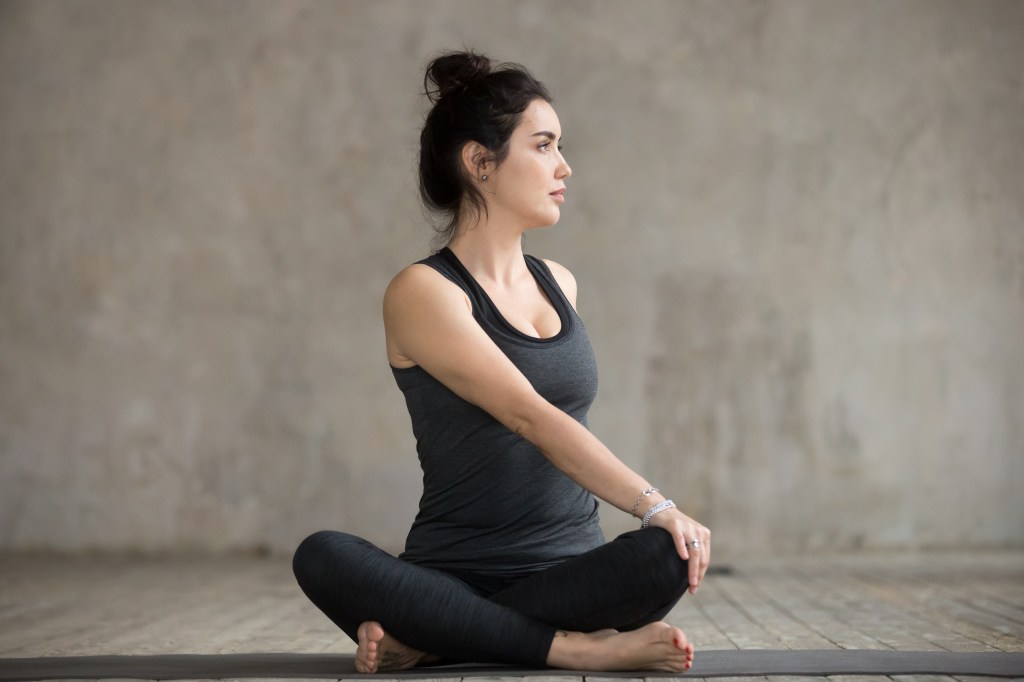
Spine twists are also excellent for stimulating the vagus nerve, either the traditional seated spine twist of in supine. Add slow horizontal eye movements to a seated spine twist (as practiced in a somatic movement class) will promote relaxation and reduce stress.
Example: Pilates for Stress Relief
If you’re experiencing chronic stress, you’ll notice symptoms such as shallow breathing and tight shoulders. Practice the following Pilates exercises and over weeks, vagal tone improves, stress decreases and resilience grows:
- Breath‑led pelvic tilts retrain diaphragmatic breathing and natural core activation.
- Somatic roll downs release spinal tension.
- Shoulder Bridge fosters grounding and safety.
Fascia, Somatic Movement and the Vagus Nerve
Fascia is richly innervated and communicates directly with the nervous system. Pilates movements that emphasise lengthening, spiraling and hydration enhance fascial health, improving vagal feedback and proprioception.
Somatic awareness deepens this connection, teaching clients to sense safety and release tension patterns.
Final Thoughts
Pilates is more than exercise — it is a neurological training system. By stimulating the vagus nerve through breath, somatic awareness and mindful movement, Pilates fosters:
- Emotional regulation
- Physical healing
- Cognitive resilience
- Trauma recovery
For wellness practitioners and clients alike, understanding the vagus nerve unlocks Pilates’ full potential as a practice of calm, connection, and holistic vitality.
#PilatesForNervousSystemRegulation #PilatesForAnxiety #PilatesForStressRelief #PilatesForResilience #PilatesForHealing #MindBodyConnection #SomaticHealing #NervousSystemReset #PolyvagalTheory #PilatesAtHome #HolisticMovement #PilatesForEveryone
 BODY SOUL WELL
Leave a comment