What the research actually says and how to modify safely.
Introduction
One of the most persistent prenatal exercise myths is that pregnant women should avoid twisting. You’ll hear it everywhere — from well‑meaning friends to fitness instructors who simply want to keep clients safe. But the truth is more nuanced.
Twisting isn’t inherently dangerous during pregnancy. What matters is how you twist, how much, and what stage of pregnancy you’re in.
Modern prenatal research, combined with our understanding of anatomy and biomechanics, shows that gentle rotational movement can be both safe and beneficial when performed mindfully.
Where the Myth Comes From
The “no twisting” rule originated from two concerns:
1. Pressure on the abdomen
Deep, forceful twists can compress the abdominal wall, which is already adapting to growing uterine pressure.
2. Overstretching the linea alba
In pregnancy, the connective tissue between the rectus abdominis (the linea alba) becomes more elastic. Aggressive twisting could theoretically increase strain.
These concerns are valid — but they apply to strong, end‑range, loaded twists, not gentle rotational movement.
What the Research Actually Says
Current guidelines from prenatal exercise organisations and physiotherapy bodies emphasise:
Rotation is safe when performed with control
Avoid deep, closed‑chain twists that compress the belly
Prioritise open, spacious rotation
Focus on thoracic mobility, not abdominal torque
Modify based on comfort, trimester, and individual needs
Rotation is a natural part of gait, posture, and daily life. Removing it entirely can actually reduce mobility and contribute to back discomfort.
Why Gentle Twisting Is Beneficial
1. Thoracic Mobility
The upper spine often stiffens during pregnancy due to postural changes. Gentle rotation keeps the ribcage mobile and supports easier breathing.
2. Ribcage Expansion
As the uterus grows, space for the diaphragm reduces. Rotational mobility helps maintain ribcage flexibility for better breath mechanics.
3. Pelvic Comfort
Rotation can reduce compensatory lumbar tension and improve pelvic alignment.
4. Functional Movement
Pregnant women twist constantly in daily life — reaching, turning, getting out of bed. Practising it safely builds confidence.
How to Modify Twisting Safely
Here are the principles you can teach your clients:
1. Keep the belly spacious
Avoid compressing the abdomen with elbow-to-knee or closed twists.
2. Rotate from the ribcage, not the waist
Think “spiral the ribs” rather than “wring out the belly”.
3. Keep range small
Gentle, mid-range rotation is ideal.
4. Avoid twisting with loaded flexion
No deep twists combined with crunching or forward bending.
5. Prioritise breath
Inhale to create space, exhale to support the core.
Safe Prenatal Pilates Twists
1. Seated Open Twist
Sit tall
Place one hand behind you for support if required. Otherwise, arms wide
Rotate gently from the ribs, keeping the hips and legs still
Keep belly soft and spacious
2. Standing Thoracic Rotation
Stand tall
Rotate ribcage over pelvis
Keep hips facing forward
3. Side-Lying Twist
Lie on your side
Circle top arm to open chest
Allow gentle rib rotation, again with no movement below the waist
Movements to Avoid or Modify
Deep closed twists (e.g., elbow to opposite knee)
Twisting combined with strong abdominal compression
Loaded twisting with weights
Fast or jerky rotational movements
Twists in supine, leading with legs and upper body fixed. Supine positions are not recommended as you move deeper into the second trimester anyway.
Conclusion
Pregnant women can twist — safely, gently, and with intention. The key is avoiding deep abdominal compression and focusing on thoracic mobility instead. Stop once you meet resistance.
When taught well, rotational movement supports comfort, breath, posture, and confidence throughout pregnancy.
Gentle strength work improves confidence, gait, and independence.
Introduction
These days, if you’re teaching daytime classes, they are likely to be full of seniors. When I first started teaching, this was definitely not the case: my 9.30am classes were full of mums who, having dropped the children off at school, would spend much of their mornings in fitness classes. Now, these classes are the luxury of those who can work flexitime or more commonly, those who have retired.
When we think about exercise for older adults, we often jump straight to balance training. And yes — balance matters. But the latest research in ageing, fall prevention, and functional mobility shows something even more important: power.
Not “gym power”. Not jumping or sprinting. But gentle, controlled, confidence‑building power — the ability to produce force quickly enough to stay safe, move well, and remain independent.
This is where Pilates shines, not least because of the core strengthening opportunities and postural correction at it’s centre.
What Is Power for Seniors?
Power is simply strength + speed. It’s the ability to react, stabilise, and move with enough force and control to meet the demands of daily life.
For seniors, power looks like:
Catching yourself if you trip
Smoothing rising from a chair
Climbing stairs without hesitation or reluctance
Turning quickly without losing balance
Lifting groceries with confidence
These are not “fitness goals”. They are independence goals. The exercises we choose need to be functional.
Why Power Declines Faster Than Strength
As we age, we naturally lose muscle mass (sarcopenia). But what declines even faster is type II muscle fibre (fast twitch) recruitment — the fibres responsible for quick reactions and stabilisation.
This means:
Balance training alone isn’t enough
Slow, gentle movement doesn’t fully prepare the body
Seniors need safe ways to practise responding and moving with intention
Pilates offers this beautifully through controlled tempo changes, resistance, and mindful coordination.
How Pilates Builds Power Safely
Pilates is uniquely suited to senior power training because it emphasises:
1. Controlled speed changes
Slow → medium → slow This teaches the nervous system how to adapt. You can incorporate this in many ways, for example, you could take a Single Leg Stretch and play with the tempo, taking two repetitions slowly with the breath, then 4 reps double time.
2. Whole‑body coordination
Power isn’t just muscles — it’s timing, sequencing, and stability. Exercises like a full Shoulder Bridge or Dead Bugs are good examples of this.
3. Resistance without strain
Bands, light weights, and bodyweight create safe challenge. Adapting exercises to standing can offer resistance and balance, for example, lifting alternate knees to work the core and balance. Light hand weights will add further resistance and co-ordination challenges.
4. Joint-friendly movement
No impact. No jarring. Just intelligent loading.
Three Power Drills for Seniors
All Pilates exercises are excellent but you can also add the following exercises to further enhance your classes which are beneficial for all.
These are simple, safe, and incredibly effective.
1. Sit-to-Stand with Arm Reach
Builds leg power, balance, and coordination.
Sit tall
Stand with a gentle push – this is your power move!
Reach arms forward as you rise
Lower with control – take twice as long for a tempo change
Why it works: It mimics real-life movement and improves reaction time.
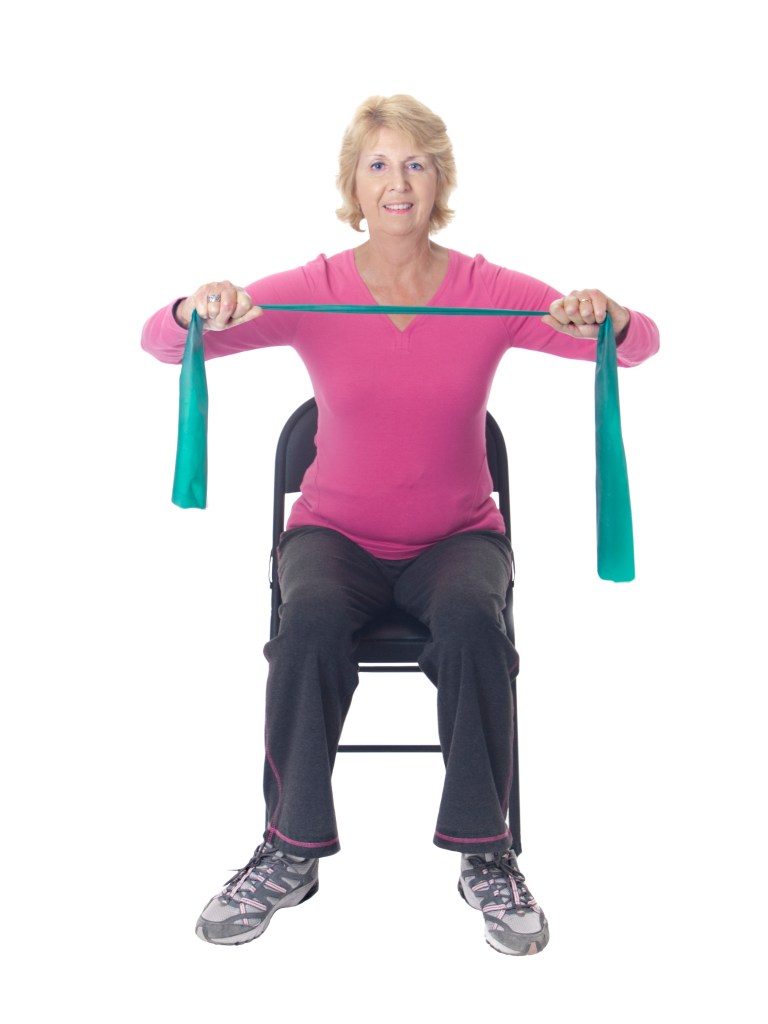
2. Heel Press + Arm Pull (Resistance Band)
Builds upper-body power and gait stability. You can choose any type of upper body exercise. You can also do this in a Shoulder Bridge position with the hips lifted and press down with the heels, lift the toes slightly.
Sit or stand tall
Press heels into the floor – this engages the glutes.
Pull the band back with intention
Release slowly
Why it works: It trains the posterior chain — essential for posture and fall prevention. The upper work improves upper body posture.
3. Step-Tap with Tempo Change
Builds rhythm, timing, and confidence.
Step to the side or alternate knee lifts
Tap the floor or lift the knee
Change tempo: tap/lift → tap/lift → tap/lift/hold. Play with the speed
Why it works: It challenges the nervous system safely and improves reaction time and balance.
The Confidence Effect
When seniors feel stronger and more responsive, everything changes:
They walk taller
They move more
They trust their bodies
They reduce fear of falling
They regain independence
Power is not about being “athletic” or super fit. It’s about being capable.
Conclusion
If you teach seniors — or if you are a senior — start thinking beyond balance. Gentle power training is one of the most effective ways to improve mobility, confidence, and quality of life.
Pilates offers the perfect environment to build it safely, mindfully, and joyfully, but add other exercises, too, that will help this older population maintain their independence long into their golden years.
The pelvis is often described as the body’s centre, but in somatic movement it is more than a landmark. It is a dynamic hub where structure, breath, visceral function, and nervous‑system tone meet and influence one another. When people say they “hold stress in their hips,” they’re pointing to something real: the pelvis is uniquely positioned to reflect both physical load and emotional load, and it responds to both with remarkable sensitivity.
To understand why the pelvis becomes a stress container, we first need to appreciate its role as a convergence zone. Although both the musculoskeletal and autonomic nervous systems span the entire body, the pelvis is one of the few regions where they interact so densely. Structural support, visceral innervation, breath mechanics, and fascial pathways all intersect here. The diaphragm–pelvic floor relationship, the neural supply to the pelvic organs, and the connective‑tissue networks that pass through this area make the pelvis a natural meeting point of physical stability and stress‑response.
The sacral plexus adds another layer to this interplay. Resting against the front of the sacrum, it carries motor and sensory fibres to the pelvic floor, deep hip rotators, and gluteal muscles, while its parasympathetic branches (S2–S4) help regulate bladder, bowel, and reproductive function. Because these nerves are influenced by autonomic state, shifts in stress, fear, or emotional load can directly affect pelvic muscle tone, breath responsiveness, and visceral tension. In simple terms, the pelvis is where your body’s physical support system meets its emotional and protective system — which is why tension so often gathers there.
Many people experience this as:
A sense of gripping or bracing in the lower belly
Tightness in the hip flexors
A tucked or rigid pelvic position
Difficulty relaxing the glutes
A feeling of “holding on” in the centre of the body
These patterns are not random. They are protective.
When we understand this convergence, pelvic holding stops looking like a random pattern and starts looking like a meaningful strategy — a way the body creates stability, safety, and containment when life feels overwhelming. And this is precisely why somatic movement can be so transformative: it works with the nervous system, not against it, helping the pelvis soften, reorganise, and return to its natural rhythm.
Why the Pelvis Holds Stress
1. The Pelvic Floor Mirrors the Breath
The diaphragm and pelvic floor work as a functional pair. When the diaphragm descends on inhalation, the pelvic floor responds by lengthening and yielding. When the diaphragm lifts on exhalation, the pelvic floor recoils and supports.
If someone’s breathing becomes shallow — a common response to stress — the diaphragm stops moving through its full range. The pelvic floor follows suit, becoming less responsive and more rigid. Over time, this creates a baseline of tension that feels like “stress in the hips.”
Research in respiratory biomechanics shows that reduced diaphragmatic excursion correlates with increased pelvic floor tone. In other words: when breath becomes tight, the pelvis becomes tight.
2. The Pelvis Is Central to Postural Stability
The pelvis is the keystone of the body’s alignment. Small shifts in pelvic position influence the lumbar spine, ribcage, hip joints, and even the feet. When the nervous system senses instability — physical or emotional — it often responds by stiffening the pelvis to create a sense of control.
This can show up as:
Excessive posterior tilt (tucking)
Excessive anterior tilt (arching)
Reduced rotation during gait
Limited lateral shifting
Over‑recruitment of the hip flexors or glutes
These patterns are not simply muscular habits: they are stabilisation strategies. The body is trying to feel safe.
3. The Pelvis Stores Unresolved Protective Responses
Somatic traditions such as Feldenkrais, Hanna Somatics, and trauma‑informed movement all recognise that the pelvis is a repository for incomplete reflexes — the “fight, flight, freeze, or fold” responses that were never fully expressed.
For example:
A freeze response may create rigidity in the pelvic floor and hip rotators.
A flight response may tighten the hip flexors and shorten the front line of the body.
A fold response may collapse the lower belly and reduce pelvic mobility.
These patterns can persist long after the triggering event has passed. The body remembers through tension.
4. The Pelvis Is a Fascial Intersection
The pelvis is wrapped in a dense network of fascia that connects to the thoracolumbar fascia, the adductors, the iliopsoas, the abdominal wall, and the diaphragm. The glutes are part of this system too. Gluteus maximus blends into the thoracolumbar fascia and sacrotuberous ligament, linking it directly to the pelvic floor, sacrum, and hamstrings. Gluteus medius and minimus sit within the lateral hip fascia, influencing pelvic stability and the way load transfers through the hips during walking and standing.
Fascia responds to stress by thickening, dehydrating, and losing glide. When this happens, movement becomes restricted and the pelvis feels “stuck.”
How Somatic Movement Releases Pelvic Tension
Somatic movement works not by stretching tight muscles, but by restoring the body’s ability to sense, respond, and reorganise. It is a process of re‑education — teaching the nervous system that it is safe to soften.
Here are the key mechanisms through which somatic movement helps the pelvis release stress:
1. Releasing Protective Patterns Through Awareness
Somatic movement begins with noticing. When someone becomes aware of how they hold their pelvis — how they grip, tuck, brace, or collapse — the nervous system gains new information. Awareness alone can reduce unnecessary tension.
This is why slow, exploratory movements are so effective. They give the brain time to update its map of the pelvis.
2. Restoring the Breath–Pelvis Relationship
Gentle somatic practices that synchronise breath with pelvic movement help re‑establish the diaphragm–pelvic floor partnership. When breath becomes fluid, the pelvic floor becomes responsive again.
Simple explorations such as:
Feeling the pelvic floor yield on inhalation
Allowing the lower belly to soften
Noticing the natural recoil on exhalation
…can create profound shifts in pelvic tension.
3. Re‑educating the Deep Stabilisers
The deep stabilisers — pelvic floor, transversus abdominis, multifidus — are designed for subtle, continuous support. When they become overactive, they lose their ability to modulate.
Somatic movement helps these muscles return to their natural rhythm by:
Reducing global bracing
Encouraging micro‑movements
Improving proprioception
Allowing the pelvis to tilt, rotate, and shift without fear
As the stabilisers regain nuance, the pelvis feels lighter and more adaptable.
4. Releasing Fascial Holding Patterns
Slow, spiralling movements, gentle rocking, and mindful weight‑shifting hydrate the fascia and restore glide. When fascia becomes more elastic, the pelvis moves more freely and tension dissipates.
This is why somatic movement often feels like “melting” or “unwinding.” The tissues are literally reorganising.
5. Completing Unfinished Reflexes
Somatic practices that allow the body to express small, instinctive movements — such as curling, uncurling, reaching, or shifting — help complete protective responses that were previously interrupted.
When these reflexes resolve, the pelvis no longer needs to hold tension as a form of protection.
What Pelvic Release Feels Like
People often describe pelvic release as:
A sense of warmth or spreading
Softening in the lower belly
More freedom in the hips
Easier breathing
A feeling of being grounded but not heavy
A sense of emotional clarity or relief
These sensations are signs that the nervous system is shifting from protection to presence.
The Pelvis as a Gateway to Whole‑Body Ease
When the pelvis releases tension, the effects ripple upward and downward through the kinetic chain. The lumbar spine decompresses. The ribcage becomes more buoyant. The hip joints regain mobility. The feet feel more connected to the ground.
Emotionally, people often feel calmer, clearer, and more centred. The pelvis is not just a physical structure: it’s a gateway to embodied resilience.
Somatic movement doesn’t force the pelvis to change. It invites it. And when the pelvis feels safe enough to soften, the whole body follows.
Such a simple exercise, yet few perform it well. Look out for shoulder position, rotation, leg extension and spinal alignment.
Decoding Posture: Post 6
Most people think of posture as a position you “hold”, but as movement professionals we know better. We spend much of our time observing our clients whilst they perform the exercises which reveals a great deal! Posture is not a statue — it’s a behaviour, a constantly adapting strategy created by the nervous system to keep the body upright, efficient, and safe.
Static posture gives us useful information, but it only tells part of the story. If we want to understand a client’s true alignment, load strategies, and compensations, we must look at posture in motion.
This is where real postural correction begins.
Why Static Posture Isn’t Enough
A client may appear symmetrical in standing, yet show clear asymmetries the moment they begin to move. This is because static posture reflects habit and a certain amount of knowledge of how it should be, but dynamic posture reflects function.
When we assess movement, we see:
how the joints organise under load
how the myofascial system distributes tension
how the nervous system chooses stability
where compensations appear when the body is challenged
This is the information that matters for effective, long‑term posture correction.
Dynamic Posture Reveals the Truth
During movement, the body can no longer “pose”. It must organise itself honestly.
Common dynamic patterns you’ll see in clients include:
A pelvis that shifts or drops during gait (glute medius weakness, lateral chain imbalance)
A ribcage that rotates more to one side (thoracic mobility asymmetry, dominant oblique patterning)
A knee that collapses only during load (valgus strategy, foot pronation, hip instability)
A foot that stiffens during push‑off (reduced ankle mobility, over‑reliance on global stabilisers)
These patterns don’t always appear in stillness — they emerge when the body must coordinate, stabilise, and transfer force.
This is why dynamic assessment is essential for Pilates teachers, yoga teachers, and movement professionals working with posture correction.
What Dynamic Posture Tells Us (Biomechanically)
When you observe posture in motion, you gain insight into:
1. Joint Stacking Under Load
How the ankle, knee, hip, pelvis, ribcage, and head align when the body is moving — not just standing.
2. Myofascial Continuity
Where tension travels, which lines dominate, and which lines under‑perform (e.g., superficial front line vs deep front line).
3. Neuromuscular Control
How well the client can stabilise, decelerate, and coordinate movement.
4. Breath + Posture Interaction
Breathing patterns that collapse the ribcage, flare the ribs, or stiffen the diaphragm.
5. Habitual Motor Patterns
The “autopilot” strategies the nervous system uses to feel safe and efficient.
This is the level of detail that allows us to create targeted, intelligent corrective exercise using matwork and simple props.
Your Posture Story: A Useful Reflection (But With Purpose)
While posture is influenced by history, emotion, environment, and experience, our goal as educators is not simply to observe — it’s to guide change.
A reflective, somatic approach helps clients understand their patterns, but it also helps us direct them toward better alignment.
Useful questions to explore with clients:
Where do you feel supported when you move?
Where do you feel effort or gripping?
What changes when you breathe differently?
What shifts when you slow down or reduce load?
These reflections give clients agency, but they also give you diagnostic clues.
Posture Correction Without Fear or Perfectionism
Although most of us are far from the idea of “ideal posture”, there are more efficient, less stressful ways for the body to organise itself without feeling we have to strive for perfection.
Posture correction isn’t about forcing a shape — it’s about:
improving joint alignment
restoring balanced muscle recruitment
increasing mobility where needed
building stability where lacking
retraining movement patterns
supporting the nervous system to adopt new strategies
This is the heart of modern, science‑based postural work.
How to Teach Dynamic Posture Assessment (Mat‑Based)
You don’t need reformers or large apparatus to assess or correct posture. Matwork and simple props give you everything you need.
Each of these reveals a different layer of the client’s postural strategy.
Why This Matters for Teachers and Trainers
When you understand dynamic posture, you can:
identify the real source of a client’s pain or limitation
design more effective corrective programs
cue with precision instead of guesswork
progress clients safely and confidently
teach with authority and clarity
This is the difference between “teaching exercises” and teaching bodies.
CTA
If you want to learn how to assess posture dynamically — and how to correct it using matwork, props, and evidence‑based biomechanics — my Postural Assessment Course walks you through the entire process.
When we think about posture, most people jump straight to the spine, shoulders, or pelvis. But one of the most powerful — and most overlooked — influencers of alignment is the ribcage. How we breathe, how we feel, and how we move all leave their imprint here.
The ribcage is not just a protective shell. It is a dynamic, responsive structure that reflects the state of the nervous system, the diaphragm, and the core. When the ribcage becomes stiff, flared, collapsed, or rotated, the entire posture adapts around it.
Understanding the ribcage is one of the most transformative skills a movement professional can develop.
Breath as a Postural Behaviour
Breathing is not just a physiological process — it is a behaviour. And like all behaviours, it adapts to stress, emotion, habit, and environment.
Common patterns include:
Shallow breathing
Often lifts the ribcage upward, creating a sense of “high chest” posture. This can lead to:
Neck tension
Overuse of accessory breathing muscles (primary breathing muscles are the diaphragm and intercostals)
Reduced diaphragm movement
Increased lumbar extension if the chest does lift.
Bracing breath
Common when clients are told to “engage the core.” This can stiffen the torso, reducing rib mobility, and limits natural spinal motion.
Emotional breath
Stress, anxiety, or overwhelm often narrow the ribs and restrict lateral expansion. This can create a collapsed or rounded posture.
Breath is a direct window into the nervous system — and the ribcage tells the story.
How Ribcage Position Influences Posture
The ribcage sits at the centre of the body’s alignment system. If it shifts, everything else shifts to compensate.
Rib flare
When the lower ribs lift and angle forward, we often see:
excessive lumbar lordosis
tight hip flexors
overactive back extensors
difficulty accessing deep core support
Collapsed ribcage
When the ribs drop and narrow, we often see:
thoracic kyphosis
rounded shoulders
forward head posture
reduced lung expansion
limited rotation
Rotated ribcage
One side expands more than the other, often linked to:
scoliosis tendencies
dominant-side breathing
asymmetrical sports or habits
compensatory spinal rotation
These are not diagnoses — they are patterns that help us understand client posture, muscle imbalances and how someone moves.
Excessive Kyphosis & Rounded Shoulders: How They Affect Breathing
Excessive thoracic kyphosis and rounded shoulders are among the most common postural patterns seen in modern life.
What happens in the body?
The thoracic spine becomes stiff and less able to extend
The ribcage narrows and collapses forward
The diaphragm loses space to descend
The upper back muscles weaken
The chest and anterior shoulder tissues tighten
How this affects breathing
Reduced rib expansion
Reliance on neck and upper chest muscles
Shallow, rapid breathing
Difficulty accessing lateral and posterior rib movement
Increased sympathetic (fight-or-flight) tone
Even though the thoracic spine is long and designed for mobility, this posture often makes it one of the stiffest regions of the body.
Breath, Core Activation & Pressure Regulation
The diaphragm, pelvic floor, deep abdominals, and ribcage work as a pressure system. When the ribcage is stiff or misaligned, this system cannot function optimally.
A well‑functioning breath–core system allows:
natural core activation without bracing
better spinal support
improved pelvic alignment
smoother movement
reduced back tension
A poorly functioning system leads to:
gripping
over-bracing
shallow breathing
increased spinal load
reduced mobility
Breath is not separate from posture — it is posture.
Pilates & Yoga Exercises to Improve Ribcage Mobility and Breath
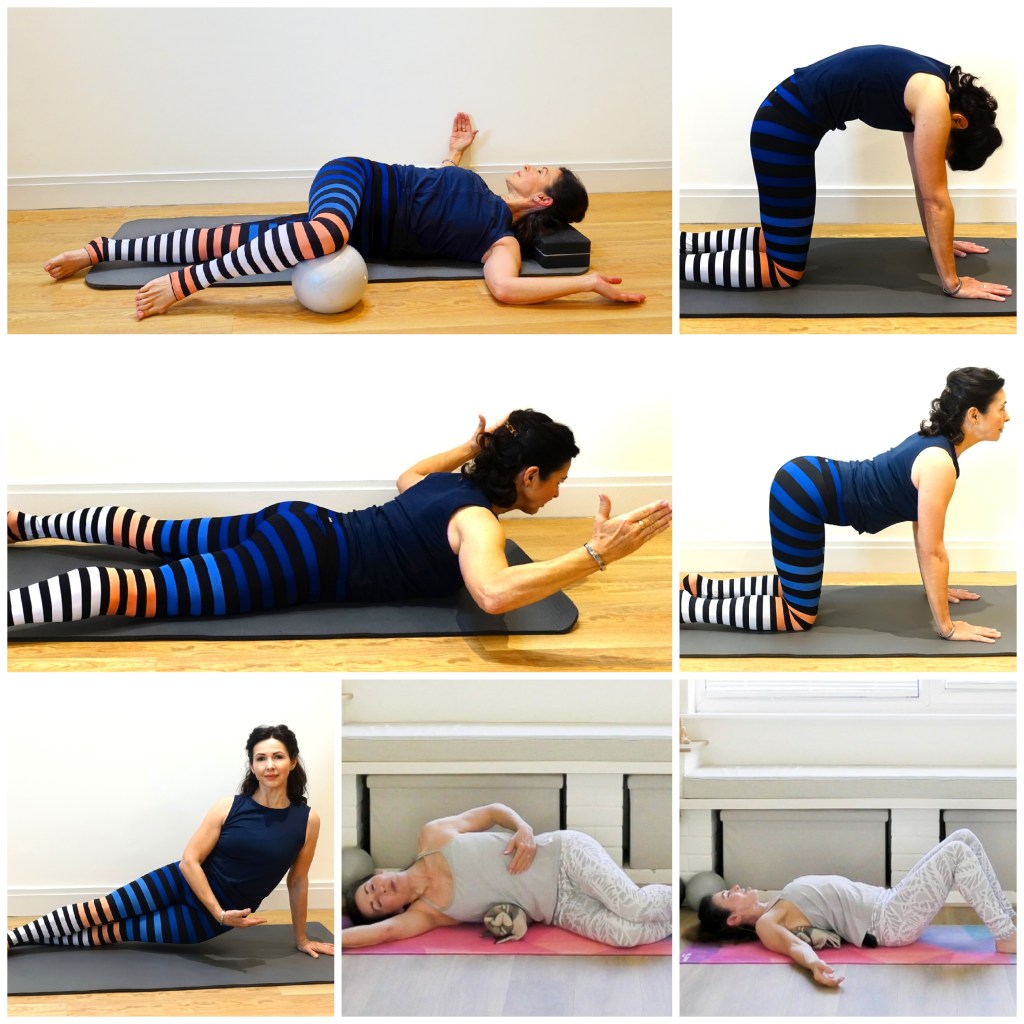
Here are some effective, accessible movements you can include in your teaching:
1. Cat–Cow with Breath Focus
Inhale: expand ribs and lift sternum as you extend the spine
Exhale: soften ribs and round gently
Improves mobility of the spine and ribcage, rib–spine coordination.
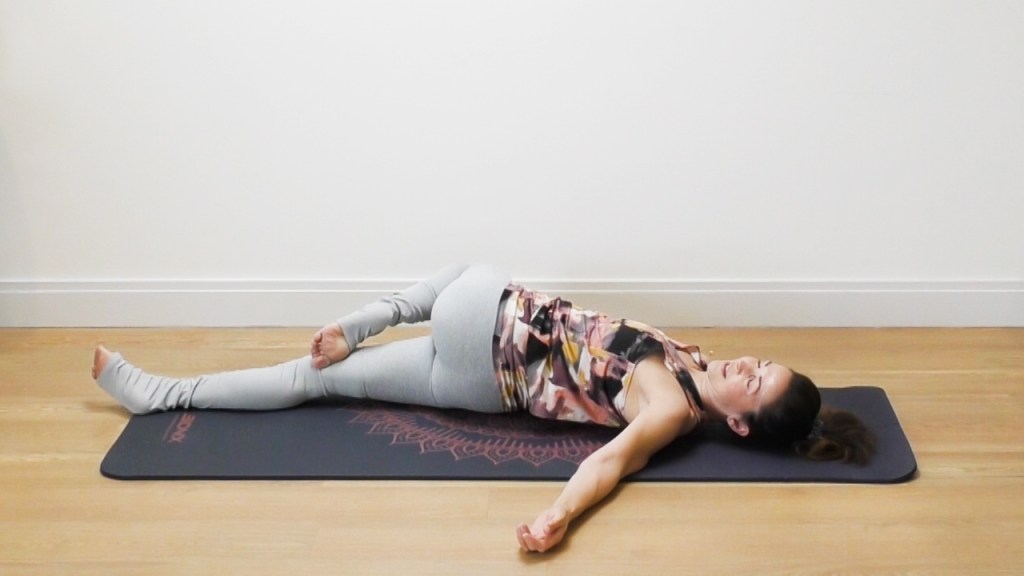
2. Side Lying Spine Twist
Encourages thoracic rotation and therefore, mobility
Opens the chests and front of shoulders
Reduces upper/mid‑back stiffness
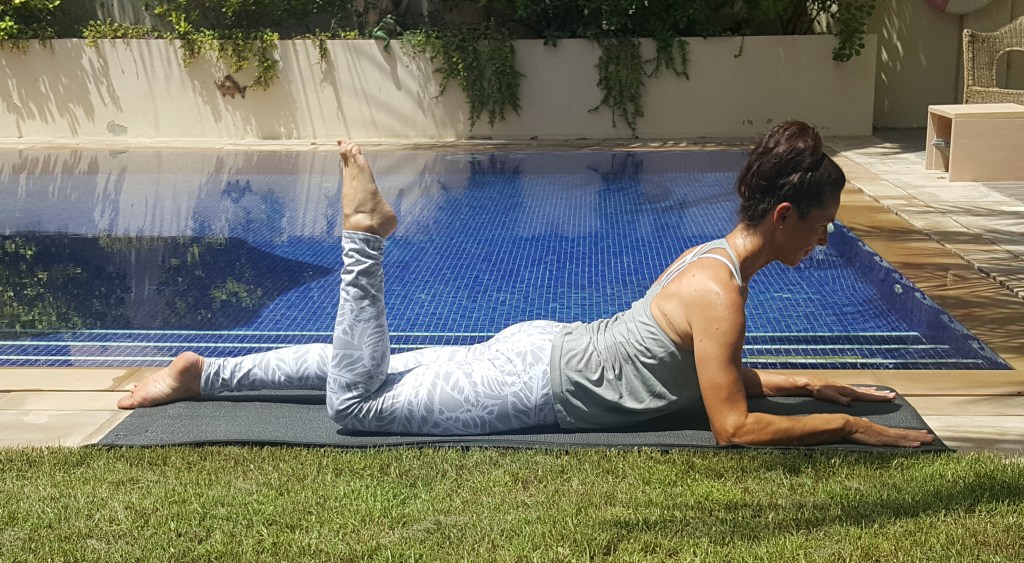
3. Spine Extension
Strength work for the mid back
With arms in a U shape and attention to positioning, this version offers great benefits to upper body posture.
4. Lateral Flexion
Opens up the side ribs, so be aware of the possible difference each side
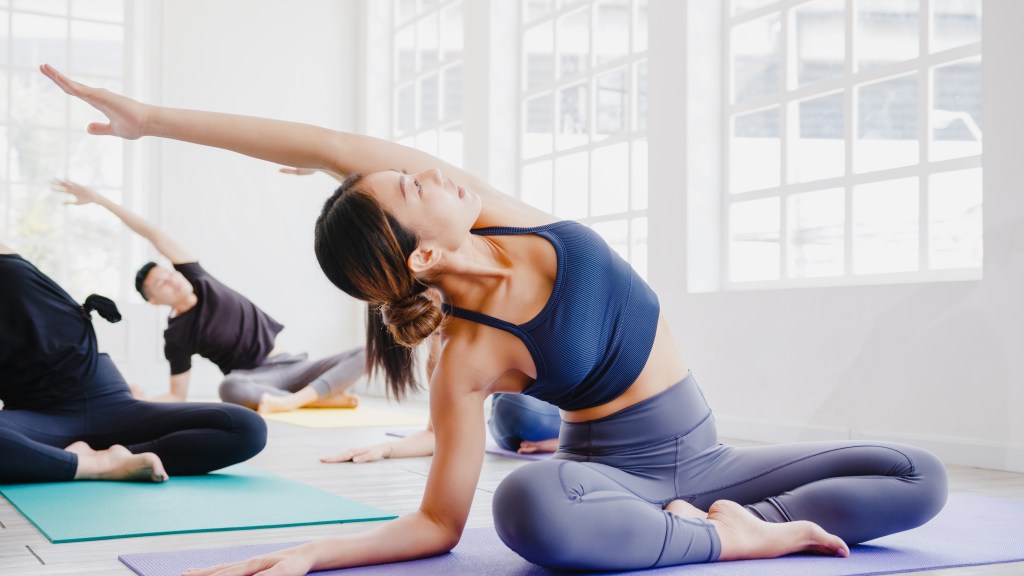
Lots of variations, from the more accessible in the main image, or the Pilates Side Bend. When able, the full version offers a full range of motion, making it very effective. The added benefit of strength work
5. Rib/Thoracic Spine Breath work
Placing a rolled towel under the ribs on one side of the body allows you to focus entirely on those side ribs.
Placing the roll in the mid back area (adjust as necessary) and laying supine over it opens the chest, front ribs and shoulders
You can rest in Savasana or Childs Pose (the latter has the added benefit of the focus moving to the back ribs.
Counteracts kyphosis and rounded shoulders
These exercises help restore mobility, balance, and breath–core synergy.
A Simple Breath Awareness Exercise
Place your hands on your lower ribs. Inhale softly and fully into the sides, allowing the torso to move as it wants to. Exhale without collapsing. Notice how the spine responds. There should be a natural extension/gentle flexion of the spine on the inhalation/exhalation. As you improve your thoracic and ribcage mobility, you will begin to notice the natural rhythm. You will also become far more aware of the natural relaxation/contraction of the core muscles.
If you want to learn how to interpret ribcage patterns, breathing behaviours, thoracic compensations and other postural topics, my Postural Assessment & Correction Course includes assessment tools and workshops that help you understand what the posture is really telling you.
The spine is not meant to be straight. It’s a beautifully engineered series of curves designed to absorb load, distribute force, and allow fluid, adaptable movement. When we tell clients to “stand up straight,” we often push them away from their natural alignment and into bracing, gripping, and overcorrection.
Why the Spine Has Curves (and Why They Matter)
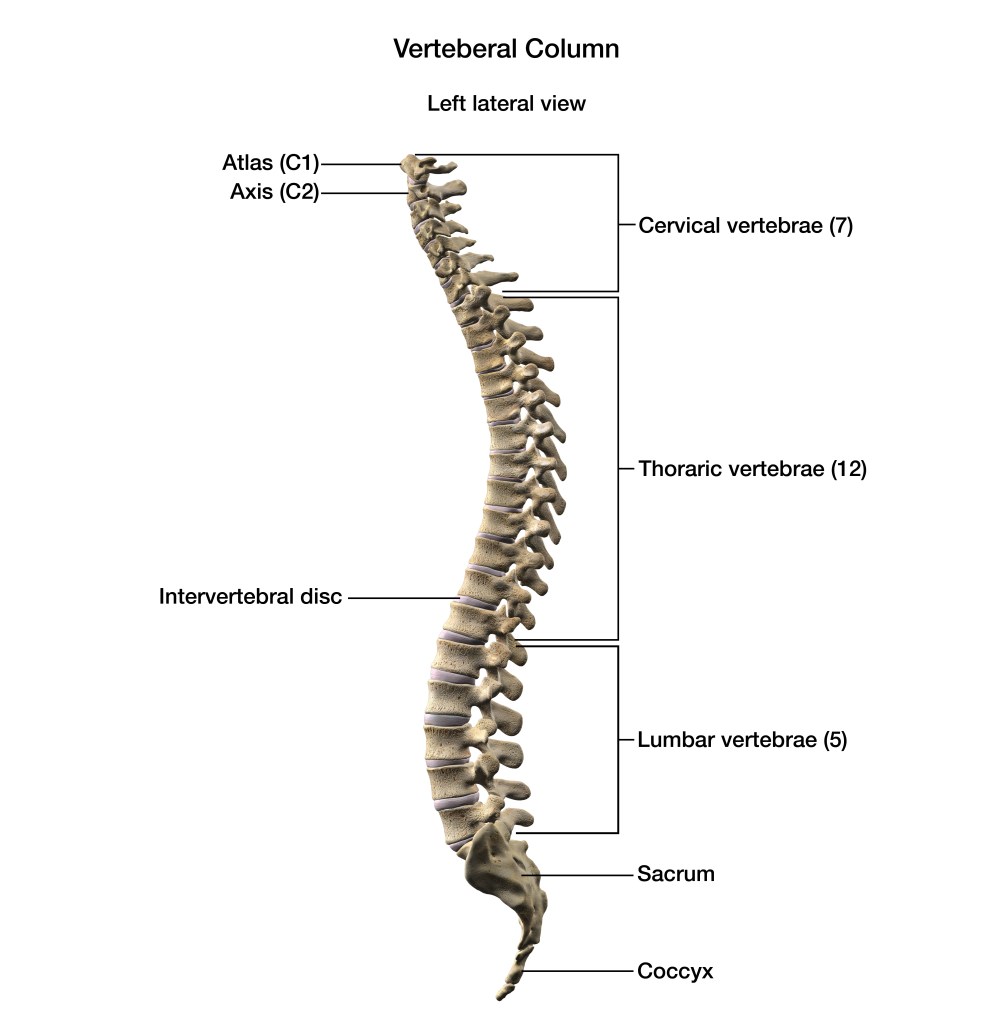
The spine’s curves are not flaws — they are functional architecture and essential for our health. Each curve plays a specific role:
Cervical lordosis (neck curve)
Positions the head over the body
Allows shock absorption during walking and running
Supports visual orientation and balance
Thoracic kyphosis (mid‑back curve)
Protects the heart and lungs
Allows rotation for gait, turning and reaching
Helps distribute load through the ribcage
Lumbar lordosis (lower‑back curve)
Supports upright posture
Allows hip–spine coordination
Absorbs compressive forces during standing and lifting
Together, these curves create a spring-like system that manages load far better than a rigid, straight column ever could.
What Happens When Curves Are Too Much or Too Little?
Spinal curves naturally vary, but when they become exaggerated or flattened, the body often compensates elsewhere.
When curves are excessive
Examples:
Hyperlordosis (excessive lumbar curve)
Hyperkyphosis (excessive thoracic rounding)
Possible consequences:
Lower‑back compression
Facet joint irritation
Ribcage collapse and restricted breathing
Neck strain from forward head posture
Hip flexor overactivity or gripping
When curves are reduced
Examples:
Flat lumbar spine
Reduced thoracic kyphosis
Military or Flat Back posture
Possible consequences:
Disc pressure increases
Reduced shock absorption
Overuse of superficial muscles
Stiff, braced movement patterns
Difficulty accessing natural spinal rotation
These patterns are not diagnoses — they’re simply observations that help us understand how someone moves, where muscle imbalances may be and how we can help our clients.
Why We Shouldn’t Guess or Label Clients
As movement professionals, we see patterns — but we do not diagnose.
Two people can look similar externally but have completely different underlying causes:
One person’s hyperlordosis may be structural
Another’s may be habitual
Another’s may be a protective response to pain
Another’s may be linked to breathing mechanics
This is why guessing is risky. It can lead to:
Overcorrecting a pattern that doesn’t need correcting
Giving exercises that aggravate symptoms
Misinterpreting a structural variation as a “fault”
Missing red flags that require medical input
A proper diagnosis — when needed — must come from a qualified clinician.
Our role is to observe, interpret movement, and guide clients safely, not to label or pathologise.
How to Spot Habitual Patterns
Look for subtle, consistent tendencies such as:
A stiff or immobile thoracic spine
A collapsed or rigid ribcage
Excessive lumbar gripping
A forward‑shifted ribcage
A tucked or untucked pelvis influencing spinal curves
Breath patterns that reinforce tension
Where the weight is on the feet
These patterns tell a story — not about “good” or “bad” posture, but about how someone has adapted to their life, habits, and history.
If you want to learn how to interpret spinal patterns and understand the deeper relationships between breath, pelvis, gait, and spinal curves the Postural Assessment & Correction Course offers a practical, compassionate, research‑informed approach with lots of practical workshops.
Another supplementary post for my Decoding Posture series Post 3 about the hips before we move to post 4.
The psoas has always held a certain mystique — the “deep hip flexor,” the “fight-or-flight muscle,” the “emotional storehouse” – if you’ve taken my Pilates Teacher Training Course, you will have studied it in depth in the Psoas lecture. But beyond the myths, current scientific research is giving us a far clearer, more functional understanding of what the psoas actually does, how it behaves under load, and what it needs to stay healthy.
And the truth is far more interesting — and far more useful — than the old “tight psoas = stretch it” narrative (still happening).
This post is part of my Decoding Posture series and links directly to the principles I teach inside my Postural Assessment & Correction Course, where we explore the psoas in relation to pelvic alignment, breathing mechanics, gait, and compensatory patterns.
What the Latest Research Reveals About the Psoas
1. It’s a stabiliser first, a mover second
EMG studies show that the psoas fires reflexively to stabilise the lumbar spine during walking, standing, and transitional movements. It’s not designed to be a big, powerful prime mover — it’s designed to be responsive, reactive, and coordinated with the diaphragm, pelvic floor, and deep abdominals.
This means:
A “tight” psoas is often a tense psoas
A “weak” psoas is often an overworked psoas
A “short” psoas is often a protective psoas
2. It’s deeply connected to the nervous system
The psoas has direct fascial and neurological links to the diaphragm and lumbar plexus. Research into autonomic regulation shows that chronic stress, shallow breathing, and prolonged sitting can increase baseline tension — making the psoas feel tight even when it isn’t structurally short.
This is why breathwork changes everything and somatic movement is a very useful form of therapy that complements Pilates perfectly.
3. Strength and load tolerance matter more than stretching
Recent hip flexor studies show that eccentric strength, load tolerance, and movement variability improve hip extension, reduce low-back discomfort, and restore functional length far more effectively than passive stretching.
In other words:
A strong, well-coordinated psoas is a long psoas.
4. Walking is the psoas’ natural rhythm
Gait research consistently shows that the psoas activates most efficiently during reciprocal movement — the gentle, rhythmic loading and unloading of walking.
If you want a healthy psoas, you need:
Hip extension
Arm swing
Thoracic rotation
A relaxed, responsive diaphragm
5. It thrives on variety, not stillness
The psoas hates being held in one position — whether that’s sitting, gripping, or “standing tall” with braced abdominals. It responds beautifully to:
Rotation
Side bending
Spirals
Dynamic hip extension
Breath-led movement
The Breath–Psoas Connection
Because of its intimate relationship with the diaphragm, breathing is one of the fastest ways to influence psoas tone.
When the diaphragm moves well:
The psoas softens
The lumbar spine decompresses
The pelvic floor responds reflexively
The nervous system shifts toward safety (releases tension)
When the diaphragm is restricted:
The psoas grips
The ribs flare or compress
The pelvis tilts
Compensations appear everywhere
How Pilates Supports a Healthy, Functional Psoas
Pilates is uniquely positioned to support psoas health because it emphasises:
Dynamic stability rather than bracing
Eccentric control of the legs
Spinal mobility to reduce compensations
Breath integration to calm the nervous system
Hip extension to counter modern sitting habits
Movement variety across all planes
This combination is exactly what the psoas thrives on.
Try These Psoas-Friendly Pilates Moves
Single Leg Kick
Scissors on the shoulders
Straight Leg Single Stretch
Advanced Shoulder Bridge
All Supine Core exercises
Side Bends and Side Kicks
Leg Circles with spine twist phase
🎓 Want to Understand the Psoas on a Deeper Level?
Inside my Postural Assessment & Correction Course, we explore:
How to assess psoas function without relying on outdated “length tests”
How pelvic alignment influences psoas behaviour (and vice versa)
How breathing patterns alter posture
How to identify compensations in gait and standing posture
Practical corrective strategies you can use with clients
As a movement professional, understanding client posture and finding functional ways to help correct imbalances is essential and makes the teacher/client relationship more valuable.
In my recent post 3 in the Decoding Posture, I talked about stability which can be a confusing subject, so I wanted to add this brief extra supplement to explain in a little more depth.
When people hear the word stability, they often imagine “holding still.” But in Pilates, stability is so much more than staying in one place.
There are two types we train:
Static Stability
This is your ability to maintain control when the body is not moving.
Think of:
The Hundred and other supine core exercises
Holding a plank
Balancing on one leg
Maintaining neutral pelvis in a bridge set‑up
Static stability builds deep support, awareness, and postural endurance. It teaches the body how to organise itself efficiently before movement begins.
Dynamic Stability
This is your ability to stay controlled while the body is moving.
Think of:
Leg circles with the advanced pelvic rotation
Walking with smooth pelvic rotation
Rolling like a ball with fluid control or Corkscrew
Side Bend or Twister
Reaching, twisting, lifting, bending
Dynamic stability is what keeps us safe in real life — when we’re carrying shopping, climbing stairs, playing sports, or reacting to uneven ground.
Why Pilates Is So Effective
Pilates trains both forms of stability by integrating:
Breath
Deep core activation
Controlled mobility
Alignment awareness
Smooth transitions
You learn not just to hold stability, but to move through it — which is where true functional strength lives.
A Helpful Way to Think About It
Static stability = setting the foundation
Dynamic stability = moving from that foundation
Both are essential for posture, balance, and confident movement at any age.
If you’d like to refine your eye for pelvic patterns, the Postural Assessment Course breaks this down with simple frameworks, real‑world examples, and practical assessment tools you can use immediately.
If the feet are the foundation of posture, the pelvis is the power centre. It’s one of the most misunderstood regions in movement work — often blamed for back pain, hip tightness, “poor posture,” or instability — yet the pelvis is usually doing its best to adapt to forces coming from above and below.
A pelvis that appears “tilted,” “rotated,” or “stuck” is often responding to:
Habitual movement patterns
Breath mechanics
Load distribution
Emotional holding
Compensations from the feet, hips, or upper body alignment
The pelvis is designed to move, tilt, rotate, and shift. Problems arise not because it moves, but because it becomes restricted or habitually fixed outside of its neutral zone.
Neutral Pelvis & Core Stability — The Foundation of Efficient Movement
In Pilates, we talk about “finding neutral,” one of the first things we teach our clients. It’s essential in order to strengthen and train the core muscles to do their stabilising job. We also need to remember that neutral is a dynamic relationship during movement in our daily lives. A neutral pelvis allows the spine to maintain its natural curves, the diaphragm and pelvic floor to work as a team, and the deep stabilisers to switch on with minimal effort. It helps stabilise, protect and prevent injury, enabling efficient movement.
Why Neutral Matters for Posture
A well‑organised pelvis supports:
Efficient load transfer through the spine
Balanced hip mobility
Optimal breathing mechanics
Reduced compensatory tension in the lower back
Better shock absorption during gait
When the pelvis is chronically anteriorly or posteriorly tilted, the stabilising system has to work harder, often leading to fatigue, gripping, or over‑recruitment of global muscles.
Meet the Deep Stabilisers — The Heroes of Pelvic Alignment
To understand pelvic posture, we must understand the core stabilising system. These muscles don’t create big movements; they create control, support, and timing.
The Key Players
Pelvic Floor — supports organs, manages pressure, and stabilises the pelvis from below
Transversus Abdominis (TA) — wraps around the torso like a corset, providing 360° support
Multifidus — segmental stabiliser of the spine, crucial for fine‑tuned control
Diaphragm — the top of the core canister; its movement directly influences pelvic and spine position
Internal obliques – essential for core stabilisation and force control of the lumbar spine, thorax, pubic symphysis and sacroiliac joint.
When these muscles work in harmony, the pelvis naturally finds its most efficient alignment. When they don’t, the body compensates — often through gripping the glutes, overusing the hip flexors, or bracing the abdominals.
A Helpful Cue for Clients
When teaching neutral position, try shifting the focus from a strict position to function.
“Let your pelvis settle into a place where your breath feels easy in a wide open ribage and your spine feels long.”
How to Observe Pelvic Patterns (for Movement Professionals)
In Standing
ASIS/PSIS (hip bones/pubic bone) relationship — is there an obvious tilt?
Weight distribution
Hip height differences
Ribcage relationship
In Movement
Squat/hinge test
Walking gait
Load response
These observations help you understand why a client moves the way they do and where you can help them.
Common Pelvic Patterns You’ll See
Posture tells a story.
Anterior Tilt — often paired with tight hip flexors, rib flare, or lumbar extension
Posterior Tilt — common in those who grip their glutes or brace their abdominals
Lateral Shift — weight habitually sits on one leg
Pelvic Rotation — sometimes linked to gait asymmetry or dominant‑side patterns
Each pattern has a reason. Your job is to observe, understand, and guide.
Helping Clients Find Their “Ideal” Pelvic Alignment
Posture is not a fixed shape — it’s a responsive, adaptable state. Encourage clients to explore:
Breath‑led pelvic movement (for example, pelvic tilts with the breath)
Hip mobility in all planes
Gentle core activation without bracing (encourage modified versions)
Awareness of weight distribution
A pelvis that can move freely can also stabilise effectively.
Final Thoughts
The pelvis is the bridge between the upper and lower body — a dynamic hub that influences every movement pattern. When we understand its behaviour, we can help clients move with more ease, efficiency, and confidence.
If you’d like to refine your eye for pelvic patterns, the Postural Assessment Course breaks this down with simple frameworks, real‑world examples, and practical assessment tools you can use immediately.
When we look at posture, the ankles and knees often get overlooked — yet they’re two of the most revealing joints in the entire kinetic chain. They tell us how the body manages load, absorbs force, and adapts to the patterns that begin at the feet. The first time I ever thought about reduced ROM in the ankle and witnessed the impact on the rest of the body was when I started teaching yoga. Some clients struggled to sit back into Child’s Pose; inability to go all the way down into Malasana (deep squat to the floor); knee drift and foot turnout in Utkatasana (Chair Pose/squat).
Why ankles and knees matter in posture assessment
These joints act as the body’s natural shock absorbers. When they move well, the whole system feels smoother and more efficient. When they stiffen, collapse, or rotate excessively, the body compensates above.
Common patterns you’ll see:
knees drifting inward (valgus)
knees bowing outward (varus)
ankles collapsing medially
ankles rolling outward
limited dorsiflexion affecting gait and squat patterns
These are common adaptations.
How foot mechanics influence the knees
A pronated foot often creates an inward spiral up the leg. A supinated foot often creates an outward spiral. But both influence knee tracking.
What to observe:
Does the knee track over the second toe?
Does one knee behave differently from the other?
Does the knee collapse inward during load?
Does the client “lock” their knees in standing?
Neutral asa behaviour
Neutral knee alignment isn’t just a fixed position: it’s the ability to move through neutral with ease.
Look for:
smooth transitions
balanced weight distribution
the ability to bend without collapsing
the ability to straighten without discomfort
Simple awareness tests
Stand on one leg — what happens at the knee?
Try a slow mini‑squat — does the knee drift?
Walk barefoot — do the knees rotate inward or outward?
Biomechanics: what’s happening under the surface
A useful way to think about the ankle–knee relationship is rotation. When the foot pronates to accept load, the arch lowers and the tibia often follows with a small amount of internal rotation. If the hip can’t control that rotation (or the ankle/foot collapses too quickly), the knee may drift inward. With a more supinated foot, the tibia tends to rotate outward and the knee may sit more “bowed” (varus) or struggle to absorb force smoothly.
Dorsiflexion matters because it’s one of the main ways we decelerate bodyweight during walking, stairs, and squat patterns. If the ankle can’t flex, the body comensates: the foot may turn out, the arch may roll inwards, the heel may lift early, or the knee may travel medially to find range. Those compensations are useful clues in assessment.
Screening Tell Tale Signs
Squat to stand or a wall squat: early heel lift, foot turnout or valgus. What it might suggest: limited dorsiflexion range or dorsiflexion not well controlled under load.
Shoulder Bridge: the supporting foot “claws” at the mat or rolls in/out, the pelvis drops/hitches, the knee loses stability and alignment as weight shifts during foot switch. What it may suggest: reduced foot tripod organisation and/or a hip control demand for which the client is not yet ready.
Mini case study: knee drift in a squat pattern
Client presents with tendency towards valgus during sit-to-stand test and there is evidence of instability on single-leg tasks. In natural standing posture, you notice that one foot and and the knee on the same side roll inwards slightly. In a slow mini-squat, the tibia appears to internally rotate as load increases, the heel wants to lift early, and the knee tracks the big toe rather than the second toe. A quick knee-to-wall check suggests reduced dorsiflexion compared with the other side. You then have to continue to observe to decide whether it is a foot/ankle ROM issue, foot control issue or hip control issue.
The Knee to Wall Test assesses ankle dorsiflexion by measuring how far the foot can be from a wall while the knee touches it without the heel lifting. Adequate dorsiflexion is essential for proper gait, squatting, and weight-bearing activities. Limited mobility can contribute to conditions like knee pain, overpronation, or plantar fasciitis.
You can help this client by restoring dorsiflexion, improving awareness of the foot tripod and work on hip external rotation/abduction. When you retest the mini-squat or single leg work, hopefully you will see better knee tracking.
Useful Cues
“Track the knee over the second toe” or “keep the heel heavy as you bend”.
Note: discomfort can have many contributors: if pain is sharp, worsening, or persistent, seek assessment from a qualified health professional.
If you want to deepen your ability to read these patterns in clients, my Postural Assessment course explores posture in much more detail.
 BODY SOUL WELL