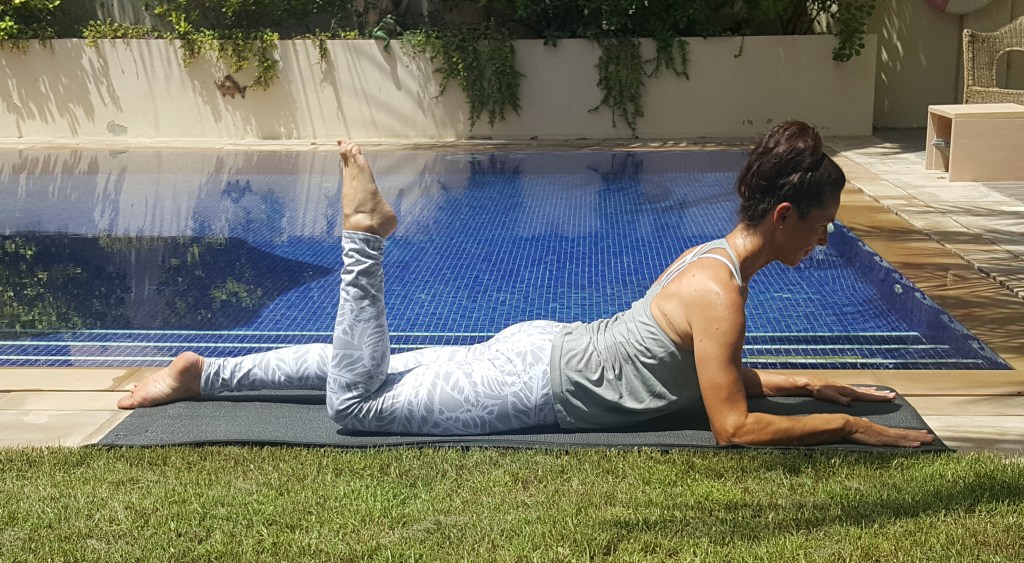
Another supplementary post for my Decoding Posture series Post 3 about the hips before we move to post 4.
The psoas has always held a certain mystique — the “deep hip flexor,” the “fight-or-flight muscle,” the “emotional storehouse” – if you’ve taken my Pilates Teacher Training Course, you will have studied it in depth in the Psoas lecture. But beyond the myths, current scientific research is giving us a far clearer, more functional understanding of what the psoas actually does, how it behaves under load, and what it needs to stay healthy.
And the truth is far more interesting — and far more useful — than the old “tight psoas = stretch it” narrative (still happening).
This post is part of my Decoding Posture series and links directly to the principles I teach inside my Postural Assessment & Correction Course, where we explore the psoas in relation to pelvic alignment, breathing mechanics, gait, and compensatory patterns.
What the Latest Research Reveals About the Psoas
1. It’s a stabiliser first, a mover second
EMG studies show that the psoas fires reflexively to stabilise the lumbar spine during walking, standing, and transitional movements. It’s not designed to be a big, powerful prime mover — it’s designed to be responsive, reactive, and coordinated with the diaphragm, pelvic floor, and deep abdominals.
This means:
- A “tight” psoas is often a tense psoas
- A “weak” psoas is often an overworked psoas
- A “short” psoas is often a protective psoas
2. It’s deeply connected to the nervous system
The psoas has direct fascial and neurological links to the diaphragm and lumbar plexus. Research into autonomic regulation shows that chronic stress, shallow breathing, and prolonged sitting can increase baseline tension — making the psoas feel tight even when it isn’t structurally short.
This is why breathwork changes everything and somatic movement is a very useful form of therapy that complements Pilates perfectly.
3. Strength and load tolerance matter more than stretching
Recent hip flexor studies show that eccentric strength, load tolerance, and movement variability improve hip extension, reduce low-back discomfort, and restore functional length far more effectively than passive stretching.
In other words:
A strong, well-coordinated psoas is a long psoas.
4. Walking is the psoas’ natural rhythm
Gait research consistently shows that the psoas activates most efficiently during reciprocal movement — the gentle, rhythmic loading and unloading of walking.
If you want a healthy psoas, you need:
- Hip extension
- Arm swing
- Thoracic rotation
- A relaxed, responsive diaphragm
5. It thrives on variety, not stillness
The psoas hates being held in one position — whether that’s sitting, gripping, or “standing tall” with braced abdominals. It responds beautifully to:
- Rotation
- Side bending
- Spirals
- Dynamic hip extension
- Breath-led movement
The Breath–Psoas Connection
Because of its intimate relationship with the diaphragm, breathing is one of the fastest ways to influence psoas tone.
When the diaphragm moves well:
- The psoas softens
- The lumbar spine decompresses
- The pelvic floor responds reflexively
- The nervous system shifts toward safety (releases tension)
When the diaphragm is restricted:
- The psoas grips
- The ribs flare or compress
- The pelvis tilts
- Compensations appear everywhere
How Pilates Supports a Healthy, Functional Psoas
Pilates is uniquely positioned to support psoas health because it emphasises:
- Dynamic stability rather than bracing
- Eccentric control of the legs
- Spinal mobility to reduce compensations
- Breath integration to calm the nervous system
- Hip extension to counter modern sitting habits
- Movement variety across all planes
This combination is exactly what the psoas thrives on.
Try These Psoas-Friendly Pilates Moves
- Single Leg Kick
- Scissors on the shoulders
- Straight Leg Single Stretch
- Advanced Shoulder Bridge
- All Supine Core exercises
- Side Bends and Side Kicks
- Leg Circles with spine twist phase
🎓 Want to Understand the Psoas on a Deeper Level?
Inside my Postural Assessment & Correction Course, we explore:
- How to assess psoas function without relying on outdated “length tests”
- How pelvic alignment influences psoas behaviour (and vice versa)
- How breathing patterns alter posture
- How to identify compensations in gait and standing posture
- Practical corrective strategies you can use with clients
As a movement professional, understanding client posture and finding functional ways to help correct imbalances is essential and makes the teacher/client relationship more valuable.
 BODY SOUL WELL
Leave a comment