How you and your Client can get the Most out of every class
For the first 15 years of my career in the fitness industry, I taught high energy, highly choreographed classes to music – aerobics and Step mainly. I did it all – every step, hop and jump – all 25 classes some weeks! I was fit and loved every minute of it. If I stopped, they stopped, so we did it all together.
The first thing I noticed on day one of my first Pilates teacher training course back in 2000 was that the teacher didn’t do any of the exercises! Each training day began with a Pilates class and she didn’t do one exercise. Yet she managed to get us all safely through a number of very enjoyable sessions.
The most common scenario, however, in many leisure centres and clubs is the teacher lying down at the front of the class, doing the exercises with the clients who are constantly stopping, lifting their heads or even sitting up to see what’s going on. Not ideal in a mind/body somatic type class that is essentially about posture, concentration, co-ordination, flow, precision, etc.
It’s a subject that comes up often and something I see all the time in my student assessments for Certification. It’s something I used to do myself which left me with a deep sense of loss of control and frustration. I’ve been lucky enough to work with some incredible instructors from around the world in some exclusive studios with discerning clients and I’ve learned a lot. I wanted to share a few insights that have helped me through my many years of teaching and kept me here for 40 years.
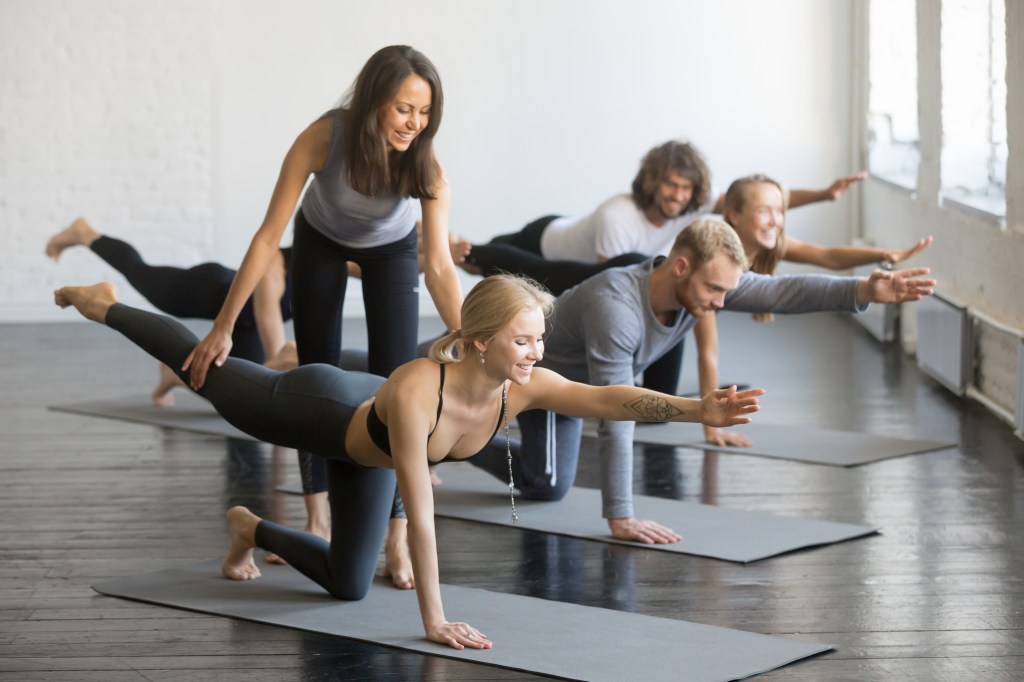
- What is your role as a teacher? To help your clients learn, understand and practice Pilates safely and effectively. We were always told: “If you want a workout, go to a class.” Through a combination of demonstration (keep it brief – just one thing to get them started), verbal/physical cues and adjustments, together with relevant information whilst observing the class, you will spend most of your time on your feet (except for beginner classes).
- Understand what you are teaching: there is a massive difference between fitness classes that are heavily choreographed, high energy with loud music. The cues are less on technique and more on direction. You need to be doing otherwise it soon deteriorates into total chaos! But they can see you all the time unlike in a Pilates class.
- Pilates is a mind/body form of exercise: you want them feeling it and “going inside” rather than trying to rely on seeing what you are doing. They can’t see you easily anyway for most of the exercises as they are supine or prone. You can’t see them if you’re lying down. If you need to demonstrate something new, try to plan it to follow a seated or side-lying exercise and put yourself in front of them. Or demo at some point during the warmup when they are busy doing something simple. Keep it brief.
- Separate the beginners from the rest: sometimes easier said than done if you are working for a leisure centre of similar, but the classes will be more satisfactory for all concerned.
- Arrive early: if you have no control over who comes to which class, you can at least avoid surprises! Briefly welcome the regulars and position the beginners for easy access. Maybe at least give them a quick tour of neutral and thoracic breathing before class. Always teach these fundamentals in every class.
- Kiss: Keep It Super Simple – in mixed classes, start with a modification that everyone is likely to understand and move the more advanced on once everyone is moving. Don’t try to cram too much into the class either – technique over reps and content.
- Sharpen up your verbal cues, vocabulary and use visuals: they are more likely to do the exercise correctly if the language is clear and descriptive.
- Try not to count all the way through: maybe just “last 2” or similar so that they can gauge whether to rest or see it through. There are so many interesting things to say – muscles, benefits, principles, technique, etc. Once you start to really see what’s in front of you, you will know when they’ve done enough!
- Avoid over-correcting: It can be demoralising for “the one” who seems to always struggle with the same thing. When you do correct, do it in a positive way. Say what they are doing well and use positive reinforcement. It’s very motivating to be told that you’re doing a great job. Also, in larger groups, priortise safety, correcting those who are in danger of hurting themselves. Obviously in a large group you won’t get to everyone but if you don’t get to someone, try to do so the following session. Stay on at the end and help “the one” understand the exercise – we all learn in different ways and sometimes, we just don’t hear or feel it for a while.
- Plan: there’s nothing like being prepared.
Conclusion
Unless you are teaching Pilates as a side hustle, you need to teach a lot of classes a week to make a living. It just wouldn’t be sustainable (or healthy) to do the whole class (or even half of it) every time. Standing in front of a group of people can be daunting, especially in the early days of teaching; both you and your clients may feel self-conscious at first – you, because of all eyes on you and eye contact; they, due to the personal attention they are getting – but you will all get used to it and come to enjoy it. They will learn to really value and appreciate your attention to detail and to them and you will find that engaging fully with your clients makes the whole experience so much more rewarding. The more you practice, the more familiar it will become, and your confidence will grow, as will your reputation as an expert instructor.
#pilates #pilatesteacher #pilatesteachertraining
 BODY SOUL WELL
Leave a comment